
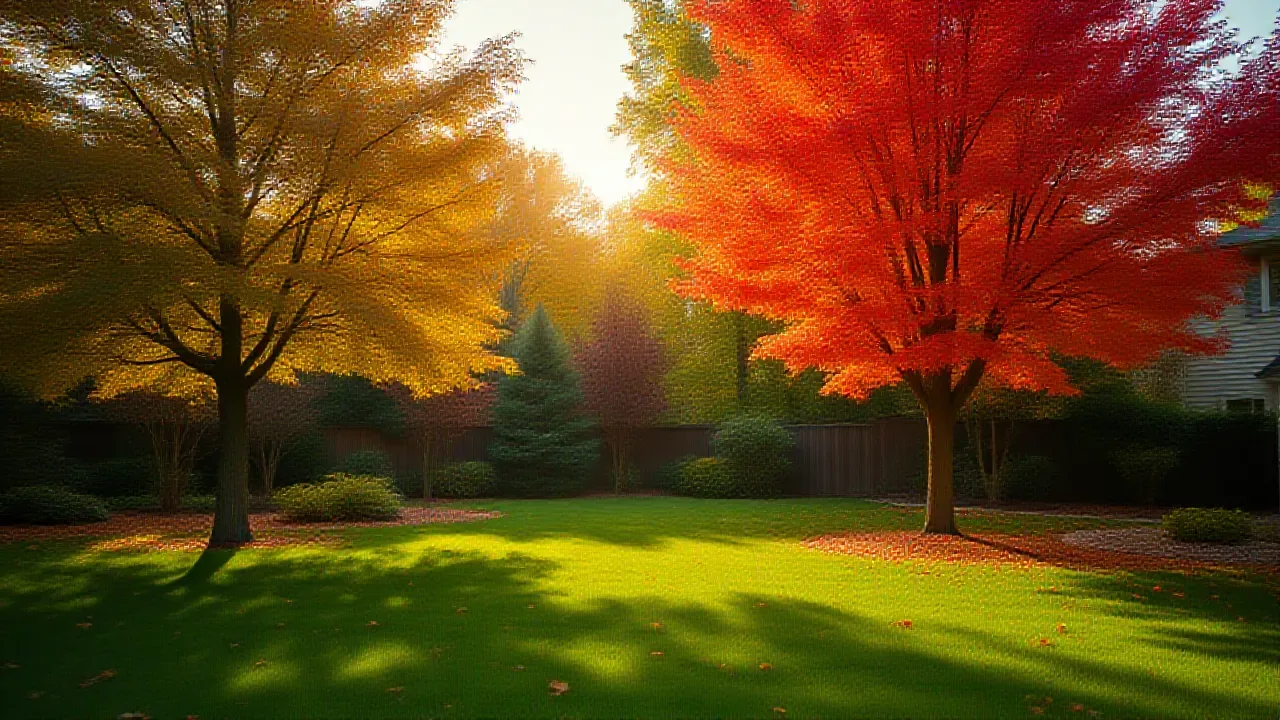
Ontario's fall colour is the envy of the world. Choosing the right tree for your yard means thinking about more than just the October show - eventual size, soil tolerance, and how the tree looks the other 50 weeks of the year. Here's the field guide.
Small trees (under 8 m at maturity)
Japanese Maple (Acer palmatum)
The small-tree champion. Slow-growing, eventually 5 to 7 m. Stunning fall colour in red, orange, or yellow depending on variety ('Bloodgood' for deep red, 'Sango Kaku' for coral bark and yellow fall). Prefers part-shade in southern Ontario; full sun causes leaf-scorch. Plant in well-drained soil, protect from harsh winter wind.
Serviceberry (Amelanchier)
Native, multi-stem or single-trunk forms, 5 to 8 m. Three seasons of interest: white spring flowers, edible blue berries in summer, brilliant orange-red fall colour. Tolerates Ontario clay. The most underplanted small tree in the region.
Eastern Redbud (Cercis canadensis)
Heart-shaped leaves, pink-purple spring flowers before the leaves emerge, yellow fall colour. 5 to 8 m. Marginal hardiness in some Ontario locations; choose 'Northern Strain' for reliability. Prefers part shade.
Medium trees (8 to 15 m)
Paperbark Maple (Acer griseum)
Slow-growing to 10 m, peeling cinnamon-coloured bark for year-round interest, brilliant scarlet fall colour. Compact form suits suburban yards. Pricier than common maples but worth it for the bark alone.
Ginkgo (Ginkgo biloba)
Living fossil tree, fan-shaped leaves that turn pure yellow then drop almost overnight in fall. Slow-growing to 12 to 15 m in residential conditions. Extremely tough - handles urban pollution, road salt, clay. Pick male varieties ('Princeton Sentry', 'Autumn Gold') to avoid the famously smelly female seeds.
Sourwood (Oxydendrum arboreum)
Native to eastern North America, 8 to 12 m. White summer flowers, brilliant red-purple fall colour, attractive year-round. Slow to establish but rewarding. Tolerates clay; prefers slightly acidic soil.
Large trees (15+ m at maturity)
Sugar Maple (Acer saccharum)
The iconic Ontario fall tree. Brilliant orange-red fall colour, classic shape, up to 25 m tall at maturity. Needs space and well-drained soil; struggles in compacted urban conditions. Best for larger lots with room for the root system.
Red Maple (Acer rubrum)
More urban-tolerant than sugar maple. Red flowers in spring before leaves, brilliant red fall colour, 15 to 20 m. Cultivars like 'Red Sunset' and 'October Glory' are widely planted Ontario street trees.
Scarlet Oak (Quercus coccinea)
Long-lived, 20+ m, brilliant scarlet fall colour that holds well into November. Tolerates a wide range of soils. One of the best red-foliage choices for large Ontario lots.
Tulip Tree (Liriodendron tulipifera)
Tall (20+ m), straight-trunked, unique tulip-shaped leaves that turn pure yellow in fall. Tulip-shaped greenish-yellow flowers in late spring. Fast-growing, native to southern Ontario. Needs space.
What to consider before planting
Eventual size
The single biggest mistake is planting a tree too big for the lot. A sugar maple at 25 m simply doesn't belong on a 30-foot urban lot. Match the eventual size to the location. Local utility lines, foundation distance, and neighbour's windows all matter.
Soil tolerance
Most older Hamilton, Burlington and Halton areas have heavy clay. Maples, oaks, ginkgos and serviceberry tolerate it. Some trees (eastern redbud, paperbark maple) need better drainage; either amend the soil or pick a more clay-tolerant alternative.
Microclimate
Lakeshore properties get warmer microclimates (zone 6 or 6a). Inland and elevated areas (Ancaster, Halton Hills) get colder (zone 5). Marginal trees (sourwood, redbud, some Japanese maples) only do well in the warmer zones.
Frequently asked questions
How big should the tree be when I plant it?
Most reliable: 5 to 7 cm caliper trees (the trunk diameter measured 30 cm above the ground). Smaller trees establish faster and often catch up to larger transplants within a few years. Larger trees provide instant impact but cost much more and take longer to establish.
When is the best time to plant a tree in Ontario?
Fall (September to mid-October) or spring (after last frost, mid-May). Fall is often slightly better because roots establish through the cool wet fall before top growth resumes in spring. Avoid summer planting if possible.
How long until I get good fall colour from a new tree?
Most trees show their characteristic fall colour from year 1 or 2 after planting, but the visual impact scales with size. A 10-year-old tree obviously has more leaves than a 2-year-old. Patience is part of tree planting.
Will my new tree need staking?
Most trees DON'T need staking. Stakes can actually weaken the trunk by preventing natural sway. Stake only if the tree is in a high-wind exposure or has a top-heavy canopy at planting. Remove stakes after the first growing season.
Do I need a permit to plant or remove a tree?
Planting a new tree: never. Removing an existing mature tree: usually yes in Oakville, sometimes in Burlington, Hamilton, Halton Hills. Tree by-laws protect mature trees on private property. See our permits guide.
- Tree & shrub services
- Best perennials for Ontario gardens
- Garden building & planting service
- Best privacy plants and hedges for Ontario
Tree profiles in more detail
Sugar Maple (Acer saccharum) - the Ontario classic
The tree that defines Canadian fall. Mature size 20-30 m tall, 12-18 m wide. Brilliant orange-red fall colour. Slow to moderate growth (30 cm per year young, faster as it establishes). Needs well-drained soil; struggles in compacted urban conditions. Best for larger lots (minimum 12 m from foundation). Long-lived (200+ years).
Red Maple (Acer rubrum) - the urban-tolerant cousin
15 to 20 m mature, more compact than sugar maple. Red flowers in early spring before leaves emerge. Brilliant red fall colour. Tolerates wetter soils than sugar maple. 'Red Sunset' and 'October Glory' are popular cultivars. Faster-growing than sugar maple.
Scarlet Oak (Quercus coccinea)
Long-lived (150+ years), 18-25 m tall. Brilliant scarlet fall colour that holds well into November. Tolerates clay soil better than most oaks. Slow to establish; once mature, virtually maintenance-free. Acorns attract wildlife.
Tulip Tree (Liriodendron tulipifera)
Tall (20-25 m), straight-trunked, native to southern Ontario. Unique tulip-shaped leaves turn pure yellow in fall. Greenish-yellow tulip-like flowers in late spring on mature trees. Fast-growing. Needs space.
Ginkgo (Ginkgo biloba)
Living fossil tree. Fan-shaped leaves that turn brilliant yellow then drop within a day or two in fall (look up the 'ginkgo drop'). Slow-growing to 12-15 m in residential conditions, eventually larger. Extremely tough - urban pollution, road salt, clay all OK. Pick male varieties to avoid stinky female seeds.
Paperbark Maple (Acer griseum)
Slow-growing to 10 m mature, but the peeling cinnamon bark provides 12-month interest. Brilliant scarlet fall colour. Compact form suits suburban yards. Pricier than common maples but worth the investment.
Sourwood (Oxydendrum arboreum)
Native to eastern North America, 8-12 m. White summer flowers (one of the few trees flowering in July-August), brilliant red-purple fall colour. Attractive bark. Slow to establish; prefers slightly acidic soil. Marginal hardiness in colder Ontario locations.
Eastern Redbud (Cercis canadensis)
Small tree (5-8 m), heart-shaped leaves, pink-purple spring flowers before leaves emerge. Yellow fall colour. Pick 'Northern Strain' or 'Forest Pansy' for Ontario hardiness. Prefers part shade. Multi-trunk forms common.
Serviceberry (Amelanchier)
5-8 m small tree, multi-stem or single-trunk. Three seasons of interest: white spring flowers, edible blue summer berries, brilliant orange-red fall colour. Most underplanted small tree in the region. Native, low-maintenance, tolerates clay.
Japanese Maple (Acer palmatum) - the small-yard champion
Slow-growing to 5-7 m. Stunning fall colour depending on variety ('Bloodgood' red, 'Sango Kaku' coral bark + yellow fall). Prefers part-shade in southern Ontario; full sun causes leaf scorch. Plant in well-drained soil, protect from harsh winter wind.
Planting your fall-colour tree (step by step)
1. Dig the hole wider than deep. 2x the width of the root ball, but only as deep. Tree roots spread laterally; depth doesn't help.
2. Plant at the right depth. The root flare (where the trunk widens into roots) should be at or slightly above ground level. Planting too deep is the #1 killer of newly-planted trees.
3. Backfill with the native soil. Don't use pure compost or topsoil; the roots need to grow into the surrounding soil eventually. Mix 25-30% compost into the native soil for the backfill.
4. Water thoroughly. Settle the soil with water as you backfill. Then water deeply (20-30 litres) once a week for the first growing season.
5. Mulch but don't volcano. 5-7 cm of shredded bark mulch in a wide ring (1+ m diameter) around the tree. Pull mulch back 10 cm from the trunk itself.
6. Skip the stake (usually). Most trees don't need staking. Stakes can actually weaken the trunk. Stake only if the tree is in a high-wind exposure or has a top-heavy canopy.
7. Water deeply for 2-3 years. A new tree needs deep weekly watering its first 2-3 years to establish. After that, most are self-sufficient.
Common tree-planting mistakes
- Planting too deep. Root flare buried under soil eventually rots the trunk. Always plant at or above grade.
- Mulch volcanoes. Mulch piled against the trunk causes bark rot. Always pull mulch back from the trunk.
- Skipping the first-year watering. Newly planted trees can't survive without consistent deep watering for the first 2-3 years.
- Picking the wrong size for the lot. Sugar maple in a 6-metre-wide lot will eventually take over the yard and create issues with the house, neighbours, and utility lines. Match size to space.
- Planting too close to the foundation. Most trees need at least 4-5 m from the foundation. Closer and you create future foundation, drainage, and root issues.
Cost ranges for trees in Ontario
| Tree type / size | Cost installed (CAD) |
|---|---|
| 5 cm caliper sugar maple (~2.5 m tall) | $300-$600 |
| 7 cm caliper sugar maple (~3 m tall) | $500-$900 |
| 10 cm caliper specimen tree (mature) | $1,500-$3,000 |
| Japanese maple, 1.5 m tall | $350-$700 |
| Japanese maple, mature specimen 2.5 m | $1,200-$3,000 |
| Serviceberry, multi-stem 2 m tall | $300-$600 |
| Ginkgo, 6 cm caliper | $400-$800 |
More questions, answered
How fast will I get fall colour from a new tree?
Year 1 typically gives some colour even from small starter trees. The visual impact scales with tree size; a 10-year-old tree will obviously have much more leaf mass than a 2-year-old. Most homeowners get good fall display by year 4-5.
Should I plant in spring or fall?
Fall (September to mid-October) is often better because roots establish through cool moist conditions before top growth resumes in spring. Spring planting works too but requires more attentive first-summer watering.
Will my tree survive Ontario winters as a young plant?
All trees we've listed are hardy in Ontario zone 5. Marginal species (sourwood, redbud) are best in warmer microclimates (lakeshore Burlington, lakeshore Oakville, Niagara). For first 2-3 winters, wrap young thin-bark trees with tree wrap to prevent sunscald.
How long until I see real return on the tree investment?
Visual impact: 3-5 years for noticeable presence. Full maturity: 15-25 years depending on species. Property value impact: trees add value from year 1 (real estate agents specifically cite mature trees as a value factor). Patience is part of the tree-planting investment.
Need to clear a tree first? See 2026 tree removal and pruning pricing including the permit rules that apply to private trees in this region.