
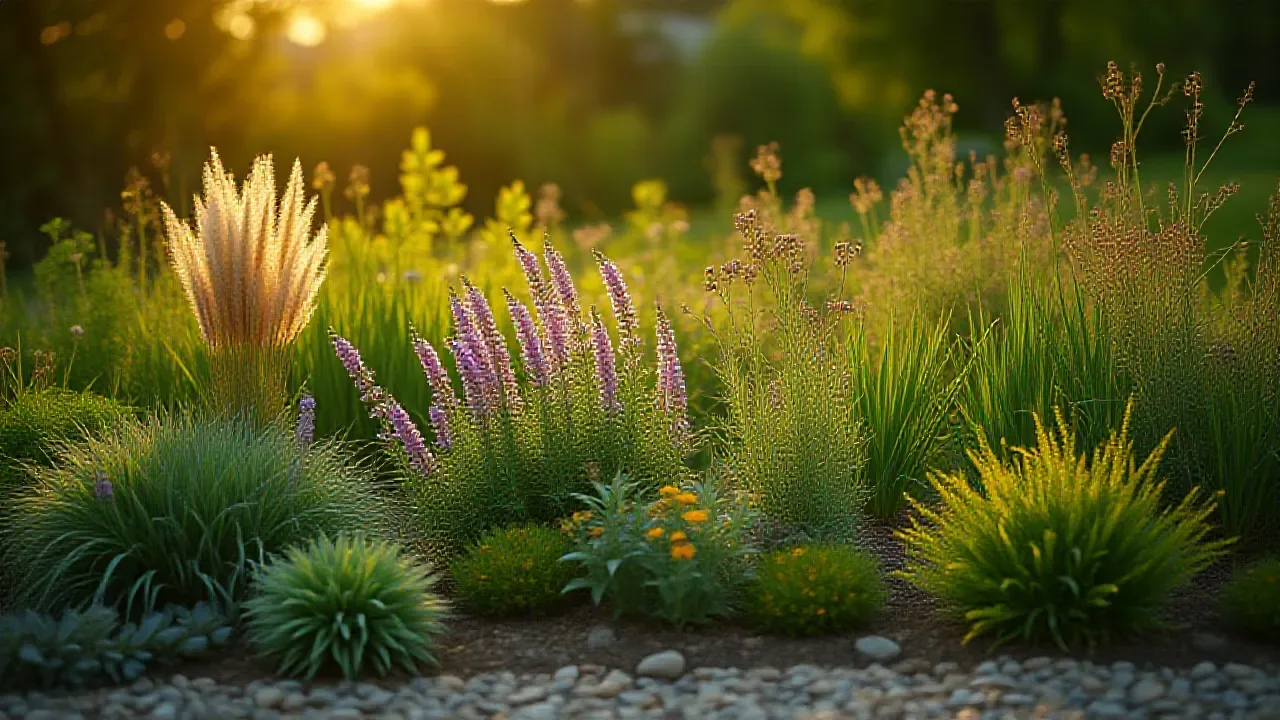
Ontario summers have been drier and hotter in recent years. Watering restrictions are now common in Hamilton, Burlington and across the Halton-Niagara corridor. Designing a garden that thrives without daily watering is no longer a niche aesthetic; it's common sense.
The drought-tolerant plant palette
Workhorse picks (handle dry weeks without watering once established)
Sedum (Hylotelephium). Succulent foliage, late-summer flowers, handles pure drought. Low-growing varieties ('Angelina', 'Dragon's Blood') and tall varieties ('Autumn Joy').
Russian Sage (Perovskia). Silver foliage, lavender-blue spires, completely drought-tolerant after year 1.
Yarrow (Achillea). Flat flower heads in yellow, red, white. Thrives in poor soil.
Coneflower (Echinacea). Native, drought-tolerant once established, pollinator magnet.
Black-eyed Susan (Rudbeckia). Bright yellow, long bloom, native.
Catmint (Nepeta). Blue-purple spires, deer-resistant, drought-hardy.
Mediterranean herbs (need sharp drainage)
Lavender. Pick zone-5 hardy varieties ('Hidcote', 'Munstead'). Plant in well-drained, sandy soil; struggles in Ontario clay. Pair with crushed-stone mulch rather than wood.
Sage (Salvia officinalis). Silver-green herb, drought-tolerant in well-drained soil.
Thyme (Thymus). Low groundcover, beautiful between paver joints.
Ornamental grasses (almost all drought-tolerant once established)
Karl Foerster feather reed grass. Upright, reliable, gold winter colour.
Little Bluestem (Schizachyrium). Native, blue-grey summer foliage that turns coppery in fall.
Switch grass (Panicum virgatum). Tall, native, airy panicles.
Native picks (already adapted to Ontario's climate swings)
Wild bergamot (Monarda fistulosa), New England aster (Symphyotrichum novae-angliae), goldenrod (Solidago), butterfly weed (Asclepias tuberosa), prairie smoke (Geum triflorum). Once established (year 2), these handle anything our climate throws at them.
The soil and mulch strategy
Soil amendment matters more than plant choice. Even drought-tolerant plants need decent soil to establish. For Ontario clay, mix in 10 to 15 cm of coarse compost when planting. For sandy soil, add compost to retain moisture.
Mulch deeper. A 5 to 7 cm layer of shredded bark mulch (not chunky bark, not stone unless aesthetic) holds soil moisture during dry spells. Refresh annually. Pull back from stems.
Group by water needs. Don't scatter drought-tolerant plants throughout a regularly-watered bed; cluster them so you can water differently if needed.
The watering plan
Year 1: Even drought-tolerant plants need weekly deep watering to establish. Skip the daily light sprinkle; one heavy soak per week trains deep roots.
Year 2+: Most established drought-tolerant plants only need watering in extreme dry spells (3+ weeks no rain in summer heat). The plant's root system has reached deeper soil moisture.
Watering method: Drip irrigation or soaker hose beats overhead sprinklers. Less water lost to evaporation, leaves stay dry (reduces fungal issues), water goes to roots.
What NOT to do
- Daily light sprinkling. Trains shallow roots, makes plants more vulnerable to drought.
- Watering midday. Evaporation losses are huge. Water early morning.
- Stone mulch over poor soil. Looks low-maintenance but heats up massively and stresses plants.
- Planting at the wrong time. Mid-summer planting fails most often. Spring or fall only.
Frequently asked questions
How long until the garden is truly low-water?
Year 2 typically. Year 1 needs consistent watering to establish; year 2 onwards most drought-tolerant plants only need water in extreme dry weeks. Native plants often need zero supplemental water by year 3.
Do drought-tolerant gardens look good or just dry and scraggly?
When designed well, they look lush and intentional. The trick is plant density (don't leave bare soil between plants), variety in foliage texture (combine ornamental grasses, broad-leaf plants, and silver-leaved Mediterranean species), and proper mulch coverage.
Will my lawn survive without daily watering?
Healthy Ontario lawns survive most summers with no watering or light weekly watering. Daily watering trains lawns to shallow roots that fail in drought. Tall fescue and Kentucky bluegrass varieties are drought-tolerant once established.
What about my existing thirsty plants?
Group them together for efficient watering rather than scattered throughout the yard. Or replace high-water plants over time with drought-tolerant alternatives - start with the ones that struggle most each summer.
Are rain barrels worth it?
Yes, for hand watering and small drip systems. A typical Ontario residential roof can fill a 200 L rain barrel in one rainfall. Cost around $80 to $200, payback in a few years if you used to water heavily.
- Garden building & planting service
- Best perennials for Ontario gardens
- Irrigation & sprinkler systems
Three drought-tolerant garden templates that work
The Mediterranean-inspired garden
Crushed-stone or pea-gravel ground surface as the dominant element. Island beds of Russian sage, lavender (in well-drained pockets), sage, thyme, ornamental grasses. A few statement plants (sumac for fall colour, smoke bush). Looks intentional, ages gracefully, almost zero summer watering once established.
The native prairie garden
Inspired by Ontario's pre-settlement landscape. Switchgrass, little bluestem, big bluestem as grass anchors. Coneflower, black-eyed Susan, butterfly weed, wild bergamot as pollinator-supporting perennials. Looks wilder than traditional gardens but stunning July-September and self-sustaining.
The structured succulent-style garden
Modern aesthetic using mostly sedums and similar succulents. Sedum 'Autumn Joy' in groups. Sempervivum (hens and chicks) as edging. Low-growing sedums ('Angelina', 'Dragon's Blood') as groundcover between paver joints. A few accent perennials like yarrow or blanket flower. Reads contemporary, requires minimal care.
Transitioning from a traditional garden to drought-tolerant
You don't need to rip everything out at once. Phased approach:
Year 1: Stop watering and see which plants struggle in dry weeks. Mark those for replacement. Add 5 to 7 cm of mulch across all beds to retain moisture.
Year 2: Replace the worst water-hogs with drought-tolerant alternatives. Hostas next to coneflowers wastes water on the hostas; relocate the hostas to shade and put more drought-tolerant plants in their previous spot.
Year 3: Convert the most water-intensive areas (lawn near a fence, beds near hot south-facing walls) to drought-tolerant zones. Add or expand mulched borders.
Year 4+: Maintenance mode. The garden is now self-sustaining in most weather.
Irrigation strategy for drought-tolerant gardens
Counter-intuitive: even drought-tolerant gardens benefit from PROPER irrigation. The key is "less but deeper":
Drip irrigation or soaker hose beats sprinklers. Less water lost to evaporation, water goes to roots, leaves stay dry (reduces fungal disease).
Watering frequency: Established drought-tolerant plants in Ontario typically need supplemental watering only during 3+ week dry spells. Most years, two or three deep waterings in mid-summer is enough.
Watering depth: When you do water, water deeply. 20 minutes of slow drip per zone, once per week, trains roots to grow deep. Light frequent watering trains shallow roots that fail in real drought.
Climate change context
Southern Ontario summers have shifted measurably over the last 30 years. Average summer rainfall has decreased and dry spells have lengthened. Heat events (5+ consecutive days above 30C) have become more frequent. The plants that thrived in our parents' gardens may struggle in our gardens. This is the practical reason drought-tolerant design has become mainstream rather than niche.
Choosing drought-tolerant plants isn't just an aesthetic or budget choice anymore. It's adapting to the climate we actually have.
More questions, answered
Will a drought-tolerant garden look brown by August?
Properly designed: no. The plant palette includes silver-leaved Mediterranean herbs, succulent foliage, grasses that hold colour through dry weeks, and bloomers timed for late summer when traditional gardens fade. A drought-tolerant garden often looks BETTER in August than a traditional garden because it's adapted to August conditions.
Can I have a drought-tolerant garden in Hamilton clay?
Yes but you need to amend the soil to improve drainage. Heavy clay holds too much water in spring (which drowns drought-tolerant plants that prefer drier conditions). Mix in 10 to 15 cm of coarse compost and some horticultural sand when planting. Some 'Mediterranean' herbs like lavender will still struggle without sharp drainage.
What about the lawn?
Lawn is the most water-hungry surface. Options: shrink the lawn area dramatically (replace with drought-tolerant beds), switch to drought-tolerant grass mix (tall fescue or fine fescue rather than Kentucky bluegrass), or eliminate lawn entirely. Even just stopping the daily watering trains the existing lawn to be more drought-tolerant over 2 to 3 years.
Is rainwater harvesting worth it?
Yes for hand watering and small drip systems. A 200 L rain barrel fills in one good Ontario rainstorm. Cost $80 to $200. Larger systems (1000+ L cistern) cost $2,000 to $5,000 installed and can handle most garden water needs in normal years.
Planning a front garden? See front yard ideas for Ontario homes with native and drought-tolerant planting.
Planning a dry garden? See rock garden ideas with drought-tolerant planting.
Laying the bed out first? See garden bed design ideas, layers and spacing for Ontario borders.