
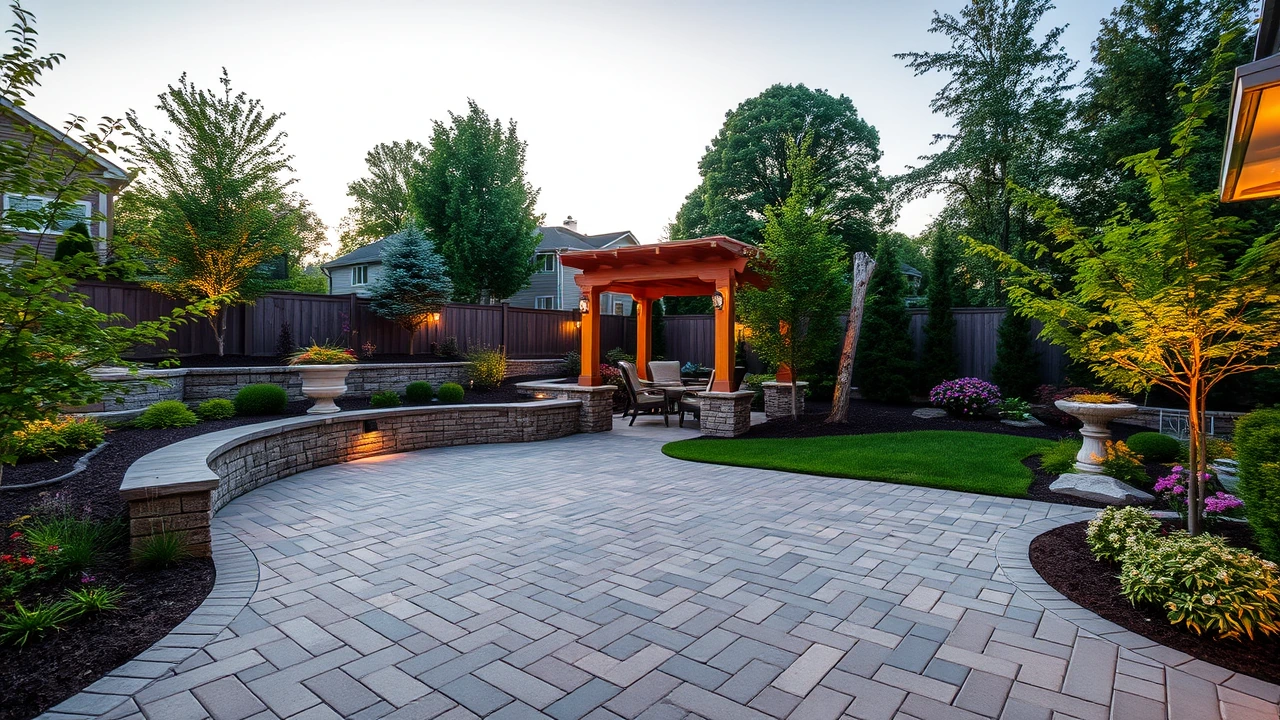
Burlington is a tough place to design a yard well, and a very easy place to design a yard badly. The city straddles plant hardiness zones 6b through 7a, with the lake softening the south end and the escarpment making Tyandaga and the north feel a half-zone colder. Aldershot lots fight a high water table and lake-influenced clay that drowns the wrong plant choices in their second spring. Tyandaga and the escarpment edge bring grade changes, ravine views and Conservation Halton oversight into the design brief. Roseland and central Burlington family yards need to work hard for kids, pets, entertaining and aging-in-place all at once. Millcroft and Alton Village subdivision lots come with developer-grade builder landscapes that almost never reflect how the family actually lives. A real landscape design starts with how the family uses the yard, not with a plant list.
Quick verdict for Burlington homeowners
For a proper landscape design package in Burlington in 2026, expect to budget $2,500 to $6,500 for a focused refresh plan, $5,000 to $12,000 for a mid-yard 2D concept plan, $10,000 to $22,000 for a full-yard package with 3D rendering, and $20,000 to $45,000 for an estate master plan with phasing strategy, lighting design and full CAD deliverables. Most Burlington design engagements run 4 to 10 weeks from kickoff to final drawings. The design fee is typically credited 50 to 100 percent toward installation if you build with us. Always get a written scope showing deliverables, revision rounds and what is and is not included before signing.
2026 Burlington landscape design cost
Prices below are turnkey design fees for Burlington in 2026, including site measure, concept development, plant selection, materials specification and presentation. They do not include installation, third-party arborist reports, surveyor work, or Conservation Halton application fees on ravine-edge lots.
| Tier | Scope | Design fee | Timeline | Best fit |
|---|---|---|---|---|
| Refresh | Single-zone plant refresh, front-yard concept sketch, plant list and source guide | $2,500 to $6,500 | 2 to 4 weeks | Aldershot or Alton Village front-yard refreshes, single-bed redesigns |
| Mid-yard plan | 2D concept plan for half the property, planting plan, hardscape footprint, materials board | $5,000 to $12,000 | 4 to 6 weeks | Roseland rear-yard family-zone plans, Millcroft back-yard rebuilds |
| Full-yard package | 2D plan plus 3D rendering of key views, planting plan, hardscape plan, lighting plan, irrigation outline | $10,000 to $22,000 | 6 to 10 weeks | Most premium Burlington family yards, central Burlington full-property work |
| Estate master plan | Full CAD master plan, 3D rendering, phasing strategy, lighting design, irrigation plan, ravine and Conservation Halton coordination | $20,000 to $45,000 | 10 to 16 weeks | Tyandaga ravine-lot estates, Aldershot lakefront-adjacent estates |
To understand what each tier actually delivers and how design fees stack against installation budget, read the Ontario landscape design cost guide and the design process explained for a phase-by-phase walkthrough.
Common Burlington landscape design projects we build
Tyandaga ravine-edge estate master plans
Tyandaga estate lots, especially the half- and full-acre properties running along Tyandaga Park Drive and the streets feeding into the golf course, are the most design-intensive work we do in Burlington. The brief almost always includes a multi-tier terrace system stepping down toward the ravine, a viewing terrace at the lower elevation, native and ravine-appropriate plantings that satisfy Conservation Halton, an outdoor kitchen or fire feature on the upper terrace, and a phased build that lets the family live through the project. We deliver a CAD master plan, 3D rendering of three to five key views, a phased construction sequence over 2 to 4 build seasons, a lighting plan in low-voltage LED and a planting plan that leans on serviceberry, eastern redbud, switchgrass and other Carolinian and ravine-compatible species for the transition zone. Conservation Halton coordination runs in parallel.
Aldershot lakefront-adjacent full-yard packages
Aldershot from Plains Road down toward LaSalle Park has a softer microclimate than the rest of Burlington thanks to the lake, sitting solidly in zone 7a in protected pockets. That opens up plant choices that struggle further north, including more hydrangea variety, some marginal hardiness specimens and a longer growing season at both ends. The design challenge here is the high water table and lake-influenced clay, which kills any plant that wants a dry winter root zone. Our full-yard packages for Aldershot specify raised beds where drainage is poor, lean on natives like switchgrass, serviceberry and bee balm that tolerate seasonal wet feet, and route hardscape drainage carefully so the planting beds do not become collection ponds. 2D concept plans cover the property, with 3D renderings of the front facade view and the rear entertaining zone.
Roseland and central Burlington family-yard mid-plans
Roseland and the central streets through New Street, Spruce Avenue and the area south of Fairview are family-yard country, where the design has to make a 50 ft wide lot work for kids, a dog, two parents who entertain and a barbecue. Our 2D mid-yard concept plans for these properties zone the yard into a hardscape patio for dining, a play zone with proper sight lines from the kitchen window, a side-yard utility run for bins and bikes, and a low-maintenance perimeter planting in native species. The materials board specifies the paver, the plant key and the fence treatment in one consistent palette so the yard reads as a single composition rather than three separate projects. Lighting is planned at the design stage even if it installs in a later phase.
Millcroft, Alton Village and Orchard subdivision yard refreshes
The newer north-Burlington subdivisions through Millcroft, Alton Village and the Orchard have generic builder-grade landscapes: a strip of sod, three foundation shrubs, a single tree in the front yard and nothing meaningful in the back. Our refresh and mid-yard plans for these neighbourhoods rebuild the front facade with a proper hardscape walkway, layered native and ornamental planting that gives the house presence, and a rear-yard concept that respects the developer lot grading. We default to natives like serviceberry, eastern redbud, switchgrass, little bluestem, bee balm and Joe Pye weed because they thrive in zone 6b interior Burlington without the irrigation a non-native palette demands. Materials boards keep the family in control of the budget.
Why DIY design plans fail in Burlington (and what we do differently)
The four failure modes we see again and again on DIY Burlington designs and big-box garden-centre plans repeat every year. First, plant-zone mismatch: a homeowner buys a plant rated to zone 7 because it caught their eye at the garden centre, plants it in interior Tyandaga which trends 6b, and watches it die back to the ground every winter. Second, no soil and drainage read: the design ignores the lake-influenced clay across Aldershot and the heavier clay across the central neighbourhoods, and the plant palette never adjusts. The plants that want sharp drainage rot, the plants that tolerate wet feet thrive, and the yard ends up looking patchy by year three.
Third, no phasing strategy: a homeowner tries to install the whole vision in one season, blows the budget on the front yard and never gets to the back, then has to live with a half-finished project for five years. Fourth, no design document: the plan exists only in the homeowner head, so the contractor builds something different than the gardener planted, and the lighting never matches the hardscape. We do it differently on every Burlington design: a measured 2D base plan over the surveyor drawing, a zone map of soil and drainage, a plant palette tested against the actual hardiness zone for that property, 3D rendering of key views so the homeowner can see the result before the first plant lands, and a written phasing strategy with a budget per phase.
The Burlington design process timeline
- Free on-site visit. We walk the property, measure the major dimensions, photograph existing grades and views, identify the soil and drainage zones, note the sun and wind exposures, and talk through how the family uses the yard. You leave with a realistic Burlington 2026 design-fee band.
- Design agreement and full site measure. We send a fixed scope showing deliverables (2D plan, 3D rendering, planting plan, materials board, lighting plan, phasing), revision rounds and timeline. After signing, we return for a full site measure and tie the drawing to the survey plan where one exists.
- Concept development. The lead designer works up two distinct concept directions for the major spaces, with rough 2D layouts and a materials direction for each. We present both, the homeowner picks the direction or asks for a hybrid, and we converge on one concept.
- 2D master plan and planting plan. The chosen concept develops into a measured 2D master plan with hardscape, plant key (species, quantity, size at install, mature size), grading notes, drainage notes and lighting locations. Plant palette is tested against Burlington 6b or 7a hardiness for that specific property.
- 3D rendering and lighting plan. Full-yard and estate packages add 3D rendering of three to five key views (front facade, rear entertaining zone, terrace approach) and a low-voltage LED lighting plan with fixture locations, beam angles and transformer load. The homeowner sees the night view before the first fixture lands.
- Phasing strategy and build handoff. The plan is broken into 2 to 4 build phases with a budget per phase, dependencies (drainage and hardscape before planting, structures before lighting) and a sequence that lets the family live through the build. If you install with us, the design fee credits 50 to 100 percent toward the first phase.
Permits and bylaws in Burlington
Pure landscape design work in Burlington does not require a permit, but the design has to anticipate where the installation will hit code. The City of Burlington requires lot-grading certification to be maintained on most subdivisions built since the late 1990s, so any design that touches grading, regrades a side yard or routes surface water differently needs a lot-grading review. Any structure higher than 600 mm above grade (decks, raised patios, retaining walls over 1.2 m) triggers building permits at the install stage, and the design should call them out by name so the homeowner is not surprised. Tree protection bylaws apply to certain protected species and to trees above a measured diameter, and a design that removes a regulated tree needs the City tree-removal permit.
For Burlington designs on properties within the regulated area of Bronte Creek, Sixteen Mile Creek, Grindstone Creek or the Niagara Escarpment, Conservation Halton review applies to any grading, structure or planting work in the regulated zone. Tyandaga ravine-edge lots almost always need this review, as do Aldershot lots near Grindstone Creek. We flag the trigger at the design stage and coordinate the application as part of the project, so the homeowner is not blindsided by a 4 to 8 week review on the way to the build.
Frequently asked questions
Do I need a 3D rendering or is a 2D plan enough?
A 2D plan is enough for a focused refresh or a single-zone redesign. As soon as the project involves a new hardscape footprint, grade changes, a structural feature like a pergola or outdoor kitchen, or a meaningful lighting design, 3D rendering pays for itself. Seeing the night view, the patio approach and the rear elevation before commit lets the homeowner catch design issues that no 2D plan reveals.
What plant hardiness zone is Burlington in?
Burlington straddles 6b and 7a. The lake-softened pockets of Aldershot and parts of the south-central neighbourhoods sit in 7a, while interior Tyandaga and the escarpment-influenced north of the city trend 6b and can dip half a zone colder in exposed pockets. We test every plant in the palette against the actual zone for the specific property, not against the city average.
Why do you push native species so hard?
Three reasons. Natives like serviceberry, eastern redbud, switchgrass, little bluestem, bee balm, Joe Pye weed and butterfly milkweed are evolved for the Burlington climate and soil and survive without supplemental irrigation in normal years. They support pollinators and birds that struggle in monoculture lawn-and-cedar landscapes. And they look stunning through three or four seasons, where many imported ornamentals only show well for six weeks.
How long does a Burlington design package take?
Refresh plans run 2 to 4 weeks. Mid-yard concept plans run 4 to 6 weeks. Full-yard packages with 3D rendering run 6 to 10 weeks. Estate master plans with phasing and Conservation Halton coordination run 10 to 16 weeks. We work from a signed scope with milestones, and the homeowner sees deliverables at each milestone, not just at the end.
Do I have to install with you if you design the yard?
No. The design is yours and you can take it to any qualified installer in Halton. That said, most of our design clients install with our crew because the same team that drew the plan knows the intent and the tolerances. The design fee credits 50 to 100 percent toward installation if you build with us, depending on the package.
What CAD deliverables do I get on a master plan?
Estate master plans include a measured CAD base plan tied to the surveyor drawing, a hardscape plan, a planting plan with species and quantities, a grading and drainage plan, a low-voltage lighting plan with fixture locations and transformer load, an irrigation outline where applicable and 3D renderings of three to five key views. All deliverables are issued as PDF and, on request, as the underlying CAD files.
How does phasing work?
A typical Burlington full-yard or estate project breaks into 2 to 4 build phases over 1 to 4 seasons. The right phase one is almost always drainage, grading and structural hardscape because everything else depends on it. Phase two is usually the entertaining hardscape and primary planting. Phase three picks up secondary planting, lighting and finishes. The phasing plan budgets each phase so the family can pace the spend.
Will my design need Conservation Halton review?
If your property is within the regulated area of Bronte Creek, Sixteen Mile Creek, Grindstone Creek or the Niagara Escarpment, any grading, structure or significant planting work in the regulated zone triggers Conservation Halton review. We flag the trigger at the first site visit and coordinate the application as part of the design package. Review typically adds 4 to 8 weeks to the timeline.
Ready to talk about your Burlington landscape design? Request a free quote and we will book a site visit, usually within 2 business days. While you are scoping the project, the Burlington landscaping hub shows the rest of what we build in town, the landscape design service page covers our process and deliverables, the Ontario landscape design cost guide breaks down the line items, and the design process explained walks through every phase from first visit to final handoff.
Planting the beds? See garden bed design ideas and spacing for Burlington gardens.