
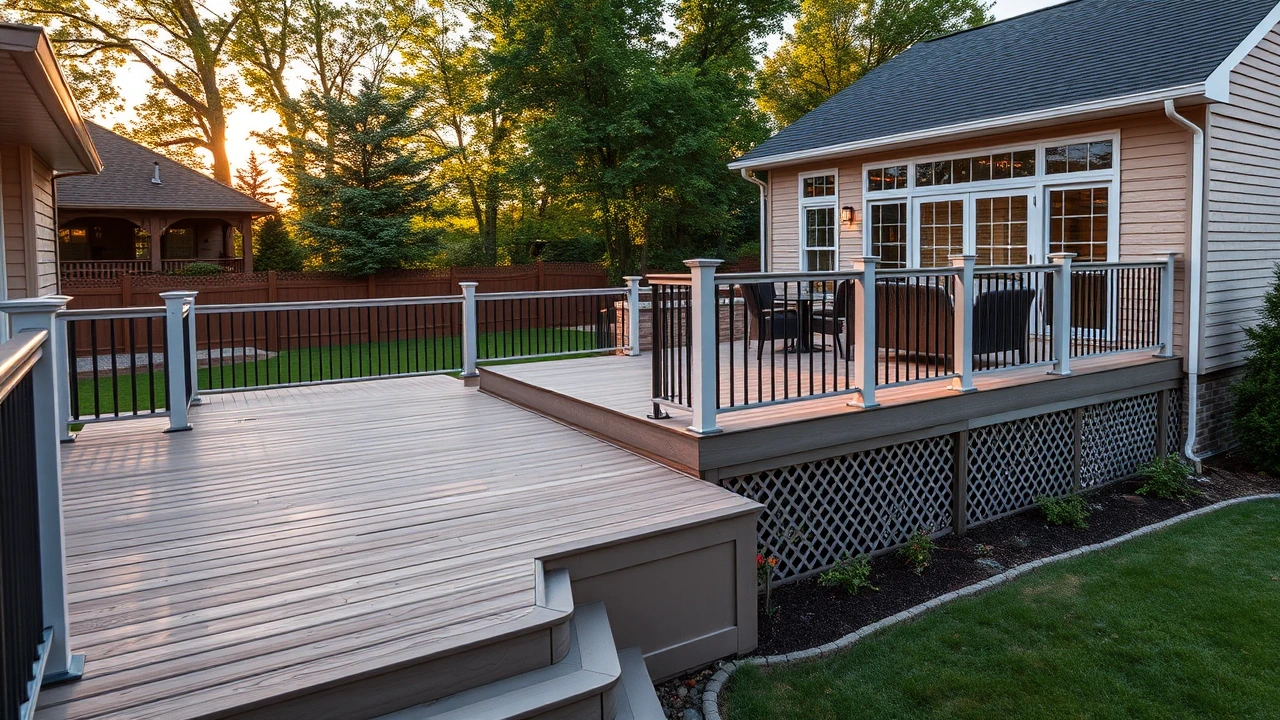
Hamilton is hard on decks. The clay subsoil across the Mountain holds water against any sonotube footing through the spring thaw, the escarpment edge through Ancaster and Stoney Creek cycles 80 to 100 freeze-thaw events a season, and the older lots in Dundas and the lower city sit on alluvial fill that needs helical piles, not poured footings. Westdale character lots are tight on access and sit close to mature trees with shallow roots that complicate excavation. On top of the soil challenges, the Ontario Building Code threshold for a deck permit kicks in at 600 mm (24 inches) above grade, and the City of Hamilton inspects guard rail heights, baluster spacing and ledger flashing on every permitted deck. A DIY weekend deck on Hamilton clay usually fails inspection, sags within five winters, or both. Doing it right starts with a soil read, a permit path and footings driven below the 4 ft frost line.
Quick verdict for Hamilton homeowners
A properly built, code-compliant deck in Hamilton in 2026 costs $45 to $120 per square foot turnkey for pressure-treated builds, and $90 to $200 per sq ft for composite or premium multi-level builds. A typical 200 to 400 sq ft single-level rear deck takes 5 to 12 working days on site, weather permitting. Mountain clay yards and Dundas alluvial fill almost always need helical piles instead of sonotube footings to clear the 4 ft frost depth without water pooling against the concrete. Any deck above 600 mm needs a building permit, OBC-compliant guards (36 inch minimum residential height, 4 inch max baluster gap), code stairs and proper ledger flashing into the house wall. Always get a written scope listing footing type, joist spacing, decking spec, guard and stair detail before signing.
2026 Hamilton deck cost
Prices below are turnkey installed costs for Hamilton in 2026, including locates, permit drawings and fees, excavation, footings, framing, decking, guards, stairs, and cleanup. They do not include pergolas, built-in kitchens, hot tub electrical, or pool-deck code work.
| Tier | Deck spec | Cost per sq ft | Lifespan | Best fit |
|---|---|---|---|---|
| Basic | 5/4 pressure-treated SPF decking, PT framing, 16 inch joist spacing, sonotube footings | $45 to $70 | 12 to 18 years | Side decks, basic Mountain rear yards, utility platforms |
| Mid-grade | Premium PT or cedar decking, PT framing, helical pile footings, code stairs and guards | $70 to $110 | 18 to 25 years | Most Hamilton family backyards, Stoney Creek rear decks |
| Premium | Composite (Trex Enhance, TimberTech AZEK), PT or LVL framing, 12 inch joist spacing, aluminum or composite guards | $110 to $170 | 25 to 40 years | Westdale, Ancaster, Dundas family decks, low-maintenance builds |
| Luxury | Multi-level composite with pergola, integrated lighting, glass or cable guards, hot tub frame, steel joists | $160 to $260 | 40+ years | Ancaster estate lots, escarpment-view rear decks, outdoor kitchen builds |
To compare the two most common decking choices on Hamilton lots, read our full composite vs pressure-treated deck guide for the line-item breakdown.
Common Hamilton deck projects we build
Single-level composite rear decks on Hamilton Mountain
Most of the Mountain, from Gourley through Gilkson and Rolston, has standard 1980s and 90s rear decks that are now sagging, rotted at the ledger, or unsafe at the stairs. We rebuild these as 250 to 450 sq ft single-level composite decks in Trex Enhance or TimberTech AZEK, framed with pressure-treated 2x10 joists at 12 inch on centre (composite requires 12 inch spacing, not the 16 inch typical for PT decking), on helical piles driven 8 to 10 ft into the clay below the 4 ft frost line. The ledger is bolted through the rim joist with code-spec lag bolts at 16 inch on centre, flashed with a continuous metal Z-flashing that tucks behind the siding to keep water out of the wall cavity. Guards are 36 inch residential height with 4 inch max baluster gap, aluminum or composite. Built this way, a Mountain composite deck stays flat and code-compliant for 30 years.
Multi-level decks on Stoney Creek slopes
Old Stoney Creek climbing up from Highway 8 toward the escarpment has lots that drop 1 m to 3 m from the back door to the rear fence. A single-level deck wastes the yard and looks like a stage. We build these as two-tier or three-tier decks: an upper dining deck at door level, a 4 to 6 step transition with a code-compliant stair (maximum 8 inch riser, minimum 10 inch run, continuous handrail at 34 to 42 inches), and a lower lounging or hot tub deck at the second elevation. Each tier gets its own helical pile footings, and the transition between levels lets us hide the framing behind a fascia for a clean architectural finish. The lower deck typically sits within 600 mm of grade, which keeps it permit-exempt while the upper deck triggers full OBC review.
Detached and side-yard decks in Westdale and Kirkendall
Westdale and Kirkendall around McMaster have tight century-home lots where the rear deck has to thread between the house, a mature tree and the side property line. We design these as 150 to 300 sq ft decks, often with one corner notched around a tree, framed in pressure-treated with composite or cedar decking. The tight-access challenge means hand-carrying material down a 760 mm side yard, hand-augering helical pile bays where the equipment will not fit, and protecting heritage brick on the existing porch during demo. The City of Hamilton heritage districts in this area also restrict any visible deck rail style facing the street, so we plan rail colour and pattern to complement the house.
Pool-side and hot tub decks in Ancaster
Ancaster through Meadowlands and Mohawk Road has the lot sizes for proper pool-side or hot tub decks, often 400 to 800 sq ft of composite with integrated steps down into a paver pool surround. The code work here is real: the City of Hamilton pool enclosure by-law measures the 1.5 m fence height from the highest ground or deck within 1.0 m of the fence, so a deck built up to the fence changes the fence height required. Guards anywhere above 600 mm have to clear OBC 36 inch height and 4 inch baluster spacing. Hot tub support requires reinforced framing (typically doubled 2x10 joists at 12 inch on centre with extra footings under the tub footprint), and the electrical chase to the tub has to be planned into the deck framing before the boards go down. We coordinate with the pool builder, the electrician and the inspector so the deck, the pool fence and the tub all pass inspection together.
Why DIY decks fail on Hamilton clay (and what we do differently)
The four failure modes we see on torn-out Hamilton DIY decks repeat every spring. First, footing failure: sonotube footings poured 30 to 36 inches deep on Mountain clay or Dundas fill, well inside the 4 ft Ontario frost zone. Each winter the wet clay below freezes and lifts the footing, then drops it unevenly in spring. By year four the deck is wavy, the ledger is pulling away from the house, and the stairs no longer meet the deck cleanly. Second, ledger failure: the ledger nailed (not lag-bolted) to the house, or bolted without flashing. Water enters the wall cavity and rots both the ledger and the house rim joist within 8 to 10 years.
Third, code-bust guards and stairs: 32 inch guard rails (OBC requires 36 inch residential), 5 to 6 inch baluster gaps (OBC allows 4 inch max), or stair risers over 8 inches with no consistent rise. Any of these is an inspection fail. Fourth, joist spacing mismatch: composite decking installed on 16 inch joist centres (composite needs 12 inch for perpendicular runs and 8 inch for diagonal patterns), which causes board bounce and warranty void within two seasons. We do it differently on every Hamilton job: helical pile footings driven below frost into undisturbed soil, lag-bolted and Z-flashed ledger connections, OBC-compliant guards and stairs verified against the latest code, and joist spacing matched to the specific decking product spec.
The Hamilton deck install timeline
- Free on-site visit. We measure the space, probe the soil for clay versus fill, check height-above-grade against the 600 mm permit threshold, photograph the house wall and existing siding, and talk through usage. You leave with a realistic Hamilton 2026 cost band.
- Design and written quote. We send a fixed scope with deck size, framing spec, decking product, footing type (sonotube or helical pile), guard and stair detail, permit path, and timeline. No vague single-line quotes.
- Permit drawings and filing. For any deck above 600 mm we draft to-scale plans and elevations, file the Hamilton building permit and pay fees, and schedule inspections. Permit turnaround in Hamilton is typically 10 to 20 business days.
- Locates and excavation. Ontario One Call utility locates, then footing locations marked and excavated. Helical piles are driven by a small skid-steer rig in a day; sonotubes are augered, formed and poured with a 24 to 48 hour cure.
- Framing and ledger. Beams set on the piles or footings, ledger lag-bolted to the house rim with continuous Z-flashing tucked behind the siding, joists hung in metal joist hangers at the decking-specific spacing (12 inch for composite, 16 inch for PT perpendicular). Footing and framing inspection booked before any decking lands.
- Decking, guards and stairs. Boards installed with hidden fasteners on composite or coated screws on PT, guards built to 36 inch with 4 inch baluster gap, stairs built to OBC stair geometry with continuous handrail. Final inspection booked, walk-through with you, and final cleanup.
Permits and bylaws in Hamilton
Any deck in Hamilton with a walking surface more than 600 mm (24 inches) above adjacent grade requires a building permit under the Ontario Building Code. Decks at or below 600 mm are permit-exempt but still must meet zoning setbacks (typically 1.2 m from rear and side property lines for unenclosed decks, more for covered decks). The OBC requirements that get inspected on every permitted deck: guard rails 36 inch minimum height on decks above 600 mm (42 inch above 1.8 m), maximum 4 inch (100 mm) gap between balusters or any opening that a 4 inch sphere can pass through, stairs with consistent rise of 125 to 200 mm and run of 255 to 355 mm, and a continuous graspable handrail on any stair with more than three risers.
Ledger connections to the house are inspected for proper lag-bolt schedule (typically 5/16 inch or 1/2 inch lags at 16 inch on centre staggered, into solid framing) and continuous metal flashing. Pool-side decks fall under the Hamilton pool enclosure bylaw and CBC 5500. Decks near the escarpment or any regulated watercourse trigger Conservation Hamilton review, which can add 4 to 8 weeks. We handle the permit drawings, fees, inspection bookings and any conservation review so you are not chasing City forms while the crew waits.
Frequently asked questions
What kind of warranty do you offer on a Hamilton deck?
Our standard Peace Love Landscaping warranty is 2 years on workmanship across the assembly (footings, framing, ledger, guards, stairs), on top of the manufacturer warranty on decking and hardware. Trex and TimberTech composite carries a 25 to 50 year limited residential warranty against structural defects, staining and fading. Pressure-treated and cedar lumber carry the mill warranty. Full terms are in the signed contract.
Do I need a permit for a deck in Hamilton?
Yes, for any deck where the walking surface sits more than 600 mm (24 inches) above adjacent grade. Decks at or below 600 mm are permit-exempt but still must meet zoning setbacks. We file the permit drawings, pay the fees, and book the inspections as part of the build scope.
How deep do deck footings need to go in Hamilton?
Below the 4 ft (1.2 m) Ontario frost depth, into undisturbed soil. On Mountain clay and Dundas fill we strongly recommend helical piles driven 8 to 10 ft, because sonotubes poured into wet clay tend to lift over time even when they clear the frost line on paper. Helical piles also do not need a 48 hour concrete cure, which shortens the build by two days.
Composite or pressure-treated decking in Hamilton?
Composite costs 50 to 80 percent more up front but lasts 25 to 40 years with almost no maintenance and holds its colour through Hamilton freeze-thaw better than PT. Pressure-treated is cheaper and easier to repair, but needs cleaning and staining every 2 to 3 years and starts to check, cup and crack by year eight. For a homeowner planning to stay 10+ years, composite wins on total cost of ownership. Full comparison in our composite vs pressure-treated guide.
What are the OBC guard rail requirements?
Residential guard rails are 36 inch minimum height for any deck walking surface above 600 mm, rising to 42 inch above 1.8 m. The maximum opening in any guard is 4 inches (100 mm), meaning a 4 inch sphere cannot pass through anywhere, including between the bottom rail and the deck surface. No climbable horizontals in the lower 36 inches on pool-side decks. Stairs need a graspable handrail (1.25 to 2 inch diameter) on any stair with more than three risers, continuous from top to bottom.
Can you build a deck in winter in Hamilton?
Generally no. Our Hamilton deck install season runs April through November. Helical piles can be driven in frost up to a point, which extends the season slightly on either end, but concrete footings need above-freezing days for proper cure, and the City of Hamilton building inspectors slow down in deep winter. Most clients book in late winter for an April to August build slot.
Can the deck support a hot tub?
Yes if it is designed for it from the start. A filled hot tub plus bathers can weigh 5,000 to 8,000 lb concentrated on a 7 by 7 ft footprint, far beyond standard residential deck load. We reinforce the framing with doubled or tripled 2x10 joists at 12 inch on centre under the tub, add extra helical piles directly under the corners, and confirm the beam and ledger spec carries the full load. Retrofitting hot tub support after the deck is built almost never works cleanly.
Can you tie the deck into a new patio or pool?
Yes, and on most Hamilton family yards it is the right call. Combining the deck, patio and any pool-fence work into one mobilisation saves two or three days of setup costs and gives a single warranty across the whole assembly. The same crew that builds the deck handles the patio and the pool-code fence. On sloped Stoney Creek lots a deck plus terraced patio is usually the cleanest way to use the back yard.
Where we work across the City of Hamilton
Hamilton amalgamated in 2001, so the city limits reach a long way past the lower city. We take on decks right across it, and the ground changes more than most homeowners expect between one community and the next.
- Ancaster: escarpment-side lots with heavier clay and long approach driveways.
- Dundas: valley properties with mature tree canopy and tight rear access.
- Stoney Creek: benchland above the escarpment with a lake-moderated microclimate.
- Waterdown: newer subdivisions on former farmland, often shallow topsoil over till.
- Flamborough: larger rural properties where well and septic locations dictate layout.
- Glanbrook: flat former farmland with heavy clay and slow natural drainage.
If you are in any of those communities, you are inside our core service area and the pricing on this page applies to your property.
Ready to talk about your Hamilton deck? Request a free quote and we will book a site visit, usually within 2 business days. While you are scoping, the Hamilton landscaping hub shows the rest of what we build across town, the deck building service page covers framing, footings and decking material choices, and the composite vs pressure-treated deck guide walks through the material trade-offs in detail.
Planning a new deck? See deck ideas that suit Ontario yards with 2026 costs.
Finishing the underside? See deck skirting ideas and costs for Hamilton decks.
Building low? See the deck block and floating deck rules for Hamilton yards.
Want the code details? See how a deck is built to Ontario code step by step.