
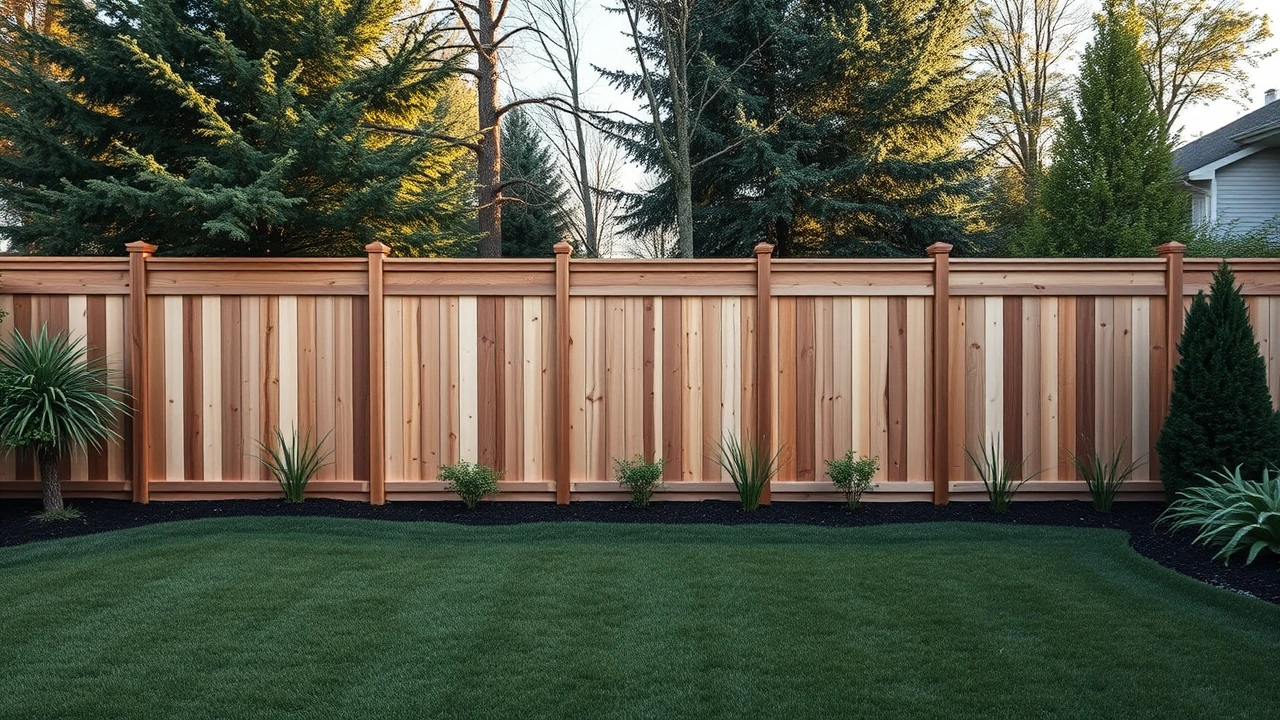
Hamilton is a tough town to set a fence post. The clay subsoil across the Mountain stays saturated through every spring thaw, the escarpment edge from Stoney Creek through Ancaster runs 80 to 100 freeze-thaw cycles a season, and the older lots in Dundas and the lower city sit on shifting alluvial fill that punishes any post set shallower than the 4 ft Ontario frost depth. Westdale and Kirkendall have tight century-home lots where the property line is rarely where the homeowner thinks it is. Add the City of Hamilton zoning bylaw splitting rear-yard and front-yard fence heights, plus a pool enclosure by-law that measures from the highest ground within 1.0 m of the fence, and a DIY weekend fence usually fails inspection or leans within three winters. Doing it right starts with a survey, a bylaw read and posts driven to frost depth.
Quick verdict for Hamilton homeowners
A properly built, bylaw-compliant fence in Hamilton in 2026 runs $55 to $150 per linear foot turnkey for most residential jobs, with premium cedar privacy and pool-code aluminum builds reaching $160 to $220. A typical 120 to 200 linear foot rear-yard fence takes 3 to 7 working days on site, weather permitting. Mountain clay lots and Dundas alluvial fill both need posts driven a full 4 ft below grade into undisturbed soil, set in concrete, not in screening. Pool fences need to meet Hamilton's Pool Enclosure By-law 16-184: at least 1.5 m high, no gap that passes a 4 inch sphere and a self-latching, self-closing gate. Always get a written scope that lists post depth, post spacing, picket spec and gate hardware before signing.
2026 Hamilton fence cost
Prices below are turnkey installed costs for Hamilton in 2026, including locates, old fence removal, post holes excavated to 4 ft, concrete footings, hardware, gates and final cleanup. They do not include surveyor pin location, retaining wall integration, or decorative lighting circuits.
| Tier | Fence type and spec | Cost per linear foot | Lifespan | Best fit |
|---|---|---|---|---|
| Basic | 4 ft galvanised chain link, 2 inch mesh, top rail | $25 to $50 | 20 to 30 years | Side yards, rear utility runs, basic Mountain backyards, dog containment |
| Mid-grade | 6 ft pressure-treated SPF privacy, dog-ear or flat-top, 4x4 posts | $55 to $95 | 10 to 18 years | Most Hamilton family backyards, Stoney Creek rear lots |
| Premium | 6 ft rough-sawn western red cedar privacy, 6x6 posts, hidden fasteners | $95 to $160 | 20 to 30 years | Westdale, Ancaster, Dundas character homes, pool privacy walls |
| Luxury | Pool-code aluminum (By-law 16-184), powder-coated, self-latching gates, or horizontal cedar with steel frames | $140 to $220 | 30 to 50 years | Ancaster estate lots, pool enclosures, escarpment-view properties |
To sanity-check a quote on your own linear footage, read the full cedar vs vinyl vs aluminum fence comparison for the line-item breakdown.
Common Hamilton fence projects we build
6 ft cedar privacy fences on Hamilton Mountain
Most of the Mountain, from Gourley and Eastmount through Gilkson, Rolston and Rymal, sits on heavy clay where 1980s and 90s pressure-treated fences are now leaning, twisted or rotted at the post base. We rebuild these as 6 ft rough-sawn western red cedar privacy fences, the maximum height allowed in a Hamilton rear yard without a variance. The posts are 6x6 cedar or pressure-treated SPF, augered to 4 ft below grade into undisturbed clay, set in 50 lb of concrete each with a sloped crown so water sheds away from the post. Rails are doubled 2x4 cedar, pickets are 5/8 inch rough-sawn western red cedar (not the thinner eastern white you see at big-box stores), and every fastener is hot-dipped galvanised or stainless. Built this way, a Mountain cedar fence holds plumb through 25 freeze-thaw seasons.
Pool-code aluminum enclosures in Ancaster
Ancaster from Meadowlands through Mohawk Road has the lot sizes for proper pool enclosures, and the City of Hamilton pool fence bylaw is strict. Under Pool Enclosure By-law 16-184 the enclosure must be at least 1.5 m (about 5 ft) high measured from the highest ground within 1.0 m outside the fence (so a raised patio or wall built up to the fence shortens your effective fence height), with no gap that passes a 4 inch (100 mm) sphere, nothing that helps a child climb it, and a self-closing, self-latching gate with the latch on the inside at least 1.35 m above the bottom of the enclosure. We install powder-coated extruded aluminum systems from Eastern Ornamental or Regis with 6x6 routed posts on concrete footings, and we sequence the install with the pool builder and the deck contractor so the first municipal inspection passes on the first visit.
Front-yard 4 ft fences and gate piers in Westdale
Westdale and Kirkendall around McMaster have character lots where the front yard wants a 4 ft picket fence to frame the house without blocking the view. Hamilton Fence By-law 10-142 caps fences at 0.9 m (about 3 ft) within 3.0 m of the front lot line, so a taller front fence has to sit further back from the street. We build these as 3 ft to 4 ft horizontal cedar picket or vertical board-and-batten fences with 4x4 cedar posts on 4 ft footings, often with a pair of brick or stone gate piers framing the front walk and a custom pedestrian gate sized to a wheelbarrow. The trick in Westdale is the property line: the original century-home pins are often buried under 60 years of garden bed, so we recommend a fresh survey before driving the first post. Better to spend $600 on a surveyor than $6,000 rebuilding a fence on the wrong line.
Chain link runs and side-yard fences in Stoney Creek and Dundas
Old Stoney Creek and Dundas have the longest side-yard property lines in town: utility runs of 80 to 150 ft between houses where a 4 to 5 ft galvanised chain link still makes sense for dog containment, garden separation or rear-laneway boundary. We use 2 inch (50 mm) mesh, top rail and bottom tension wire, 2 inch round terminal posts and 1 5/8 inch line posts, all on 4 ft concrete footings. Chain link in Stoney Creek and Dundas often sits next to mature trees and slope, so we set terminal posts deeper at corners and gates, and we tension the mesh from the top to keep it from sagging into the neighbour yard over time. Galvanised holds 25 to 30 years here. Black vinyl-coated chain link is the upgrade where the look matters more than the budget.
Why DIY fences fail on Hamilton clay (and what we do differently)
The four failure modes we see on torn-out Hamilton DIY fences repeat every spring. First, shallow posts: a 30 inch hole filled with screening or pea gravel instead of a 4 ft hole filled with concrete. Hamilton frost depth is a full 4 ft, and any post bottom inside that active zone gets jacked up and out of plumb every winter. By year three the fence is wavy. Second, wrong material at the post: pressure-treated 4x4 posts set directly in concrete with no slope on the crown, so water pools at the wood-concrete interface and rots the post core within 8 to 10 years.
Third, bylaw misses: a 7 ft rear fence on a Mountain backyard that triggers a complaint and an order to cut, or a pool-side cedar privacy wall that fails the pool enclosure by-law because the horizontal rails are climbable. Fourth, property-line creep: posts driven without a survey on a 1925 Westdale lot, where the new fence sits 8 inches inside the neighbour line and has to come out at the homeowner cost. We do it differently on every Hamilton job: surveyor pins confirmed or a fresh survey ordered, posts augered 4 ft into undisturbed soil, concrete crowned to shed water, bylaw heights verified before the first hole, and pool enclosures pre-checked against the pool enclosure by-law before the gate hardware lands.
The Hamilton fence install timeline
- Free on-site visit. We walk the line, locate property pins or recommend a survey, measure linear footage, count gates, check for overhead lines and existing locates, and talk through privacy, pool and pet needs. You leave with a realistic Hamilton 2026 cost band.
- Design and written quote. We send a fixed scope listing fence type, height, post spacing (typically 8 ft on centre), post depth (4 ft below grade), concrete spec, picket spec, gate hardware, and bylaw notes. No vague single-line quotes.
- Locates and permits. We file Ontario One Call for utility locates (5 business day turnaround) and confirm bylaw compliance with the City. Pool enclosures and fences over 2 m get a building permit; standard residential fences do not.
- Demo and post layout. We strip the old fence, haul it away, and string-line the new fence path. Posts are marked at 8 ft on centre, adjusted around obstructions, gates and corners.
- Post holes and footings. We auger each hole 4 ft deep and 10 to 12 inches wide, set the post plumb, brace it, and fill with concrete to 4 inches below grade with a sloped crown to shed water. Posts cure 24 to 48 hours before the rails go on.
- Rails, pickets and gates. Doubled rails are notched or saddle-mounted to the posts, pickets are spaced consistently (4 inch max for pool fences, 1/4 inch typical for privacy), gates are hung with heavy-duty hinges and self-latching pool hardware where required, and we walk the line with you before final cleanup.
Permits and bylaws in Hamilton
Hamilton Fence By-law 10-142 caps residential fence height at 2.0 m (about 6 ft 7 inches, commonly built to 6 ft), and at 0.9 m (about 3 ft) within 3.0 m of the front lot line and inside corner and driveway visibility triangles. Going higher requires a minor variance through the Committee of Adjustment, which adds 8 to 12 weeks and a fee. A building permit is required for any fence over 2 m, any retaining wall over 1 m that integrates with the fence, and any pool enclosure. Pool enclosures fall under Hamilton's Pool Enclosure By-law 16-184: minimum 1.5 m high measured from the highest ground within 1.0 m outside the fence, no gap that passes a 4 inch (100 mm) sphere, nothing that helps a child climb it, and a self-latching, self-closing gate.
For Hamilton fences near the escarpment, the Mountain brow, or any regulated watercourse, Conservation Hamilton review can add 4 to 8 weeks to the timeline. Corner lots have a visibility triangle, measured 5.4 m along each street line from the corner, where fences are capped at 0.9 m. We confirm bylaws, file the permit where required, book the inspection and stay on the line with the City so you are not chasing forms while the crew waits.
Frequently asked questions
What kind of warranty do you offer on a Hamilton fence?
Our standard Peace Love Landscaping warranty is 1 to 2 years on workmanship across the assembly (post depth, plumb, concrete, rails, pickets, gate hardware), on top of the manufacturer warranty on aluminum systems and hardware (Eastern Ornamental and Regis carry 10 to 20 year finish warranties). Cedar and pressure-treated lumber carry the mill warranty. Full terms are in the signed contract.
Do I need a permit for a backyard fence in Hamilton?
Not for a standard residential fence at or below 2.0 m, or 0.9 m within 3.0 m of the front lot line. You do need a permit for any fence over 2 m, any pool enclosure, and any fence integrated with a retaining wall over 1 m. Corner lots also have a 0.9 m limit inside the visibility triangle, 5.4 m along each street line from the corner.
How deep do fence posts need to go in Hamilton?
4 ft (1.2 m) below finished grade, which is Ontario frost depth. Anything shallower sits in the active freeze-thaw zone and will heave out of plumb within three winters. We auger 4 ft holes, set the post in concrete, and crown the concrete top to shed water away from the wood.
Cedar or pressure-treated for a privacy fence in Hamilton?
Rough-sawn western red cedar is the better long-term value: 20 to 30 years of life, weathers to a silver-grey without staining, holds straight in Hamilton humidity. Pressure-treated SPF is cheaper up front (about 35 percent less) but warps more in the first two seasons and starts to look tired by year eight. Eastern white cedar is a middle option but softer than western. For a full breakdown, read our cedar vs vinyl vs aluminum comparison.
What does a Hamilton pool fence have to comply with?
The City of Hamilton Pool Enclosure By-law 16-184. Minimum 1.5 m high measured from the highest ground within 1.0 m outside the fence, no gap that passes a 100 mm (4 inch) sphere, nothing that helps a child climb it, and a self-closing, self-latching gate with the latch on the inside at least 1.35 m above the bottom of the enclosure and a lock on the inside. We pre-check every pool job against the by-law before ordering material.
Can you build a fence in winter in Hamilton?
No. Our Hamilton fence install season runs roughly April through November. We do not auger post holes in frozen ground, and concrete will not cure correctly in sustained sub-zero temperatures. Most clients book in late winter for an April to July build slot.
Who owns the fence on the property line?
In Ontario, a fence built directly on the surveyed property line is a shared (line) fence and both neighbours have rights and obligations under the Line Fences Act. A fence set 6 inches inside your line is yours alone. We strongly recommend a survey before any line fence build, and a written cost-share agreement with the neighbour where the line fence approach is used.
Can you remove and dispose of my old fence?
Yes. Old fence demo, haul-away and disposal at a licensed waste site are included in our standard scope unless you ask us to leave material on site. We pull old concrete footings too, which most quick-quote crews skip and then build new posts beside the old footings, which causes problems within two years.
Where we work across the City of Hamilton
Hamilton amalgamated in 2001, so the city limits reach a long way past the lower city. We take on fences right across it, and the ground changes more than most homeowners expect between one community and the next.
- Ancaster: escarpment-side lots with heavier clay and long approach driveways.
- Dundas: valley properties with mature tree canopy and tight rear access.
- Stoney Creek: benchland above the escarpment with a lake-moderated microclimate.
- Waterdown: newer subdivisions on former farmland, often shallow topsoil over till.
- Flamborough: larger rural properties where well and septic locations dictate layout.
- Glanbrook: flat former farmland with heavy clay and slow natural drainage.
If you are in any of those communities, you are inside our core service area and the pricing on this page applies to your property.
Ready to talk about your Hamilton fence? Request a free quote and we will book a site visit, usually within 2 business days. While you are scoping, the Hamilton landscaping hub shows the rest of what we build across town, the fence building service page covers materials, gate hardware and pool-code work, and the cedar vs vinyl vs aluminum fence guide walks through the material trade-offs in detail.
Want a fence you cannot see through? See privacy fence ideas that stay private as the wood shrinks.
Need a gate? See fence gate ideas, widths and hardware for Hamilton fences.
Front yard picket fence? See picket fence costs and why 35 inches is the safe height.