
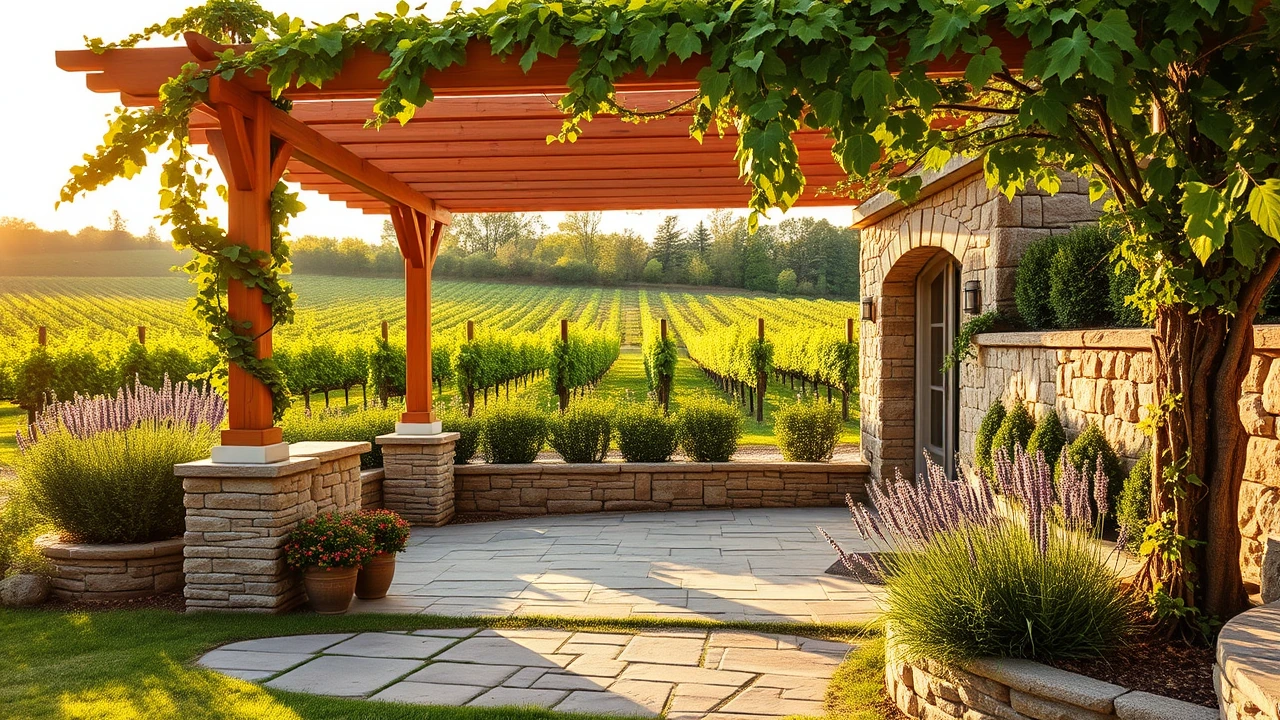
Lincoln sits in the heart of Niagara wine country, a string of villages including Beamsville, Vineland, Vineland Station, Jordan, Campden and Tintern tucked between Grimsby and St Catharines along the foot of the Niagara Escarpment. We design and build landscapes here for vineyard estates above the bench, heritage stone farmhouses on the fruit-belt flats and new subdivisions backing onto orchards, blending dry-stack stone, ornamental plantings and outdoor living spaces that suit the rhythm of wine country.
What we build in Lincoln
Lincoln properties tend to want a softer, more naturalistic look than the polished suburban work we do further east. Homeowners on the bench above Beamsville and the long rural lots around Vineland Station often have room for full estate-style landscapes, while the village cores of Jordan and Beamsville call for tighter, more curated courtyards that respect the heritage stone architecture.
- Wine-country aesthetic landscape design. Full property master plans that take cues from the vineyard estates next door: clipped boxwood, lavender rows, ornamental grasses, gravel paths and weathered stone.
- Dry-stack stone walls. Retaining and freestanding walls in locally-quarried limestone and dolostone, laid without mortar in the traditional escarpment style.
- Ornamental gardens. Deep perennial borders, pollinator plantings, kitchen and cutting gardens, and structured shrub layouts that hold up through the long Niagara growing season.
- Large estate-style patios. Natural flagstone, dimensional limestone and oversized porcelain pavers, often stepped to follow the natural slope from the house down toward a vineyard or orchard view.
- Outdoor entertaining spaces. Pergola-covered dining areas, built-in grills, wood-fired pizza ovens, fire tables and lounge zones built around the way wine-country homeowners actually entertain.
Communities we serve in Lincoln
- Beamsville core and escarpment. Heritage homes along King Street, newer subdivisions on the south side of Beamsville and the bench properties climbing toward the escarpment edge.
- Vineland village. Older homes around Victoria Avenue and the village core, plus larger rural lots on the surrounding concession roads.
- Vineland Station. The fruit-belt flats north of the QEW, with deep lots, mature trees and a mix of farmhouses and newer custom builds.
- Jordan and Jordan Station. The historic village core, the Twenty Valley along the creek and the vineyard estates climbing up the bench.
- Campden. Above the escarpment, larger acreages, rural properties and equestrian-style estates.
- Tintern and the rural concessions. Farm properties, country estates and bench-edge lots with long views over the lake plain.
The wine-country landscape design aesthetic
What pulls a Lincoln landscape together is restraint. The vineyards, orchards and escarpment already do most of the visual work, so the build needs to frame them rather than compete. The palette we lean on for wine-country projects:
- Stone. Locally-quarried limestone and dolostone in dry-stack walls, flagstone terraces and dimensional cap pieces. Weathered, honest, and matched to the heritage stone you already see across the town.
- Planting. Perennials and ornamental grasses chosen for long seasonal interest: catmint, lavender, Russian sage, salvia, echinacea, sedum, miscanthus, panicum and karl foerster. Underplanted with boxwood and yew for structure.
- Vineyard-inspired pergolas. Vine-trained pergolas using grape, wisteria or hardy kiwi over dining patios. We build them in cedar or ipe, with cable systems sized for mature vine weight.
- Ipe and cedar joinery. Pergolas, privacy screens, raised planters and outdoor kitchen surrounds in ipe for longevity or western red cedar where a softer, more rustic look fits.
- Fire features. Stone-clad gas fire tables, wood-burning fire bowls set into gravel courtyards, and built-in fireplaces anchoring lounge areas for the long Niagara shoulder seasons.
Niagara Escarpment Commission and conservation
Anything close to the escarpment edge in Lincoln sits inside the Niagara Escarpment Plan area, which means an extra layer of approvals on top of the Town of Lincoln and Niagara Region. The Niagara Escarpment Commission (NEC) reviews development within its plan boundary, and the rules tighten as you move from Escarpment Rural and Protection areas into Natural and Recreation zones.
- Build setbacks. Pools, accessory structures, large patios and outbuildings often need to sit a defined distance back from the brow of the escarpment.
- Slope and grading work. Cuts, fills and retaining walls on or near sloped land usually trigger a development permit and sometimes a geotechnical or arborist input.
- Tree removal and woodland edges. Mature trees and woodland edges near the escarpment are protected, so designs are built around them rather than through them.
- Environmentally-sensitive zones. Areas near streams, wetlands and the Bruce Trail corridor carry their own conservation authority overlays through Niagara Peninsula Conservation Authority.
Soil and climate in Lincoln
The Town of Lincoln has one of the most forgiving growing climates in Ontario. Lake Ontario moderates winter lows, the escarpment shelters the bench from the worst north winds and the growing season runs longer than most of the province.
- The fruit-belt flats and lake plain. Heavier loam and clay-loam soils that hold moisture well but compact easily under traffic. Patio bases need proper excavation and a clean stone base.
- The bench and above-escarpment land. Better-drained loam over shallower bedrock in places. Drainage is easier but post holes, deep footings and pool excavations sometimes hit limestone.
Estate landscapes for vineyard and rural properties
For those projects we plan:
- Long entry drives. Geometry, surface (gravel, exposed aggregate or asphalt with a stone apron), drainage and tree-lined edges that build a sense of arrival before the house even comes into view.
- Gated entrance landscaping. Stone pillars, low dry-stack walls, integrated lighting and the planting beds that anchor a gate without making it look fortress-like.
- Vineyard-view design. Patios, pergolas and pool areas sited and shaped to hold the view rather than fight it, with planting kept low along sight lines.
- Working-yard screening. Hedging, fencing and grade changes that hide equipment yards, propane tanks and parking from the public-facing side of the property.
Frequently asked questions
Do I need a Niagara Escarpment Commission permit for my Lincoln landscaping project?
It depends on where your property sits and what you are building. If you are inside the Niagara Escarpment Plan area, anything beyond minor planting and routine maintenance can trigger an NEC development permit, especially pools, accessory buildings, large retaining walls and significant grading. We confirm the zone designation and what triggers a permit on the first site visit.
How much does a dry-stack stone wall cost in Lincoln?
Dry-stack walls are priced by linear foot, by height and by stone type. Locally-quarried limestone or dolostone in a freestanding garden wall typically runs higher than a mortared block wall with a stone veneer because of the labour involved in selecting and fitting each stone. Taller engineered retaining walls in dry-stack style cost more again. We quote each wall as a line item with a clear stone spec.
Can you design something that fits the wine-country look without feeling like a theme?
Yes. The wine-country aesthetic we use is rooted in restraint, weathered stone, structured planting and a small, repeated material palette, so it reads as part of the landscape rather than a set piece. We avoid the obvious props (no decorative wine barrels) and lean on the things that actually pull vineyard estates together: long lines, honest materials and planting that earns its place across all four seasons.
What kind of landscape lighting works best for wine-country estates?
Low, warm and layered. We use 2700K LED fixtures on a low-voltage system, with path lights kept short and shielded, uplights on key trees and architectural stone, and downlights from pergolas and trees to wash patios in a softer moonlight effect. The goal is to extend the patio into the evening, not to floodlight the property.
When should I book a Lincoln landscape project for next season?
The earlier the better, especially for anything that needs NEC or municipal permits. For larger builds with stonework, pergolas or pools, we typically lock the season's schedule in late winter and early spring. Smaller garden refreshes and planting projects can usually still be slotted in closer to the season.
Do you work on rural and acreage properties above the escarpment?
Yes. We regularly build on larger rural lots in Campden, Tintern and the concessions above Vineland and Jordan. Acreage projects come with their own considerations, longer driveways, well and septic locations, exposed sites and sometimes shallow bedrock.