
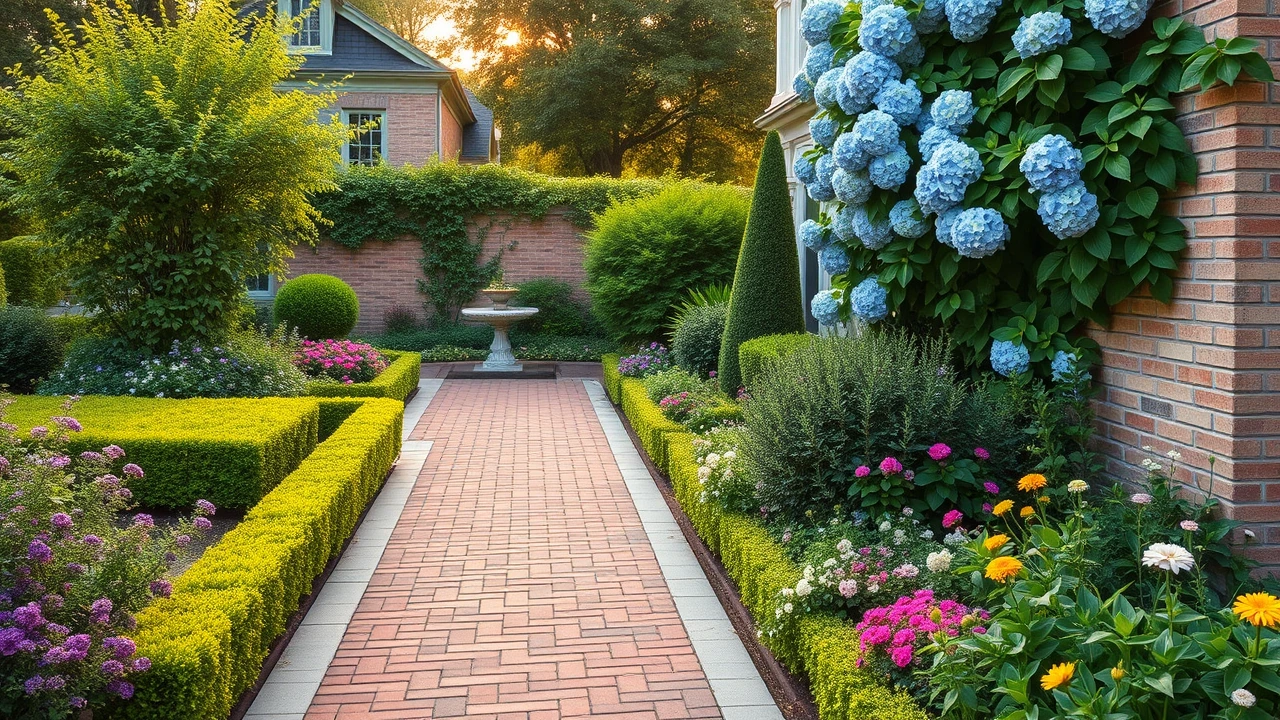
Niagara-on-the-Lake sits where the Niagara River meets Lake Ontario, and the landscapes here carry weight. Old Town is a designated heritage district with strict by-laws on what you can build at the curb. Virgil and St. Davids run into vineyard estate country. Queenston and the river bench drop toward bluffs and protected view corridors. Glendale stretches west toward newer estate builds. Every postal code in NOTL asks something different of a landscape, and we've been building across all of them since 2008.
What we build in Niagara-on-the-Lake
NOTL properties sit at the premium end of Ontario residential landscape work. Lot sizes range from compact Old Town heritage courtyards to multi-acre vineyard estates along the Niagara River Parkway, and the design vocabulary shifts accordingly. What stays constant is the level of finish the town expects.
- Heritage-home landscape restoration. Period-appropriate front gardens, hand-laid brick walks, restored picket and wrought-iron boundary treatments, and ornamental beds matched to the era of the home. Most Old Town builds start with a heritage permit conversation before a single shovel goes in the ground.
- Vineyard estate landscaping. Entrance allées, terraced garden levels stepping down toward the vines, ipe and cedar pergolas, integrated outdoor kitchens sized for hosting, and lawn-to-grape transition planting.
- Riverfront and lakefront builds. Erosion-resistant slope planting, view-corridor preservation, wind-tolerant species selection, and patio placement that respects setback rules along the Parkway.
- Dry-stone walls. Hand-laid limestone and Wiarton flagstone retaining walls and freestanding boundary walls. No mortar, no rebar, built to the same craft tradition the heritage district was designated to protect.
- Period-appropriate ornamental gardens. Boxwood parterre, peony and rose borders, espaliered fruit, climbing hydrangea on heritage masonry, and pollinator beds composed of species documented in 19th-century Niagara horticulture.
- Estate patios in European limestone. Travertine, Indiana limestone, and bluestone in large-format slabs, sealed and crowned for the freeze-thaw cycle. Most NOTL clients ask for permeable joints and integrated lighting from the design stage.
- Outdoor entertaining spaces for B&B and short-term rental owners. Guest-facing courtyards, screened dining areas, secondary fire features, and durable finishes built for high-turnover traffic without looking commercial.
Neighbourhoods we serve
- Old Town heritage district. The streets around Queen, King, Picton, and Johnson. Tight lots, strict by-laws, and a public realm that demands a curb appeal worthy of the town's reputation.
- Virgil. Larger lots, more contemporary homes, and clients who want a polished private landscape without the heritage paperwork that comes with Old Town.
- St. Davids. Vineyard country, escarpment views, and a mix of estate builds and working winery properties. Most projects here involve some grade and some stone.
- Queenston. The river bench above the Niagara River, with bluff exposure, mature canopy, and strict view-corridor expectations on Parkway-facing lots.
- Glendale. Newer estate construction toward the QEW. Larger building envelopes, more room for full pool-and-pergola programmes, and a younger demographic asking for modern hardscape.
- Niagara River Parkway corridor. Some of the most photographed driveway frontage in Ontario. Design here is as much about restraint as it is about planting.
- Around the Shaw Festival area. Walk-to-theatre properties, many of them historic, many of them part-time residences or rentals. Low-maintenance heritage planting wins here.
Heritage District considerations
If your property is inside the Old Town heritage conservation district, or is individually designated under the Ontario Heritage Act, your landscape is regulated. Most homeowners learn this the first time they try to swap a fence. We build with the by-laws in mind from the first site visit.
- Designated properties. Designation can apply to the whole property, not just the building. Any change visible from the public right of way, including front walks, fences, gates, and large planting beds, may need approval.
- Fencing constraints. Material, height, and street-facing detail are all reviewable. We default to traditional picket, board-on-board cedar, or wrought iron in heritage zones, sized to the by-law before drawings go in.
- Period-appropriate plant selection. The heritage committee tends to push back on anything that reads as a 1990s subdivision palette. We specify species and cultivars consistent with the home's era, which usually means more boxwood, hydrangea, peony, roses, and lilac, and fewer big-box ornamental grasses.
- Working with the LACAC heritage committee. The Municipal Heritage Committee (LACAC) reviews applications affecting designated properties. We're comfortable preparing the landscape package that goes in with your permit and attending the review on your behalf if useful.
- Materials that read right. Hand-laid brick on sand, real flagstone, dry-stone retaining, and natural cedar. Stamped concrete is almost never the answer in Old Town, regardless of budget.
Vineyard and estate landscape design
The vineyard belt running through St. Davids, the Niagara Parkway, and the rural concessions south of Old Town has reshaped what NOTL clients ask for. The brief is usually some version of 'Tuscany without losing Niagara,' and the design language has settled into a recognisable wine-country aesthetic.
The bones are stone and timber. Ipe pergolas weather to a silver that sits well next to limestone. Terraced garden levels handle the grade between the house and the vines without bulldozing the slope flat. Integrated outdoor kitchens are sized for hosting twelve, not four, because most of these homes do a season of tastings, dinners, or rental nights. Lighting runs warm and low. Lawn ends in a defined edge of crushed limestone or steel before it meets the planting and the vines beyond.
Niagara River and lakefront properties
Waterfront lots in NOTL look easy and aren't. The river side of the Parkway runs along a bluff that is actively eroding in places. Lakefront lots near the river mouth take northwesterly wind off Lake Ontario for nine months of the year. Both ask more of the planting plan than a typical inland property.
- Erosion-resistant planting. Deep-rooted native species on slopes, including sumac, dogwood, ninebark, switchgrass, and little bluestem. We avoid lawn on any pitched ground above six percent.
- View-corridor preservation. Trees are limbed up rather than removed. Sightlines from the principal rooms and primary patio are designed in, not discovered later.
- Wind exposure. Lakefront and river-edge planting needs species rated for zone 6b exposure, not the warmer microclimate of inland NOTL. We over-spec rootball size on every windward tree.
- Setback and conservation rules. The Niagara Peninsula Conservation Authority regulates work near the river bank.
Climate and soil
Niagara-on-the-Lake has the mildest climate in Ontario. The combination of Lake Ontario to the north, the Niagara escarpment to the south, and the river running between them creates a microclimate that hits zone 7a in protected pockets and gives the region the longest growing season in the province.
Why NOTL homeowners choose Peace Love Landscaping
- Premium hardscape expertise. Dry-stone, large-format limestone, ipe and cedar carpentry, and lighting integrated from the design stage rather than bolted on.
- ICPI-certified installation. Interlocking Concrete Pavement Institute certified crews on every paver and slab job. Base depth, bedding, and edge restraint are not negotiable.
- Since 2008. Almost two decades of builds across the Niagara region, including heritage lots, vineyard estates, and river-edge properties.
- Heritage-fluent. We speak the language of the by-laws, the committee, and the period detailing. You won't lose six months to a rejected fence permit.
- One point of contact. Faz runs every NOTL project personally from quote through final walkthrough.
- Anonymous but accountable. We don't plaster the owner's name on a billboard. We do stand behind the work.
Frequently asked questions
Do I need a heritage permit for my landscape project in NOTL?
If your property is individually designated under the Ontario Heritage Act, or sits inside the Old Town heritage conservation district, any exterior change visible from the public right of way is potentially reviewable. That includes front walks, fences, gates, retaining walls, and significant front-yard planting changes. We screen this on the first site visit and prepare the heritage submission as part of the design package when it's needed.
What does a premium hardscape build cost in Niagara-on-the-Lake?
NOTL projects sit toward the higher end of our range because the material specification is higher. A modest heritage front walkway in hand-laid clay brick typically lands in the mid five figures once base, edging, and planting are included. A full estate program with large-format limestone patio, ipe pergola, outdoor kitchen, and integrated lighting routinely runs into the low to mid six figures.
I run a B&B or short-term rental. What should I prioritise in the landscape?
Three things. Durability of the high-traffic surfaces, because guest turnover is hard on a finish. A clear guest-facing outdoor space that photographs well for your listing without looking staged. And a maintenance plan that doesn't depend on you being there every week.
My property backs onto the river and the bank is eroding. Can you stabilise it?
Often yes, with the caveat that work close to the river bank is regulated by the Niagara Peninsula Conservation Authority. The right approach is rarely a hard wall. It's usually a combination of regrading, deep-rooted native planting, and selective stone toe protection at the base of the slope.
When should I book a NOTL project to get spring or summer completion?
Earlier than most clients expect. Our NOTL book typically fills six to nine months ahead for spring starts, and the heritage permit process can add two to four months on top of that for Old Town designated properties.
Will you work on my property without putting your name and signage all over it?
Yes. Many of our NOTL clients prefer a quiet build. We don't lawn-sign properties, and we're happy to keep crew vehicles unmarked on request.