
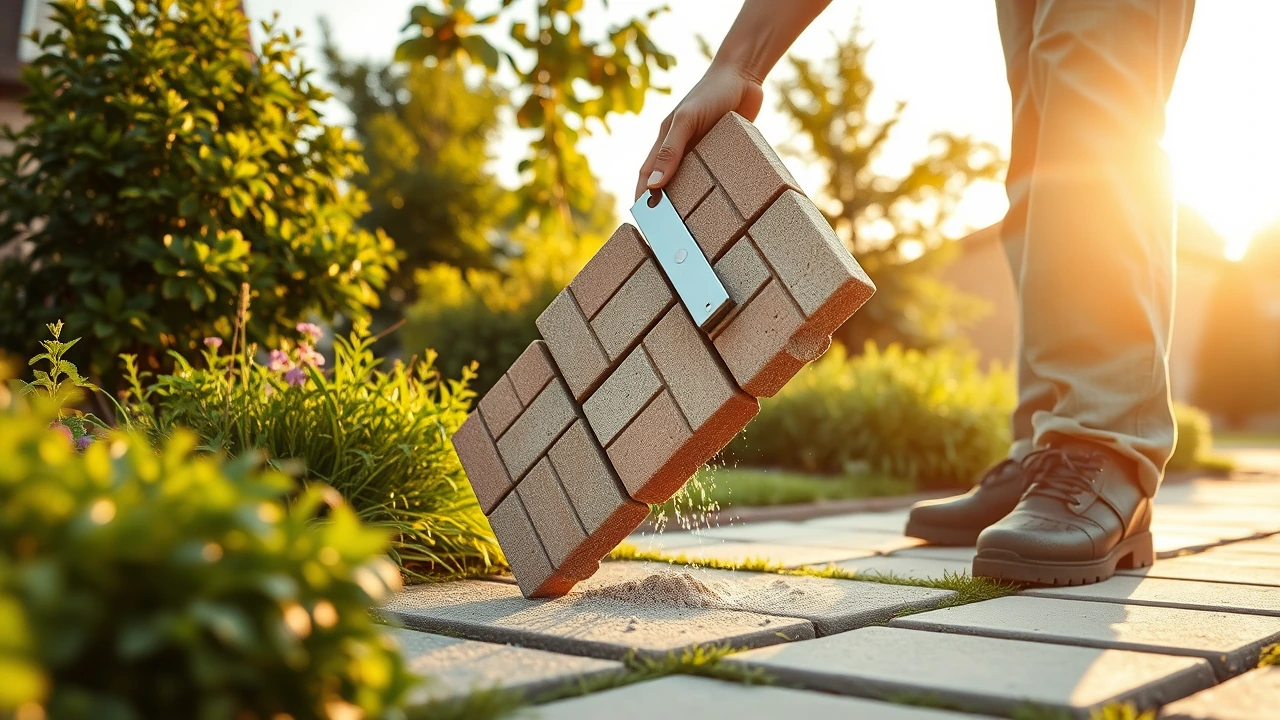
A sinking paver patio is one of the most common and most fixable landscape issues. If you catch it early and the cause is local, you can fix it yourself in a couple of hours. If it is spreading or repeating, it is a base-level problem and needs different attention.
Diagnose what is actually sinking
Stand back and look at the whole patio. Three patterns:
1. Single local low spot (1 to 4 pavers). Usually caused by a void under the bedding sand (from settling, an old animal burrow, or a poorly compacted area). Pure DIY fix.
2. A whole edge has dropped (multiple pavers along the perimeter). Usually caused by the edge restraint failing or the perimeter base eroding. Moderate DIY; some need a pro.
3. A large area is sinking (5+ pavers, especially in the middle of the field). The base itself is failing, either from insufficient depth, lack of compaction, or water erosion. Pro job; the patio needs to be lifted, the base rebuilt, and the pavers re-laid.
DIY step-by-step (for small local sinks)
Tools and materials needed: rubber mallet, two flat screwdrivers (or a proper paver-lifting tool), level (a 4-foot is ideal), bag of clean concrete bedding sand (NOT polymeric sand), bag of polymeric sand for re-jointing, garden hose with mister setting.
Step 1: Remove the joint sand. Use a screwdriver or thin tool to scrape out the polymeric sand from the joints around the pavers you need to lift. You only need to clear about 20 mm down so the pavers can be lifted.
Step 2: Lift the pavers. Use a paver-lifting tool if you have one, or two flat-blade screwdrivers as pry points on opposite sides. Tap the wedges in gently, then lever the paver up. Set the removed pavers aside in order.
Step 3: Inspect the base. Look at what is underneath. If you see clean bedding sand, the issue is just compaction. If you see soil and very little sand (the bedding has migrated), the geotextile may have failed. If the base feels soft or hollow when you press on it, that is a pro problem.
Step 4: Re-bed. Add clean bedding sand (concrete sand, not polymeric) to bring the low spot back to level. Use the surrounding pavers as your reference. Add a few mm extra; you want a slight crown that compresses when you set the paver back.
Step 5: Re-set the pavers. Lay them back in the original order and orientation. Tap them down with a rubber mallet until they sit flush with the surrounding patio. Check with the level.
Step 6: Re-joint. Sweep new polymeric sand into the joints. Use a soft broom to work it down. When the joints are full, lightly mist with water to activate the polymer. Wait 24 hours before walking on it.
When DIY will not work
Three signs the patio needs professional attention:
Repeated sinking in the same spot. You fix it, it sinks again in six months. The underlying cause (drainage, base failure, soil movement) needs to be addressed.
Sinking is spreading. Small dip last summer is now affecting 10 pavers. The base is failing across a larger area.
Sinking is happening near a structure or foundation. Drainage may be undermining adjacent construction. Get it looked at before it gets worse.
What does a pro repair cost?
Spot re-set (1 to 6 pavers): $500-$1,500. Most pros carry a minimum visit charge.
Relevel a larger settled area over a firm base: $6-$14 per square foot, reusing the same pavers.
Section rebuild (lift, rebuild base, re-lay): $18-$32 per square foot, close to a fresh install rate.
Full patio lift, re-base and relay: $18-$32 per square foot with the original pavers, or $26-$48 for a full tear-out with new pavers. Often makes sense if more than 30% of the patio is showing failure; redoing the whole thing once is cheaper than spot-fixing it three times.
Frequently asked questions
Why is my paver patio sinking?
Almost always one of three reasons. Insufficient or poorly compacted base under the bedding sand. Water erosion of the base (often from a downspout draining onto or under the patio). Original installation skipped the geotextile, allowing base material to migrate into the subgrade soil.
Can I just sweep sand into the gaps without lifting the pavers?
If the issue is just joint-sand loss (joints look low, weeds growing), yes; a re-sand without lifting is the right fix. If the pavers themselves are below level, no; you have to lift them to add bedding sand underneath.
What kind of sand do I use under pavers?
Concrete sand (also called bedding sand or coarse sand). NOT polymeric sand (that is for the joints between pavers, not under them). NOT play sand (too fine, will compact unevenly).
Should I use polymeric sand to fill the gaps?
Yes, between the pavers (the joint sand) should be polymeric. It activates with water and sets to lock the pavers together. Use regular polymeric sand from any landscape supplier.
Is a sinking patio a sign I need to replace it?
Not usually. Most sinking patios can be fixed in-place by lifting, re-bedding and re-setting. Only when the base itself has failed across a large area, or the original install was so poor that piecemeal fixes keep failing, does full replacement make sense.
- Paver sealing & restoration (service)
- Interlocking patios & driveways (service)
- How long does an interlocking patio last?
Sources and further reading
- Interlocking Concrete Pavement Institute (ICPI) for paver industry standards, base-prep specifications and installer certification.
- Landscape Ontario for Ontario industry standards, member directories and consumer resources.
- Belgard, Techo-Bloc, Unilock and Permacon for paver product specifications and warranty information.
- Peace Love Landscaping installer experience across hundreds of projects in Hamilton-Wentworth, Halton and Niagara, 2008-2026.
Want the full diagnostic walk-through? Read our diagnostic walk-through: match symptoms to root causes with DIY-fix steps and realistic pro-repair cost ranges.
More than a few pavers? See what a relevel or full relay costs in Hamilton, Burlington and Oakville.