
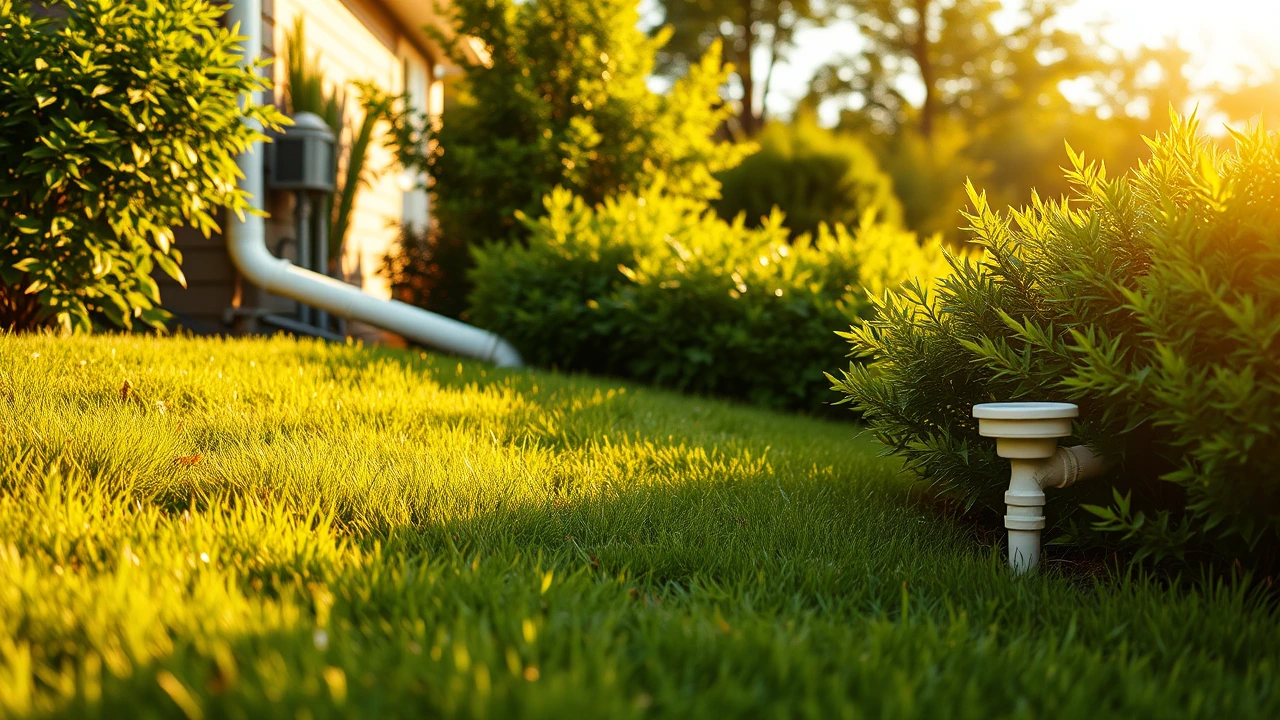
Most yard drainage problems are easy to diagnose if you know what to look for. The damage they cause if ignored - foundation cracking, basement water, sinking patios - is much harder to fix than the original drainage issue. Here are the five field tests that catch most problems.
What you will need
- A clear day, ideally 24-48 hours after a significant rainfall
- Garden hose for controlled water tests
- Phone with camera (document what you find)
- Notebook or notes app
The five tests
Step 1: The post-rain foundation walk. After a significant rainfall, wait 4 to 6 hours, then walk the full perimeter of your home's foundation. You are looking for three things: visible water still pooling within 1 metre of the foundation, soft or muddy soil that gives under your weight, and any visible water staining on the foundation wall above ground. Photograph anything you find. Any of these three is a sign that water is sitting against the foundation rather than flowing away.
Step 2: The downspout extension check. Stand at each downspout. Where does the water exit? It should exit at least 2 metres from the foundation, ideally onto a downspout extension or splash block that delivers water to grade where the lot slopes away from the house. If a downspout discharges within 30 cm of the foundation, the equivalent of an entire roof's worth of water is being dumped against the basement wall every rain. This is the single most common drainage problem we see.
Step 3: The lawn squelch test. 24 to 48 hours after a heavy rain, walk the lawn. Note any patches where water still squelches under foot or where the grass is visibly more saturated than surrounding areas. Mark these on a sketch. These low spots indicate poor surface drainage and often correlate with underground water collection. In severe cases, you may see standing water 48 hours after the rain has stopped.
Step 4: The grade slope inspection. Walk away from each side of the house and observe the slope. Proper lot grading drops 15 cm in the first 3 metres from the foundation in all directions; you should be able to see this drop with the naked eye. A flat lawn near the foundation, or worse, a lawn that slopes toward the foundation, is a recipe for chronic basement water. Photograph any sections that look flat or backward-sloped.
Step 5: The basement audit. Go to your basement on the day after a significant rain. Look for: visible water marks on the foundation walls, especially around windows and at the wall-floor joint; powdery white deposits (efflorescence) which indicate water has been moving through the concrete; musty smell; visibly damp patches on the floor; humidity that feels noticeably higher than the rest of the house. These are signals that water is entering, even in small amounts. Catch this early.
What each problem typically means
| Symptom | Likely cause | Typical fix range (CAD) |
|---|---|---|
| Water pooling at foundation | Grade too flat or sloped wrong direction | $3,000-$8,000 to regrade |
| Downspout dumping at foundation | Missing or too-short downspout extension | $50-$400 DIY or pro |
| Soggy lawn patches 24+ hours after rain | Low spot, poor sub-surface drainage | $1,500-$5,000 French drain or swale |
| Efflorescence in basement | Foundation wall is wet from outside | $5,000-$20,000+ (waterproofing) |
| Sinking pavers near downspout | Concentrated water erosion under patio base | $300-$2,000 to repair |
| Basement humidity rises after rain | Slow water ingress (often joints, cracks) | $500-$5,000 depending on source |
The cheapest fixes (try these first)
Extend downspouts. A $20 plastic extension and 10 minutes of work has saved more Ontario basements than any other single fix.
Clean and re-direct. Cleared gutters + downspout extensions to grade solve probably 40% of the residential basement-water problems we see.
Address obvious surface low spots. A small swale (gentle ditch) to redirect surface water is a half-day landscaping project that solves visible pooling.
When to call a pro (do not delay)
- Water actively entering the basement
- Visible foundation cracks growing over time (mark them and re-check after the next rain)
- Standing water 48+ hours after rain in multiple locations
- Sinking ground near the foundation (could indicate buried drain failure)
- Recurring patio sinks despite repair (base failure from concentrated water)
Frequently asked questions
How often should I check my drainage?
Twice a year minimum: spring (after snowmelt) and fall (after the first significant fall rain). More frequently in the first 1-2 years after any major landscape work, when the grading is still settling.
My basement is dry. Do I still need to worry about drainage?
Yes. A dry basement today is a great starting point, but Ontario's freeze-thaw cycling slowly degrades drainage over years. The cheap preventive measures (downspout extensions, gutter cleaning) take an hour total and prevent expensive future problems.
Are French drains always the answer?
No. French drains are great for chronic low spots and behind retaining walls. For surface water on a flat lot, regrading is often the better fix. For downspout problems, just extending the downspout is usually enough. We diagnose before recommending a specific solution.
What if my neighbour's drainage is the problem?
Common in older Ontario neighbourhoods where lots slope unevenly. Sometimes the fix is on your side (a swale or berm at the property line). Sometimes the neighbour has to redirect their downspouts. We have helped negotiate these conversations many times.
How long does proper drainage work take to install?
Most residential drainage fixes are 1 to 5 working days. Major regrading with multiple drains can run 2 to 3 weeks. The disruption to your yard is real but the lifelong benefit to your home is much larger.
If anything from the tests rang true
- Grading & drainage service
- How to prepare your yard for winter
- Landscaping cost guide
- Retaining wall cost guide
Found a problem? See what drainage and grading work costs in Ontario so you know what a fair quote looks like before you call anyone.