
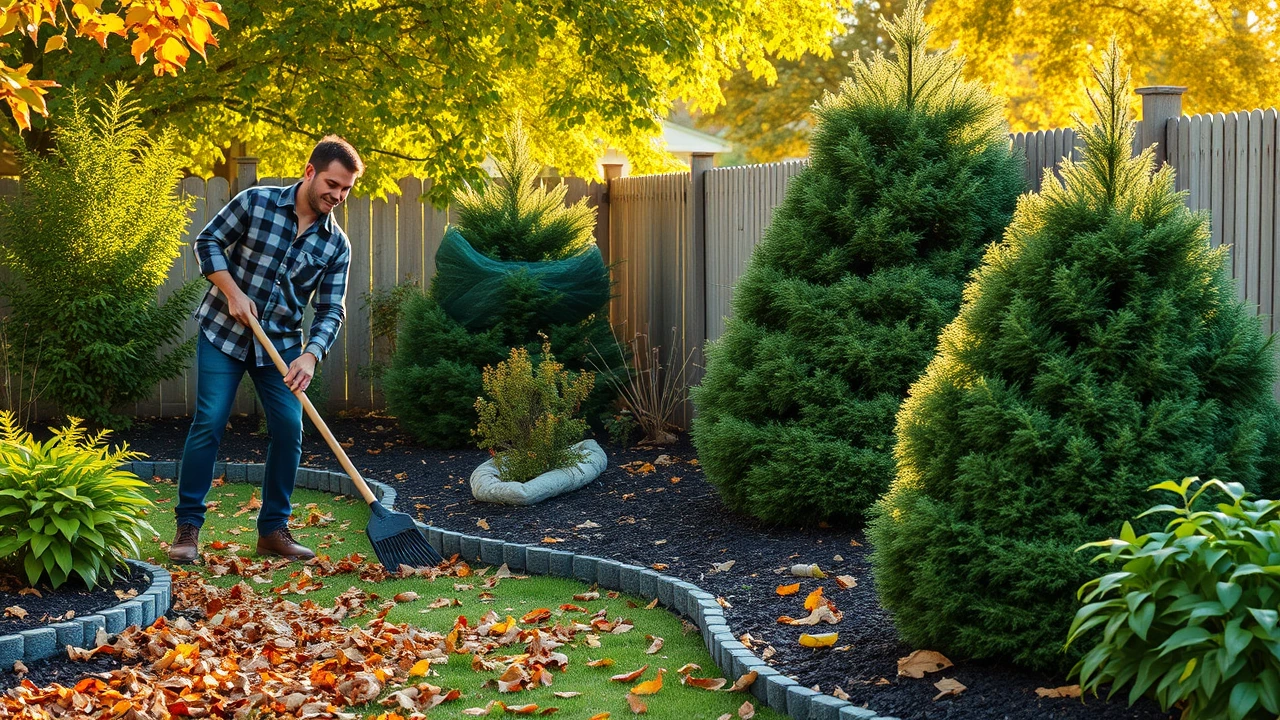
Ontario winters are not kind to yards that were not prepared. A focused afternoon in late October or early November saves a much harder spring cleanup and prevents the freeze-thaw damage that ruins poorly-prepped landscapes.
The fall yard checklist
Step 1: Clean and inspect the patio. Sweep the patio thoroughly, then rinse with the garden hose. Look for joints that need a polymeric sand top-up and address them now (polymeric sand will not activate properly once temperatures drop below 4 C). Inspect for individual pavers that have shifted; lifting and re-setting them is much easier when the ground is not frozen. Check that the patio drains away from the house cleanly.
Step 2: Drain and shut down irrigation systems. If you have an in-ground irrigation system, schedule a professional blowout (compressed-air drainage) before the first hard freeze. Water left in the lines expands when it freezes and cracks the PVC. Drain backflow preventers and shut off the dedicated supply valve. Most Ontario homeowners book this in mid-to-late October.
Step 3: Top up mulch on garden beds. A 5 to 7 cm layer of shredded bark mulch on garden beds insulates root systems, conserves moisture and protects against the freeze-thaw cycling that heaves shallow-rooted plants out of the ground. Top up beds that look thin. Avoid piling mulch against woody stems or tree trunks (creates rot conditions).
Step 4: Protect vulnerable plants. Wrap young trees and tender shrubs (recently planted, evergreens on south-facing exposed sites) with burlap or commercial tree wrap to prevent sun-scald and wind desiccation. Cedars in exposed positions benefit from a burlap windscreen. Roses and other dieback-prone perennials get a thicker mulch mound at the base.
Step 5: Clear all gutters and downspouts. Backed-up gutters cause ice dams in winter and dump concentrated water directly into the soil next to the foundation. Clear leaves, check that downspouts extend at least 2 m from the foundation, and ensure they drain to grade rather than into a sunken bed. This step prevents more spring-water-in-basement problems than any other.
Step 6: Mark hardscape edges for snow plows. If you have a contracted snow plow service, place reflective markers at the corners of your driveway, walkways and patio edges where the plow operates. Plows scraping over paver edges destroy the pavers; markers prevent this. We sell or supply these markers as part of our seasonal contracts.
Step 7: Book snow removal before the first snowfall. Wait until the snow has fallen and you will pay premium for a same-week start. Book in October or early November to lock in seasonal contract pricing. Most reliable residential providers fill their books by mid-November.
Step 8: Final lawn care. Mow the lawn to a slightly shorter final cut (5 to 6 cm) in late October. Apply a winter fertilizer if your lawn care routine includes it. Rake up persistent leaf cover; mat-down on grass over winter creates dead patches in spring.
What NOT to do in fall
- Hard pruning of most shrubs and trees. Most ornamental shrubs prefer late-winter or early-spring pruning. Fall pruning stimulates tender new growth that gets damaged by the first freeze.
- Aggressive raking that damages the lawn. Heavy raking pulls grass crowns; light raking or mowing in fallen leaves to mulch them is gentler.
- Late planting (most species). Planting trees and shrubs after mid-October in our zone gives roots insufficient time to establish before frost. Hardy spring-flowering bulbs are the exception.
- Skipping the irrigation blowout. A cracked PVC line is a $1,500-$3,000 spring repair. The blowout is $150-$250.
- Putting away the snow shovel. First snowfall in Ontario can be late October or early December; do not pack it deep into the garage.
Frequently asked questions
When is the right time to do all of this?
Mid-October through early November in the Hamilton/Halton/Niagara region. The trigger is the forecast for the first hard freeze (sustained nighttime temperatures of -5 C or colder); finish the checklist 1-2 weeks before that. If you wait until you can see your breath outside in the morning, it is already getting tight.
Can I do all this myself or do I need a pro?
Most homeowners can do all of it themselves except the irrigation blowout (which requires a compressor and shut-off valve knowledge) and snow removal contracting. Allocate a focused weekend and you can knock it out.
What about my interlocking patio specifically?
Three things matter for the patio: a thorough fall clean, addressing any sunken pavers before the ground freezes, and using sodium-chloride rock salt or sand (not calcium chloride) for traction over the winter. See our patio maintenance guide for the full year-round routine.
How do I know if my drainage is set up right for winter?
Walk the perimeter of your foundation during a heavy fall rain. Water should be flowing away from the foundation in all directions. If you see pooling against the foundation or near downspouts, that water will freeze into ice dams in winter. Drainage and grading work in the fall prevents winter basement issues.
Do snow removal contracts cover everything I need?
Standard residential snow contracts cover driveway clearing and salting per snowfall trigger. Add-ons like walkway clearing, ice management, and emergency service vary by provider. Read the contract before signing.
If the list feels overwhelming
- Snow removal service
- Grading & drainage service
- How to maintain an interlocking patio
- Best time of year to install a patio
Related reading
Need the November-specific list? Read the maintenance-timing guide with month-by-month tasks for Hamilton, Halton and Niagara yards.