
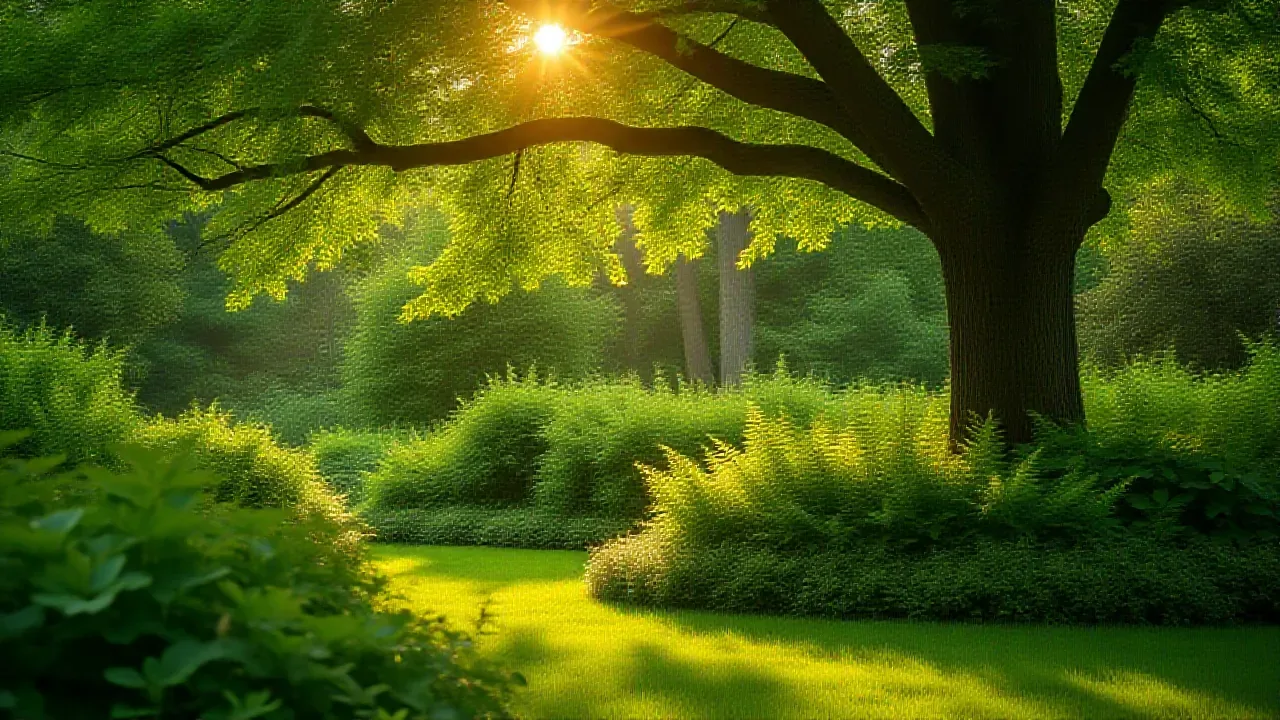
A north-facing yard, deep shade from mature trees, the dim corner behind the garage. Shade gardens have a reputation for being limited but the right plant palette turns them into the lushest part of the property. Here is what actually thrives.
The shade tier system
Not all shade is the same. Three categories matter:
Part shade: 2 to 4 hours of direct sun, mostly in morning. Widest plant palette available.
Dappled shade: sunlight filtered through tree canopy all day. Most Ontario yards under mature trees fall here.
Deep shade: no direct sun, often dim even at noon. Limited but still real plant options.
The reliable picks (every shade level)
Hosta
The shade-garden default. Pick by leaf size: 'Patriot' (medium variegated), 'Sum and Substance' (giant chartreuse), 'Halcyon' (blue-grey small). Tolerates Ontario clay. The only real enemies are slugs and deer.
Hellebore (Lenten rose)
The earliest bloomer in the shade garden, often pushing through snow. Leathery evergreen foliage year-round. Tolerates both moist and dry shade once established. Plant in groups of 3 or 5.
Astilbe
Feathery summer plumes in pink, white, red. Needs consistent moisture; struggles in dry shade. Pair with hostas and ferns in moist-shade beds.
Heuchera (Coral bells)
Foliage in burgundy, lime, peach, near-black. The colour anchor of any shade bed. 'Caramel', 'Forever Purple', 'Lime Marmalade' are workhorses. Year-round structure.
Brunnera (False forget-me-not)
Silver-veined heart-shaped foliage with blue spring flowers. 'Jack Frost' is the silver-leaved variety we plant most often. Light up shady corners.
Ferns
Ostrich fern (tall, classic, spreads), Christmas fern (evergreen, ostrich-like in summer), Japanese painted fern (silver-purple, smaller), maidenhair fern (delicate, refined). Match the fern to the bed scale.
For dry shade specifically
Dry shade is the hardest condition in any Ontario garden - usually under mature deciduous trees where roots monopolise the water. These survive it:
Epimedium (Barrenwort): low-growing groundcover with delicate spring flowers and bronze-tinted leaves.
Lungwort (Pulmonaria): silver-spotted foliage and early-spring blue/pink flowers. Tolerates Ontario clay.
Periwinkle (Vinca minor): the classic dry-shade groundcover with small blue flowers. Aggressive but effective.
Ostrich fern: surprisingly drought-tolerant once established.
European wild ginger (Asarum europaeum): glossy heart-shaped evergreen leaves, slow to spread.
For deep shade
The hardest condition. Limited but real:
Sweet woodruff (Galium odoratum): low groundcover with starry white spring flowers, vanilla scent when crushed. Spreads.
Wild ginger (Asarum canadense): native heart-shaped foliage, slow groundcover.
Hellebore: tolerates deep shade better than most expect.
Ostrich fern: if there is any moisture at all.
Layering a shade bed
The classic Ontario shade bed has three layers. Canopy: existing mature trees provide the shade. Mid-height: hostas, ferns, astilbe form the bulk. Groundcover: hellebore, brunnera, sweet woodruff between the mid-height plants. Layer mulch (3 to 5 cm) between everything.
Frequently asked questions
Can I grow flowers in shade or just foliage?
Both. Most shade plants flower (astilbe, hellebore, brunnera, lungwort, even some hostas) but the foliage is usually the bigger visual contribution. Lean into texture and leaf colour rather than expecting full-sun bloom volume.
What about ground cover for under trees where grass won't grow?
Periwinkle (vinca minor) is the classic. Pachysandra, ajuga, and creeping Jenny also work. Sweet woodruff if it's not too dry. Stop fighting the grass; replace it with proper shade groundcover.
Do hostas really come back every year?
Yes. Hostas are extremely cold-hardy and live for decades. They die back to the ground each fall and return as 'eyes' in spring. Mature hostas can be divided every 4 to 5 years to make more plants.
How do I keep slugs off hostas?
Three options: copper-tape barriers around the crowns, beer traps (small saucers with beer attract and drown them), or iron-phosphate slug bait (pet-safe). Worst slug damage is in wet springs; severe cases can require all three.
What about coloured foliage in shade?
Heuchera in burgundy, lime, caramel; hakonechloa 'All Gold' for chartreuse; hosta 'Sum and Substance' for chartreuse; brunnera 'Jack Frost' for silver; Japanese painted fern for silver-purple. Endless palette.
- Garden building & planting service
- Best perennials for Ontario gardens
- How to plant in Ontario clay soil
Designed shade beds (specific plant combinations)
The classic moist-shade bed (under mature trees with regular rainfall)
The most common Ontario shade situation. Plant in layers: hosta 'Sum and Substance' (giant chartreuse, 1 m wide) as the structural backbone. Japanese painted fern grouped at the front for silver-purple contrast. Astilbe in the middle for July plumes. Brunnera 'Jack Frost' for silver heart-shaped leaves. Hellebore at the front for the earliest spring bloom. The bed has interest from March through October.
The dry-shade survivor bed
For the hardest situation (under mature maples or other thirsty trees): Epimedium as groundcover (low, delicate spring flowers). European wild ginger for glossy evergreen heart leaves. Lungwort 'Mrs Moon' for silver-spotted leaves and early spring blue/pink flowers. Ostrich fern at the back (surprisingly drought-tolerant). Heuchera 'Caramel' for foliage colour contrast.
The contemporary shade bed
For modern homes: Hakonechloa 'All Gold' (chartreuse Japanese forest grass) drifting through. Heuchera 'Forever Purple' for dark colour. Brunnera 'Jack Frost' for silver. A single specimen Japanese maple 'Bloodgood' for canopy presence. Clean, restrained, year-round visual interest.
The pollinator-friendly shade bed
Shade gardens get fewer pollinators than sun gardens, but you can support them: Bleeding heart (spring nectar). Wild columbine (hummingbird-friendly). Foxglove 'Camelot' (bumblebee magnet, biennial). Native woodland phlox for early-spring nectar. Anchor with hostas and ferns.
Light levels: how to actually measure them
Most homeowners overestimate how shady their yard is. Real measurement: pick a sunny week and visit the spot at 9 AM, noon, and 4 PM. Note when the sun is on the spot. Total morning sun + late afternoon shade often equals "part shade" - much more sun-tolerant plants will thrive than you might think.
Less than 1 hour direct sun: deep shade plants only (hostas, ferns, hellebore).
1 to 3 hours morning sun: dappled to part shade - most shade plants thrive.
3 to 5 hours morning sun: full part-shade range - widest plant palette.
3 to 5 hours afternoon sun: tough - afternoon sun is harsher. Stick to part-sun plants (heuchera, daylily, peony).
Spring, summer, fall interest in the shade bed
The mistake most homeowners make is choosing all summer-bloomers. A great shade bed has interest across seasons:
Early spring (March-April): hellebore in bloom, brunnera and lungwort breaking dormancy with new silver-spotted leaves, fern fiddleheads emerging.
Late spring (May): bleeding heart, columbine, woodland phlox, brunnera flowering blue.
Summer (June-August): hostas in full majestic foliage, astilbe blooms, hydrangea (panicle or oakleaf in shade), heuchera flowering.
Fall (September-October): Japanese anemone (one of the few shade bloomers in fall), grasses with seasonal interest, hellebore leaves still looking fresh.
Winter (November-March): evergreen plants come into their own. Hellebore foliage, Christmas fern, heuchera, periwinkle.
Common shade-bed mistakes
- Choosing plants that need more sun than you have. The most common reason a shade bed underperforms. When in doubt, pick the plant rated for one shade-level deeper than you think.
- Spacing too tight. Hostas in particular need room - a mature 'Sum and Substance' is 1.5 m wide. Plant for mature size, not for the cute small plant you bought.
- Ignoring soil moisture. Most shade plants prefer consistent moisture. Dry-shade gardens need different plant choices than moist-shade gardens. Test by checking the soil 10 cm deep after a dry week.
- Too many bloom-focused plants. Shade gardens are foliage-driven. Aim for 70% foliage interest, 30% bloom-focused.
- Forgetting the small details. The little plants - wild ginger, sweet woodruff, epimedium - are what make a shade bed feel finished rather than just functional.
More questions, answered
Will hostas really come back if deer eat them?
Yes, hostas regrow from the roots even when deer eat all the leaves down to ground level. The plant is set back for that year but returns the following spring. Repeated deer damage will eventually weaken the plant; protect young hostas with deer-resistant alternatives nearby or temporary fencing.
My shade bed has tree roots near the surface. What works?
Plant in the gaps between tree roots, not on top of them. Use small starter plants. Add 5 cm of compost on top before planting to give roots somewhere to grow. Epimedium, periwinkle, and wild ginger handle root competition particularly well.
Can I have a lawn in shade?
Limited. Fine fescue lawn mixes tolerate part shade better than Kentucky bluegrass. But under heavy shade, replace lawn with shade groundcover (periwinkle, pachysandra, ajuga). Stop fighting nature.
How do I add colour to a shade garden?
Coloured-foliage plants more than flowers. Heuchera in burgundy, lime, near-black; hosta in chartreuse, blue-grey, gold; Japanese painted fern in silver-purple. The colour is from leaves, not blooms, and lasts the entire season.