
Privacy from neighbours is one of the most common reasons homeowners plant. The right choice depends on how fast you need it, how tall you need it, whether you want evergreen year-round screen, and how much space you have. Here is the honest field guide.
The fast track (3 to 6 metres tall in 5 to 10 years)
Cedar (Thuja occidentalis 'Smaragd' or 'Brandon')
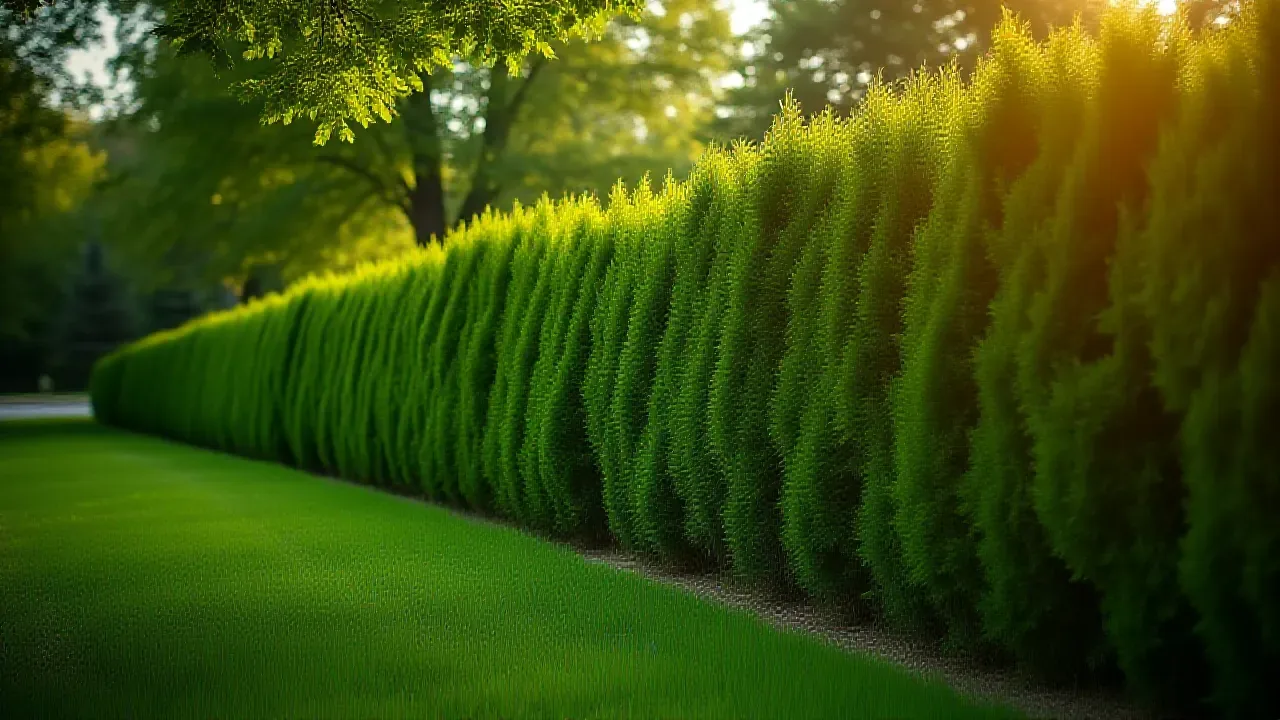
The Ontario privacy default. 'Smaragd' (Emerald) cedar grows 3 to 5 m tall, narrow form, dense foliage year-round, easy to source. Plant 60 to 90 cm apart for a solid screen. Cedars are deer candy in some areas; protect young plants with deer fencing for the first 3 years.
Norway Spruce (Picea abies)
The largest, fastest evergreen we plant. Grows 1+ m per year, eventually 15 to 25 m tall. Use where you have space (don't plant within 3 m of the property line). Wind-tolerant, virtually pest-free.
White Pine (Pinus strobus)
Native Ontario evergreen, soft-needled, grows fast. Eventually large (20+ m). Best for large lots where you want a forest-feel privacy screen rather than a manicured hedge.
The slow but premium picks
Yew (Taxus)
The classic English hedge plant. Slow but extremely long-lived (some yews are 500+ years old). Tolerates heavy shearing, recovers from hard prune. Deer-resistant. Best for formal hedge with a defined shape. 'Hicksii' is the upright variety.
American Holly (Ilex opaca)
Evergreen, glossy, red-berried. Slower growing but reliably hardy in zone 5/6. Female plants need a male nearby for berries. Architecturally striking even out of bloom.
Boxwood (Buxus 'Green Velvet', 'Winter Gem')
Small spaces (up to 1.5 m). Evergreen, formal, takes shaping beautifully. Watch for boxwood blight in humid summers; choose disease-resistant varieties.
Deciduous formal hedges
European Hornbeam (Carpinus betulus)
The European formal-hedge classic. Loses leaves in winter but holds dried bronze leaves until spring (looks like privacy, just lighter). Easy to maintain at any height from 1.5 m to 6 m. Tolerates heavy shearing.
Beech (Fagus sylvatica)
Similar to hornbeam: deciduous but holds bronze leaves through winter. Slower growth, larger eventual size. Pricier to source but stunning at maturity.
What NOT to plant for Ontario privacy
- Leyland Cypress. Common US privacy choice. Not reliably hardy in Ontario zone 5/6, especially exposed sites. Frost damage and dieback are common.
- Italian Cypress. Zone 7+, won't survive.
- Bamboo (running). Aggressive spreader; once established it goes everywhere. Some clumping varieties (Fargesia) are OK but rarely tall enough for real privacy.
- Privet. Used to be common but has become invasive in some Ontario areas. Better deciduous options exist.
- Burning Bush (Euonymus alatus). Invasive in Ontario; avoid for new plantings.
How to plant a privacy hedge
Spacing matters more than people realise. For cedar 'Smaragd': 75 to 90 cm apart on centre. For Norway spruce: 2.5 to 3 m apart. For yew hedge: 60 cm apart. Closer spacing fills in faster but causes long-term competition; the recommended spacing exists for a reason.
Soil prep: dig a trench 60 cm wide and 45 cm deep along the entire hedge line, amend with compost. Plant at the depth they were in the container. Water deeply weekly the first season.
Frequently asked questions
How long until the privacy hedge is actually private?
For cedar 'Smaragd' planted at recommended spacing and 1.5 m starting height: 3 to 5 years to a useful screen, 7 to 10 years to a mature hedge. Norway spruce: similar timeline but eventually much taller. Buying larger starter plants (2 m+) shaves 1 to 2 years off the wait but costs significantly more.
Can I plant the privacy hedge on the property line?
Check local by-laws and talk to your neighbour first. Most Ontario municipalities allow hedges directly on the property line but the maintenance becomes complicated (both sides have to be maintained). Setting back 30 to 60 cm from the line keeps it your hedge.
How tall can my hedge legally be?
Varies by municipality. Most Ontario towns allow hedges up to 2 m on side and rear property lines, up to 1 m in front yards. Hamilton, Burlington, Oakville and Milton all have specific by-laws; check before planting tall.
Are there any privacy plants that grow truly fast?
Hybrid willow grows extremely fast (1.5+ m per year) but only lives 20-30 years and is messy. Norway spruce is the fast evergreen pick. Most fast-growing hedge sales pitches ('Privacy in one season!') are overpromises.
What about a fence with vines instead?
Good combo for small spaces. A 1.8 m wood or vinyl fence with climbing hydrangea, clematis or Boston ivy grown on it gives instant privacy plus seasonal interest. Faster than waiting for a hedge to grow.
- Fence building service
- Garden building & planting service
- Best perennials for Ontario gardens
- How to plan a backyard layout
Privacy scenarios and specific solutions
Scenario 1: urban lot with neighbours 3 metres away
Most challenging because vertical space is limited and you can't plant 3 metres of cedar. Solutions: a 1.8 m wood fence with narrow-form evergreens above the fence top (Sky Pencil holly, 'Smaragd' cedar planted right against the fence). Climbing hydrangea on the fence itself. Total visual screen is fence + 1 m of plant - usually enough for second-storey window privacy too.
Scenario 2: corner lot with two exposed property lines
Combine fencing with mixed planting. Wood fence along one line. Layered cedar hedge along the other (faster growth, more impactful). At the corner where both lines meet, use a specimen tree (Japanese maple, serviceberry) as the anchor - it draws the eye away from the exposed corner.
Scenario 3: rural property with views to be preserved
Often the goal is privacy WITHOUT blocking nice views. Solution: clustered plantings in specific spots (between your patio and the neighbour's house) rather than continuous hedges. A 3-tree grouping of mature Norway spruce or hornbeam blocks the specific sight line while leaving the rest of the view open.
Scenario 4: pool privacy (must comply with pool fencing by-law)
Pool enclosure by-laws require a fence around the pool with self-closing, self-latching gates: at least 1.5 m tall in Hamilton and 1.2 m in Oakville. Use that fence as the base, then plant taller privacy plants (cedar, yew) along the outside of the fence. The fence handles code; the planting handles aesthetics and additional privacy.
Scenario 5: budget-limited solution
If full hedge planting isn't affordable now, start with a basic wood fence + climbing plants. Climbing hydrangea covers a 6 m section of fence in 3 to 5 years and gives stunning summer bloom. Boston ivy is faster (covers a fence in 2 to 3 years). Total cost: fence + a $50 climbing plant. Visual result in year 3 rivals expensive hedge installations.
Deer pressure: what survives
Deer pressure varies across our service area. Hamilton lower city: low. Ancaster, Burlington north, Halton Hills: high. If you have regular deer visits, your plant list narrows significantly.
Deer-resistant privacy plants: Yew (almost completely ignored), boxwood, juniper (some species), Russian sage, ornamental grasses, foxtail lily.
Deer LOVE these (avoid in high-pressure areas): cedar (Thuja) - the #1 favourite, hostas, tulips, daylilies, arborvitae.
Mixed risk: hemlock, spruce, pine (deer browse the new growth in winter).
Maintenance schedule by privacy plant
| Plant | Pruning frequency | When |
|---|---|---|
| Cedar (Thuja) | Once a year | Late spring after new growth flush |
| Yew | Once or twice a year | Spring + late summer |
| Boxwood | 2-3 times a year | Spring, mid-summer, optional fall touch-up |
| Norway spruce | Minimal | Only to control height; mostly hands-off |
| Hornbeam/Beech (deciduous hedge) | Once a year | Late winter, before bud break |
| Gabion or fence | None | Inspect annually for structural integrity |
How fast each plant actually grows in Ontario
From real installations in our region, mature size and timeline for typical Ontario residential planting (1 to 1.5 m starter plants):
Norway spruce: 1+ m per year for first 10 years. Reaches 15 m+ at maturity (40+ years).
Cedar 'Smaragd': 30 to 45 cm per year. Reaches 3 to 5 m at maturity (15 to 20 years).
White pine: 60 to 90 cm per year. Reaches 20 m+ at maturity (30+ years).
Yew (hicksii): 15 to 25 cm per year. Reaches 3 to 4 m at maturity (20+ years).
Hornbeam: 30 to 50 cm per year. Maintained at 1.5 to 6 m depending on pruning.
Boxwood: 10 to 15 cm per year. Reaches 1 to 1.5 m at maturity (15 to 20 years).
More questions, answered
Can I plant a hedge right on the property line?
Legally yes in most Ontario municipalities, but practically it's a maintenance nightmare. Trimming the neighbour's side becomes their responsibility (which may not happen). Setting the hedge 30 to 60 cm back from the property line keeps it entirely your hedge to maintain and care for.
What if my neighbour's tree is on my privacy side?
You have the legal right to prune any branches overhanging your property line, back to the line. You don't have the right to enter their property to prune from the other side, or to damage the tree. For a healthy mature tree on the line, a friendly conversation almost always beats the legal route.
How much does a privacy hedge cost in total?
For 10 metres of mature cedar 'Smaragd' hedge (starter plants 1.5 m tall, planted at proper spacing, installed with soil amendment): roughly $1,800 to $3,200. Norway spruce: similar. Yew: 50% more (slower-growing, more expensive starter plants). Boxwood: similar to cedar but for shorter hedges only.
Will my privacy plants survive heavy winter wind?
Cedars in exposed positions can suffer winter burn (brown patches on south-facing or wind-exposed sides). Wrap young cedars in burlap for the first 2 to 3 winters until established. Yew, spruce and pine handle wind much better. Position matters: don't plant cedars in the windiest spot of your lot if you have alternatives.
Need privacy on a raised deck? See deck privacy wall ideas and costs and how tall a screen can be under local by-laws.
Need privacy faster than a hedge grows? See privacy fence ideas and costs for Ontario yards.