
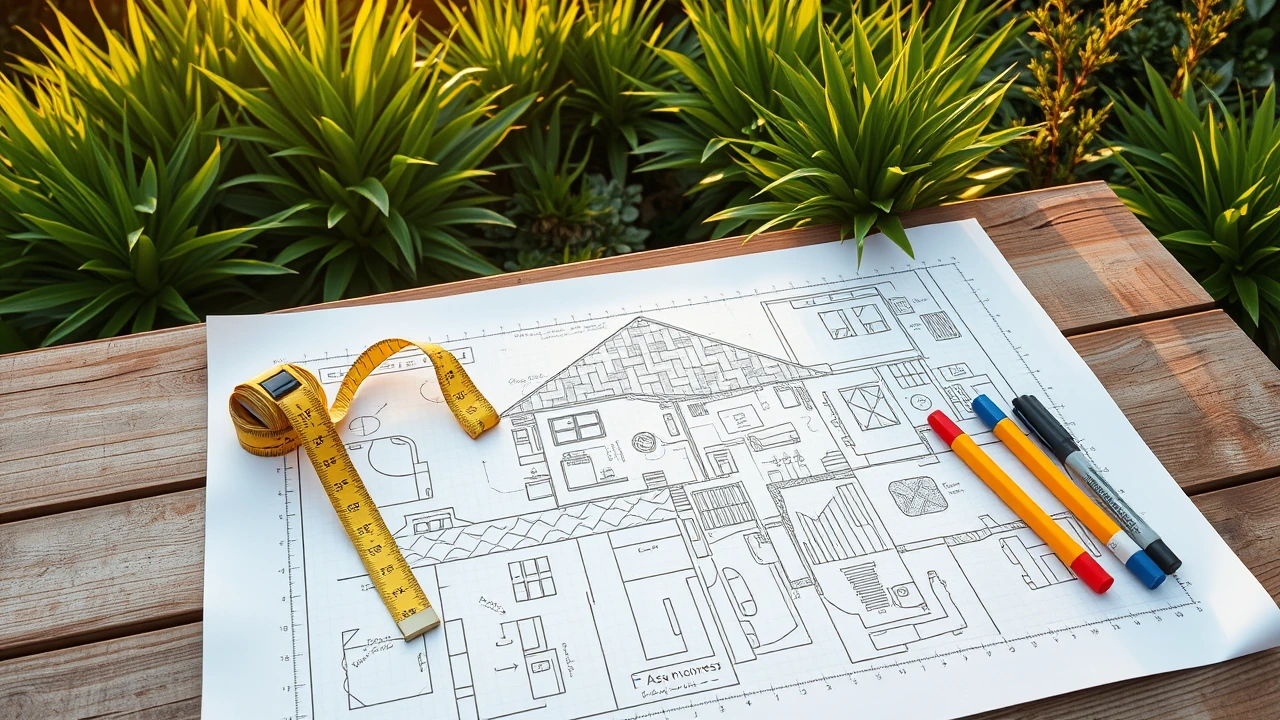
Most homeowners hire a landscape designer and then try to figure out what they want during the first meeting. The result is a slower design process and decisions made under time pressure. Half a day of preparation before that first meeting saves weeks of revision and tens of thousands in budget anxiety.
What you will need
- A printed satellite image of your property (Google Maps screenshot works)
- A notebook or notes app
- Tape measure or measuring app
- Phone camera
The planning steps
Step 1: List how you actually use the yard. Not what you wish, what you do. Where do you sit with morning coffee? Where do the kids play? Where do you set up the BBQ? Where do guests go? Walk the yard with a notebook and mark the actual usage patterns. This is the foundation of the design; everything else serves it.
Step 2: Map sun, shade and exposure across the day. Walk the yard at 9am, noon and 4pm on a sunny day, and photograph each spot at each time. The patterns matter: a north-facing corner that is shaded at noon may be useful in summer but cold and damp in spring. A west-facing exposure that gets harsh afternoon sun in July may be unusable without shade structure. Note which areas get morning sun (great for breakfast), midday sun (great for vegetables), or afternoon shade (great for evening entertaining).
Step 3: Walk the drainage. After the next significant rain, wait 4 to 6 hours, then walk the yard. Note where water pools, where the ground feels soft, where it drains within an hour. Mark these on your satellite image printout. Drainage drives where you can and cannot put hardscape, plants and structures. See our drainage diagnostic guide.
Step 4: Set a realistic budget BEFORE the design conversation. Knowing your budget changes what is possible. Use our backyard budget calculator to model different combinations. Write down a number that you would happily spend and a number that is your absolute ceiling. Both are useful in design conversations.
Step 5: Make a must-have / nice-to-have / never list. Three columns on a piece of paper. Must-have (non-negotiable, will not proceed without): patio, parking, etc. Nice-to-have (would love but not deal-breakers): fire pit, lighting, pergola. Never (not interested or actively against): pool, formal lawn, certain plants. This list keeps design conversations focused.
Step 6: Sketch the rough layout. Print the satellite image. Use a pencil to sketch in rough zones (patio here, lawn here, garden bed here). It does not need to be artistic; the goal is to externalise the ideas before a designer adds theirs. When you bring this to the first design meeting, the conversation starts at a much more productive place.
Useful frameworks for the design conversation
Outdoor rooms
Think of the yard as a series of rooms rather than one space. A dining room (the patio with table), a lounging room (lower comfortable seating), a play room (lawn for kids), a working room (shed, vegetable garden). Each room can have its own character.
Connection between rooms
How do you get from one outdoor room to the next? A clear path or stepping stones? A subtle change in surface material? This question is often more important than the rooms themselves; bad transitions make a yard feel disjointed.
The "from the house" view
What do you see looking out from the kitchen window? From the back door? From the living room? These views matter as much as standing in the yard itself because you see them all year. Plan a "view focus" for each main vantage point.
Frequently asked questions
Do I really need to do all of this before hiring a designer?
You can skip it and have the designer walk you through these questions in their process. The result is the same designer fee for 2-3 more revision rounds because the briefing was vaguer.
Should I look at Pinterest before or after these steps?
After. Looking at inspiration first traps you into styles that may not fit your actual yard, sun, soil, or budget. Doing the analysis first lets you filter inspiration through your own constraints.
What if my partner and I disagree about priorities?
Each of you do the must-have/nice-to-have list separately, then compare. The overlap is your shared must-haves. The disagreements are the conversations to have BEFORE the designer hears them; designers cannot resolve relationship disagreements.
How long should the planning phase take?
Half a day to a weekend, depending on detail. Spread over a few weeks lets the sun/shade observation happen across different days. The investment pays back many times in design time.
Can I just send these notes to a landscape designer?
Yes. The notebook + sketch + photos package is the perfect briefing document for a designer or design-build firm. We work better with clients who arrive with this kind of preparation.
Ready to start the design conversation?
- Landscape design service
- Backyard budget calculator
- How to read a landscape contractor quote
- Landscape design cost guide
Related reading
Ready to plant the beds? See garden bed design ideas, depth and layers once the layout is settled.