
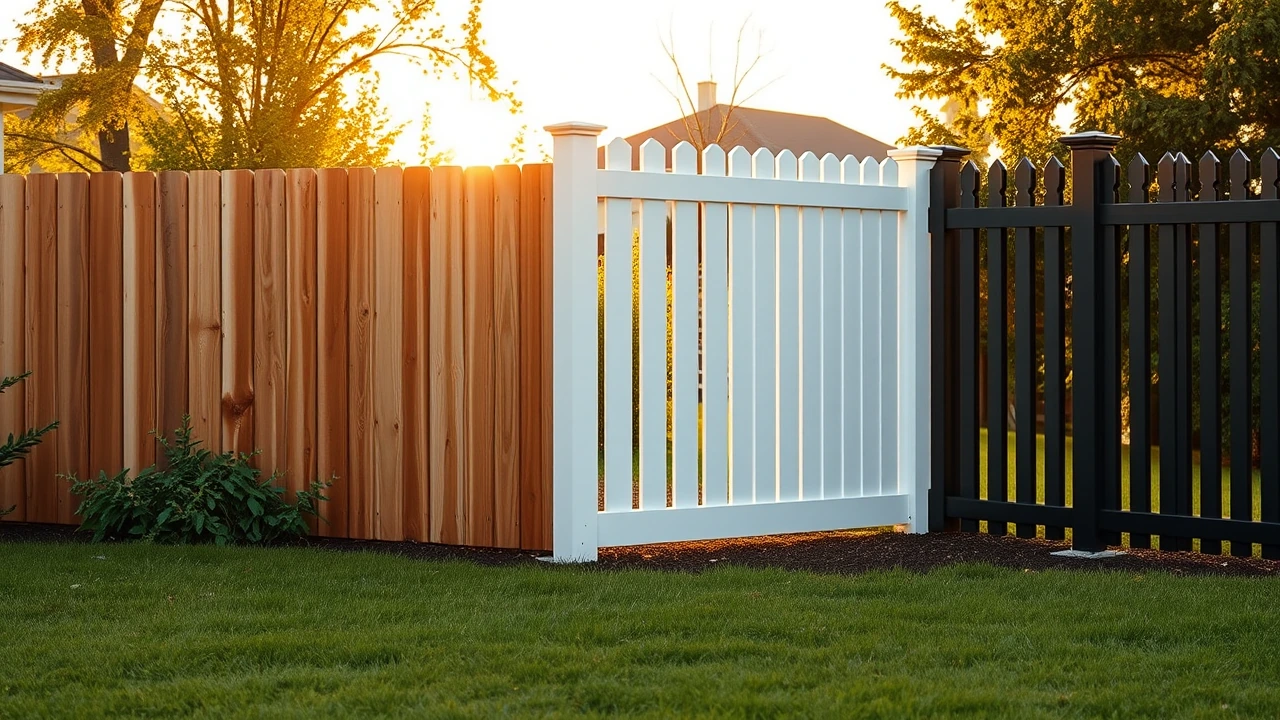
Picking a fence material in Ontario is rarely about looks alone. Frost, salt spray, pool code, neighbour sightlines and a 20 year horizon all push the decision. We install all five common materials across Hamilton, Burlington, Oakville and Niagara, and the right pick changes by yard. This guide compares cedar, pressure-treated, vinyl, aluminum and chainlink head-to-head using 2026 quote data, so you can match material to budget and intent without overpaying.
Quick verdict
For most Ontario backyards wanting privacy on a sane budget, cedar still wins on look-per-dollar if you accept staining every 3 to 4 years. Vinyl is the lowest-maintenance privacy option and pays back over 25 years, but the upfront sticker is 20 to 30 percent higher than cedar. Aluminum is the right call for pool enclosures and front-yard decorative runs where you want sightlines preserved. Chainlink is the budget workhorse for back property lines and dog runs where looks are not the point.
Head-to-head comparison table
| Factor | Cedar | Pressure-treated | Vinyl | Aluminum | Chainlink |
|---|---|---|---|---|---|
| Cost per linear ft (2026 ON, 6 ft) | $50 to $90 | $35 to $60 | $50 to $85 | $60 to $110 | $20 to $35 |
| Lifespan | 15 to 25 yrs | 10 to 15 yrs | 25 to 40 yrs | 30 to 50 yrs | 15 to 25 yrs |
| Maintenance | Stain every 3 to 4 yrs | Stain yearly, replace boards | Rinse only | Rinse only | Essentially none |
| Look options | Warm natural wood, stains | Green-tinted, paintable | White, tan, grey, woodgrain | Black, bronze, white | Galvanized, black vinyl-coat |
| Best for | Backyard privacy with warmth | Tight budget, paint-ready | Set-and-forget privacy | Pool code, front yard, slopes | Property lines, dog runs |
Cedar privacy fence
Western red and eastern white cedar both perform well in Ontario climate. Cedar resists rot and insects naturally thanks to its tannins, and it weathers to a soft silver if left untreated. It is the default privacy fence we quote for Hamilton mountain and Burlington Aldershot homeowners who want a 6 ft solid board look without the vinyl sticker shock.
Pros
Warmest natural appearance, accepts solid and semi-transparent stains, mills cleanly for board-on-board and lattice tops, and individual pickets are easy to replace if a tree drops a branch. Lower embodied carbon than vinyl or aluminum if that matters to you.
Cons
Needs cleaning and re-staining every 3 to 4 years to hold colour. Knots can bleed sap. Pickets cup or twist if you skip the first stain cycle. Cedar prices have risen sharply since 2022 and now sit close to vinyl per foot.
Real-world cost range
$50 to $90 per linear ft installed for a 6 ft board-on-board run on flat terrain. Add 15 percent for slope, 20 percent for lattice top, and roughly $600 to $900 per gate.
Best fit
Backyard privacy where you actually like the look of wood and will commit to staining. Pairs well with cedar pergolas and natural stone patios.
Pressure-treated wood fence
Pressure-treated spruce or pine soaked in ACQ or MCA preservative is the entry-level wood option. It carries that familiar green tint when fresh, fades to grey within a season, and accepts paint or solid stain once dry.
Pros
Cheapest privacy wood by 25 to 40 percent. Posts and rails are the same stock you would use under any cedar fence, so the structural bones are identical. Easy to source from any Ontario lumberyard.
Cons
Shorter lifespan than cedar, typically 10 to 15 years before pickets warp or split. Treatment chemicals can leach if pickets are not allowed to dry before staining. Heavier than cedar, so gates sag faster without proper bracing.
Real-world cost range
$35 to $60 per linear ft for a 6 ft solid PT fence. Often the right call when you plan to paint to match a house trim colour.
Best fit
Tight-budget privacy runs, rental properties, or any fence you intend to paint a solid colour from day one.
Vinyl (PVC) fence
Modern vinyl fencing has come a long way from the chalky white panels of the 1990s. Premium UV-stabilized PVC now comes in tan, grey, and convincing woodgrain finishes. Panels lock into routed posts and need essentially no maintenance.
Pros
Will not rot, warp, splinter, or need staining. Rinse with a hose twice a year and it looks new. 25 to 40 year manufacturer warranties are common. Excellent for pool surrounds where chlorine and splash would punish wood.
Cons
Higher upfront cost. Can crack if a snowblower or hockey net hits it in deep cold. Damaged panels cannot be patched, the full panel swaps out. Cheaper grades yellow under UV after a decade.
Real-world cost range
$50 to $85 per linear ft installed for 6 ft solid privacy panels. Woodgrain finishes and taller 8 ft runs push toward the top of that range.
Best fit
Homeowners who refuse to stain anything ever again. Strong choice around pools and on rental investment properties.
Aluminum fence
Powder-coated aluminum is the modern replacement for wrought iron. It will not rust, weighs a fraction of steel, and the picket-and-rail look preserves sightlines. Ontario pool code lets aluminum satisfy the 4 ft minimum enclosure if picket spacing is 1.5 inches or less.
Pros
30 to 50 year lifespan with zero rust. Looks high-end on front yards. Handles slopes gracefully because individual sections rack. Best material for pool enclosures by a wide margin. Self-closing self-latching pool gates are an off-the-shelf accessory.
Cons
Zero privacy. Higher cost per foot. Powder coat can chip if hit hard, exposing bare aluminum. Not the right pick if your goal is to block neighbour sightlines.
Real-world cost range
$60 to $110 per linear ft installed for residential-grade 4 to 6 ft sections. Pool-code self-closing gates run $800 to $1,400 each.
Best fit
Pool enclosures, front-yard decorative fencing, sloped lots, and any setting where you want a defined boundary without losing the view.
Chainlink fence
Galvanized or black vinyl-coated chainlink is the budget workhorse. It will not win design awards but it keeps dogs in, kids safe, and deer out for less than half the cost of cedar.
Pros
Cheapest installed option. Black vinyl-coated mesh almost disappears against shrubs, much less ugly than raw galvanized. 15 to 25 year lifespan with effectively zero maintenance. Easy to add privacy slats later.
Cons
No privacy out of the box. Galvanized finish looks industrial. Bottom rail can heave with frost if posts are not set 4 ft deep. Cannot satisfy pool code unless paired with a privacy slat insert that meets non-climbable rules.
Real-world cost range
$20 to $35 per linear ft for 4 to 6 ft galvanized. Black vinyl-coat adds about 25 percent.
Best fit
Rear property lines along ravines, dog runs, large rural lots, and any spot where function trumps form.
Which one is right for your yard?
Start with intent and constraints, then narrow on budget. A few decision shortcuts we use in the field:
- Pool in the yard? Aluminum with self-closing self-latching gates is the cleanest path to Ontario pool code compliance (4 ft minimum, non-climbable, picket gap under 4 inches).
- Backyard privacy from neighbours? Cedar if you like wood, vinyl if you never want to stain again. Pressure-treated only if budget is tight and you will paint.
- Front yard or corner lot with HOA-style sightline rules? Aluminum picket. Looks intentional, preserves curb appeal, no neighbour complaints about a wood wall.
- Sloped lot? Aluminum racks easily, vinyl needs stepped panels (looks fine), wood needs custom raked pickets (costs more). Avoid chainlink on steep grades, the mesh sags.
- Frost depth matters everywhere. Every post we set goes to 4 ft minimum in Hamilton, Burlington and Niagara. Anyone quoting 3 ft posts is setting you up for frost heave by year three.
- Salt spray near roads or driveways? Aluminum and vinyl shrug it off. Pressure-treated softens at the base over time. Plan for a kick board.
Common mistakes we see on quote reviews
- Posts set only 30 to 36 inches deep. Ontario frost line is 4 ft. Anything shallower heaves.
- Cedar fence quoted without a kick board or gravel board at the base. The bottom picket wicks moisture and rots first.
- Pool fence quoted in wood with horizontal rails on the outside. That fails the non-climbable rule, code requires rails inside or pickets close enough to deny a foothold.
- Vinyl quote that does not specify UV-stabilized virgin PVC. Recycled-blend panels yellow inside 10 years.
- No mention of locates. Every fence project needs Ontario One Call locates before digging, and reputable contractors include it.
- Gates included as a single line item with no hardware spec. Heavy-duty hinges and a drop rod for double gates are non-negotiable.
Frequently asked questions
What is the cheapest fence that still looks decent?
Black vinyl-coated chainlink runs $25 to $40 per linear ft and almost disappears against landscaping. For privacy on a budget, pressure-treated wood painted a solid colour is the next step up at $35 to $60 per ft.
How long does a cedar fence really last in Ontario?
15 to 25 years if you stain it on a 3 to 4 year cycle and the posts were set to 4 ft. Skip staining and you cut that in half. Cedar posts set in concrete still outlive pressure-treated posts by roughly 5 years on average.
Do I need a permit for a fence in Hamilton or Burlington?
Most residential fences under 2 m (about 6.5 ft) in rear and side yards do not need a permit. Pool enclosures always do. Corner lots and front yards have height limits. Always check your specific municipal zoning before signing.
Is vinyl fence worth the extra cost over wood?
Over a 25 year horizon, yes. You spend more upfront and save the recurring stain cost (roughly $1.50 to $3 per linear ft every 3 to 4 years for materials, plus your time). It is a question of whether you want predictable maintenance or a higher one-time bill.
What fence works best around a pool?
Aluminum picket with self-closing self-latching gates. It meets Ontario pool enclosure code cleanly, will not rot from splash or chlorine, and preserves the view from the house. Avoid wood for pool surrounds unless you accept refinishing every 2 years.
Can I mix materials, like aluminum in front and cedar in back?
Yes, and we do this often. Aluminum picket along the front for curb appeal, cedar privacy along the sides and rear. Match the post colour at transitions and it reads as intentional.
What about composite fencing?
Composite (wood-plastic mix) panels exist but are still a small slice of the Ontario market. They run $80 to $130 per ft, look like vinyl woodgrain, and do not have the 25 year track record vinyl does. We rarely recommend them yet.
Want a number for your specific yard? Drop your dimensions into our fence cost calculator, cross-check with the per-foot ranges in our Ontario fence cost guide, or request a free quote and the Peace Love Landscaping crew will walk the lot with you.