
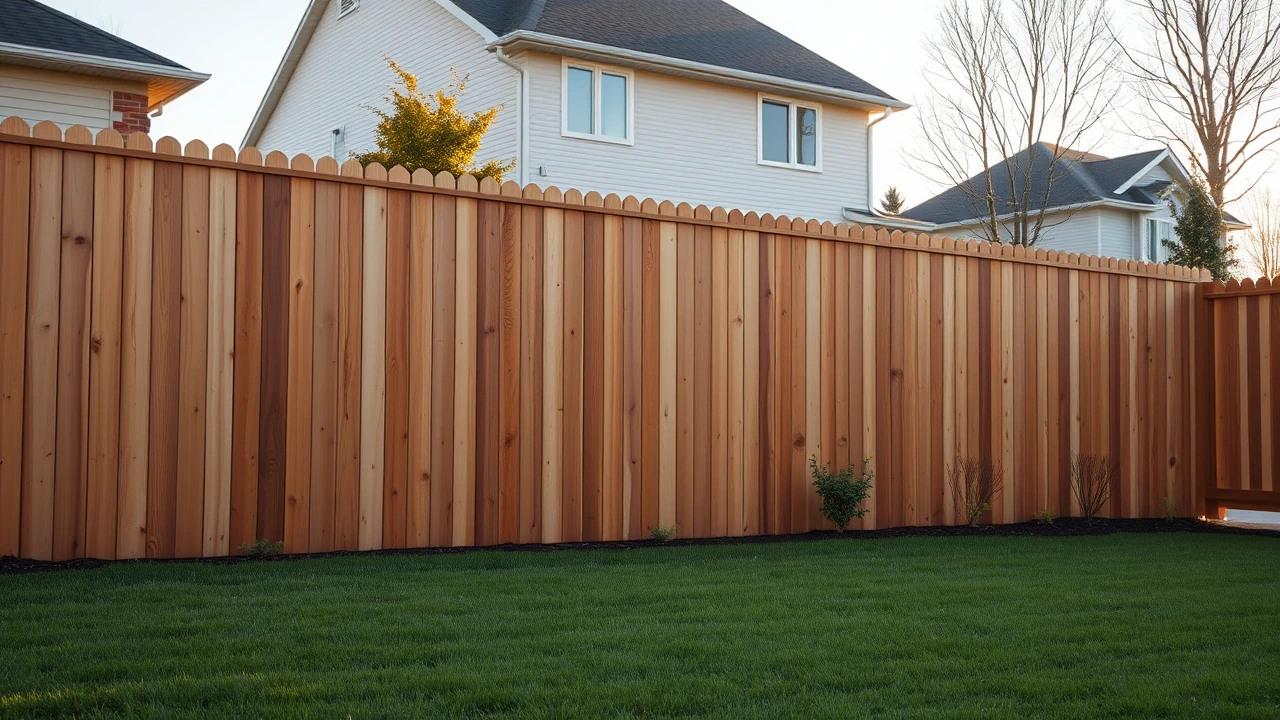
Fence quotes in Ontario swing wildly, and a lot of homeowners get sticker shock comparing a $4,000 chain-link estimate to a $14,000 cedar one for the same backyard. The truth is that material is only one lever. Linear footage, height, post depth, soil type, gates, by-law setbacks, and whether you're fencing a pool all shift the bill. This guide breaks down what fencing actually costs in Hamilton, Burlington, Oakville, Milton, and across the wider GTA and Niagara in 2026, with real ranges by material and the variables that push you to the top or bottom of each range.
Want a real budget number for your specific project? Use our 2026 Ontario calculators (Hamilton, Halton, Niagara data baked in):
- Landscaping cost guide (Ontario)
- Backyard renovation cost calculator
- Retaining wall cost calculator (Canada)
- Deck cost calculator
- Fence cost calculator
Or request a free quote for a line-item estimate on your property.
2026 Ontario fence cost at a glance
Here's the snapshot most homeowners want first. These ranges assume a standard 6-foot-tall residential fence, professionally installed on relatively flat ground, with concrete-set posts and no major demolition or rock. Pool fences, sloped yards, and decorative add-ons sit higher.
| Material | Per linear foot (installed) | Per linear metre (installed) | Typical lifespan |
|---|---|---|---|
| Chain link (galvanized) | $20 to $35 | $65 to $115 | 20 to 30 years |
| Pressure-treated wood | $35 to $60 | $115 to $200 | 12 to 20 years |
| Cedar (Western red or white) | $50 to $90 | $165 to $295 | 20 to 30 years |
| Vinyl (PVC) | $50 to $85 | $165 to $280 | 25 to 40 years |
| Aluminum ornamental | $60 to $110 | $195 to $360 | 30 to 50 years |
| Composite | $80 to $130 | $260 to $425 | 25 to 30 years |
| Wrought iron / steel | $90 to $160 | $295 to $525 | 40 to 75 years |
For a typical Hamilton or Burlington backyard with roughly 120 linear feet of fence, that means a budget range of about $2,400 for basic chain link up to $15,600 for composite or ornamental iron. Most cedar projects we quote in the GTA land in the $6,500 to $10,500 zone for a full backyard.
What actually drives your fence cost
Two neighbours on the same street can get quotes $4,000 apart for visually similar fences. Here's why.
Linear footage
Fencing is priced per linear foot or per linear metre, so the total perimeter is the biggest single driver. A 60-foot side-yard run is dramatically cheaper than a full 180-foot wraparound. Measure your property along the proposed fence line before requesting quotes, and remember to subtract for the house wall and any existing fencing you're keeping.
Height
Going from 4 feet to 6 feet typically adds 25 to 40 percent to material and labour. Jumping to 8 feet (where permitted) can add 60 to 90 percent because posts need to be set deeper and bracing increases. In most Ontario residential zones, rear and side-yard fences max out at 6 feet (1.83 m) and front-yard fences at 4 feet (1.22 m) without a variance. Hamilton, Burlington, and Oakville all follow this pattern, with small differences in how corner lots are handled.
Gates
Every gate adds $250 to $900 depending on width and hardware. A standard 4-foot walk gate in cedar with a basic latch runs around $350. A 10-foot double-drive gate in aluminum with self-closing hinges and a keyed lock can clear $1,500. Pool gates with self-closing, self-latching hardware sit at the higher end because the hardware itself is code-driven.
Post depth and soil
Ontario's frost line means posts should be set a minimum of 42 inches (1.07 m) deep, and most reputable installers go to 48 inches with a bell-bottom concrete footing. Hamilton Mountain and parts of Stoney Creek have shallow rock and clay that can force hand-digging or a rock auger, adding $20 to $60 per post. Sandy soils in parts of Burlington and along the lake are faster to dig but sometimes need wider footings for the same hold.
Slope and terrain
A flat lot is the cheapest install. A graded slope needs stepped or racked panels, which means more cuts, more material waste, and more labour. Expect a 10 to 20 percent premium on a moderately sloped yard, and up to 35 percent on steep terraced lots common in parts of Ancaster, Dundas, and the Niagara Escarpment ridge.
Demolition of old fence
Removing and disposing of an existing fence usually costs $5 to $12 per linear foot. Old concrete footings are the wildcard: if posts were set in oversized concrete bells, pulling them can add $15 to $25 per post or push the crew to a mini-excavator day rate. Many homeowners save by removing the old panels themselves and leaving the posts to the pro crew.
Material-by-material deep dive
Pressure-treated wood: $35 to $60 per foot
Pressure-treated (PT) spruce or pine is the workhorse fence in Ontario. It's the cheapest wood option, accepts stain after a season of drying, and any local lumberyard stocks it. Lifespan is 12 to 20 years depending on whether you stain or seal it. The downsides: PT tends to twist, cup, and check as it dries, and the green tint fades to grey within a year if left untreated.
Cedar: $50 to $90 per foot
Cedar is the most popular premium wood fence in the GTA. Western red cedar costs more than white cedar but resists rot and insects naturally, holds straight better than PT, and develops a clean silver-grey patina if left unsealed. A well-built cedar fence in Hamilton or Burlington routinely lasts 25 to 30 years. Maintenance is optional: stain every 4 to 6 years if you want to keep the warm tone, otherwise let it grey naturally.
Vinyl (PVC): $50 to $85 per foot
Vinyl has come a long way from the chalky white panels of the 2000s. Modern PVC fencing in tan, grey, and woodgrain finishes holds up well to Ontario winters, won't rot, and never needs paint. Higher upfront, near-zero maintenance, 25 to 40 year lifespan. Hose it off once a year, replace cracked panels individually if a tree limb hits.
Aluminum ornamental: $60 to $110 per foot
Powder-coated aluminum gives you the wrought iron look without the rust or weight. It's a go-to for pool fencing because panels are factory-made to code, with vertical pickets and no climbable horizontal rails. Aluminum will not rust through like steel and typically carries a 20 to 25 year finish warranty on top of a 30 to 50 year structural life.
Composite: $80 to $130 per foot
Composite fencing (recycled wood fibre and HDPE plastic) is the premium privacy option. It looks like wood, weighs more than vinyl, and shrugs off rot, insects, and UV. The price is the catch: composite is the most expensive privacy fence on this list for most homes. Brands like Trex and Barrette dominate the Ontario market.
Chain link: $20 to $35 per foot
Galvanized chain link is the cheapest permanent fence you can install. It's utilitarian, transparent, and lasts 20 to 30 years with almost no upkeep. Black vinyl-coated chain link costs 20 to 30 percent more and visually disappears into a hedge or treeline, which is why it's popular for back lot lines that abut ravines or conservation land in places like Ancaster, Waterdown, and parts of Oakville near Sixteen Mile Creek.
Wrought iron and welded steel: $90 to $160 per foot
Real wrought iron (or modern welded steel powder-coated to mimic it) is a luxury fence. It's heavy, custom-fabricated, and built to last 40 to 75 years. You'll see it on heritage homes in Westdale, Kirkendall, and old Oakville. Expect long lead times and a fabrication deposit.
Pool fence requirements in Ontario
If you have a pool, hot tub deeper than 24 inches, or a pond over 600 mm deep, your fence is regulated by your municipal pool enclosure by-law. The rules are similar across Hamilton, Burlington, Oakville, and Milton but each city has its own permit and inspection process.
- Minimum height: 1.5 m (about 5 feet) in Hamilton and 1.2 m (about 4 feet) in Oakville, measured from the ground outside the enclosure. Always confirm with your permit.
- No climbable surface: horizontal rails must be either inside the pool side, or spaced more than 1.2 m apart vertically so a child can't use them as a ladder.
- Gap rules: no opening that passes a 100 mm sphere in Hamilton. Oakville generally limits openings to 38 mm, unless the enclosure is at least 1.52 m high with horizontal rails at least 1.22 m apart.
- Self-closing, self-latching gate: latch mounted high and a lock (Hamilton: latch on the inside at least 1.35 m above the bottom; Oakville: at least 1.22 m above grade).
- Inspection: a pool enclosure inspection is required before water goes in. Some cities will not issue a final occupancy on a new pool until the fence passes.
Cost premium for a pool-rated fence is roughly 15 to 30 percent over a standard fence of the same material. Aluminum is the most cost-efficient pool fence in Ontario because manufacturers build panels to code by default.
Property lines, neighbours, and setbacks
Before you sign a fence contract, settle three things: where your property line actually is, whether your neighbour is sharing the cost, and what your by-law setback requires.
Many GTA homes have a Surveyor's Real Property Report in the closing documents. Pull it out. If you can't find one, a fresh stake survey from an Ontario Land Surveyor runs roughly $1,200 to $2,500 in Hamilton and Burlington. It's cheaper than tearing out a fence built 18 inches over the line.
Ontario's Line Fences Act allows you to compel a neighbour to share the cost of a boundary fence, but in practice almost nobody uses it. A friendly chat, a shared quote, and a written agreement on cost split works far better.
Most Ontario municipalities allow a fence directly on the property line. The catch is corner lots, where sight-line by-laws restrict fence height in the daylight triangle near the intersection (usually 0.75 m to 1 m max within 3 to 6 m of the corner). Hamilton and Burlington both enforce this, and inspectors do drive by.
Permit costs by city
Standard residential property-line fences usually don't need a building permit in Ontario, but pool enclosures almost always do, and a few cities require a permit for any fence over a certain height.
- Hamilton: no permit for standard fences under 2.4 m. Pool enclosure permit runs roughly $200 to $350.
- Burlington: no permit for standard residential fences under 2.0 m in the rear yard. Pool enclosure permit is roughly $250 to $400.
- Oakville: no permit for standard fences within height limits. Pool enclosure permit sits around $300 to $450 and inspection is mandatory.
- Milton: standard fences are exempt within by-law limits. Pool enclosure permits run roughly $200 to $400.
- Niagara region: similar structure, pool enclosure permits typically $150 to $300.
DIY versus pro install
A 100-foot pressure-treated fence in materials only runs roughly $1,800 to $2,800 at a Hamilton lumberyard in 2026. Add a rented post-hole auger, concrete, and a couple of weekends, and a handy homeowner can build it for $2,500 to $3,500 total. A pro install on the same fence lands at $4,500 to $6,000.
DIY works when the run is short, the terrain is flat, you own (or can borrow) a one-person auger and a long level, you're comfortable setting posts plumb, and you're building simple PT or chain-link, not cedar privacy with mitred caps.
Hire a pro when it's a pool fence (inspection failures are expensive), the yard slopes or has rock and clay, you're going with cedar, vinyl, or aluminum (material waste from rookie cuts erodes savings fast), or the fence is street-facing and resale matters.
Repair versus replace
If your fence is mostly sound but has a few bad sections, repair almost always wins. Replacing 3 to 4 panels in a cedar fence runs $400 to $900. Resetting one leaning post is $150 to $300.
The tipping point comes when more than 30 percent of posts are rotten or leaning, the fence is past 75 percent of its expected lifespan, or you'd need to replace it within 3 years anyway. Rough rule: if repair costs exceed 40 percent of full replacement and the fence is past two thirds of its life, replace it.
Best time of year to install a fence in Ontario
Fence contractors in the GTA are busiest from late April through early July. If you book in that window, expect 6 to 10 week lead times and zero negotiating room on price.
- March to early April: ground often still frozen, but quotes are easy to get and lead times are short.
- Late April to June: peak demand, highest prices, longest waits. Book by February if you want a spring install.
- July and August: still busy but lead times shorten. Good window for mid-summer installs.
- September to mid-November: the sweet spot. Crews have capacity, the ground is workable, and some companies offer 5 to 10 percent off to keep crews booked into fall.
- Late November to February: frozen ground makes post-setting tough. Only emergency repairs and certain steel installs happen in winter, often at a premium.
Frequently asked questions
How much does a typical backyard fence cost in Hamilton or Burlington?
For a standard 120-linear-foot backyard with one gate, expect roughly $4,200 to $7,200 for pressure-treated wood, $6,500 to $10,800 for cedar, $6,000 to $10,200 for vinyl, and $9,600 to $15,600 for composite or ornamental iron. Lot shape, slope, and demolition of the existing fence can shift these numbers by 15 to 25 percent.
Do I need a permit to build a fence in Ontario?
Not for a standard residential fence within by-law height limits (usually 2 m in the rear yard, and 0.9 m to 1.5 m in the front depending on the city). You do need a pool enclosure permit for any pool, hot tub, or pond over the depth threshold. Heritage districts and corner-lot sight triangles can also trigger extra approvals.
How deep should fence posts be in Ontario?
Minimum 42 inches (1.07 m) to get below the frost line, and 48 inches is the standard for any quality install. Bell-bottom concrete footings about 12 inches wide at the base give the best hold in clay and freeze-thaw conditions common in the GTA.
Which fence material lasts longest in Ontario winters?
Aluminum and wrought iron lead at 30 to 75 years. Vinyl follows at 25 to 40 years. Cedar and chain link both deliver 20 to 30 years with minimal upkeep. Pressure-treated wood is the shortest-lived at 12 to 20 years, especially if it's never stained.
Can I split the fence cost with my neighbour?
Yes, and Ontario's Line Fences Act technically lets you compel a contribution. In practice, almost everyone settles it with a friendly conversation and a written 50/50 agreement before work starts. Get the quote, share it, agree in writing, and both parties pay the contractor directly.
Is it cheaper to repair or replace an old fence?
Repair wins when fewer than 30 percent of posts are failing and the fence still has more than a third of its lifespan left. Replace when repair costs exceed about 40 percent of a full replacement, or when you're fighting the same issue every spring.
- Our fence building service
- Retaining walls & hardscaping
- Landscape permits in Ontario
- How to read a landscape quote
Want a quick estimate? Try our fence cost calculator for your project. Slide the inputs to see your real 2026 cost range in seconds.
Comparing materials? See our head-to-head breakdown: Wood vs vinyl vs aluminum fencing with 2026 cost, lifespan and maintenance side by side.
Fence already rotting or leaning? Read our diagnostic walk-through: match symptoms to root causes with DIY-fix steps and realistic pro-repair cost ranges.
Repairing an existing fence instead? See our fence repair cost guide and the five post rule for repair or replace.
Privacy problem is on the deck, not the lot line? See deck privacy wall ideas and by-law limits with 2026 prices.
Want full privacy? See privacy fence ideas and styles including board-on-board and horizontal.
Pricing the gate? See fence gate ideas, widths and hardware and what makes one gate cost twice another.
Considering chain link? See chain link fence costs, gauge and mesh and how to make it look better.
Fencing a pool? Compare the pool fence by-laws for five towns side by side.
Pricing a picket fence? See picket fence costs by material and the front yard height limits.
Wondering what holds a fence up? See our fence post guide wood vs steel vs spikes.