
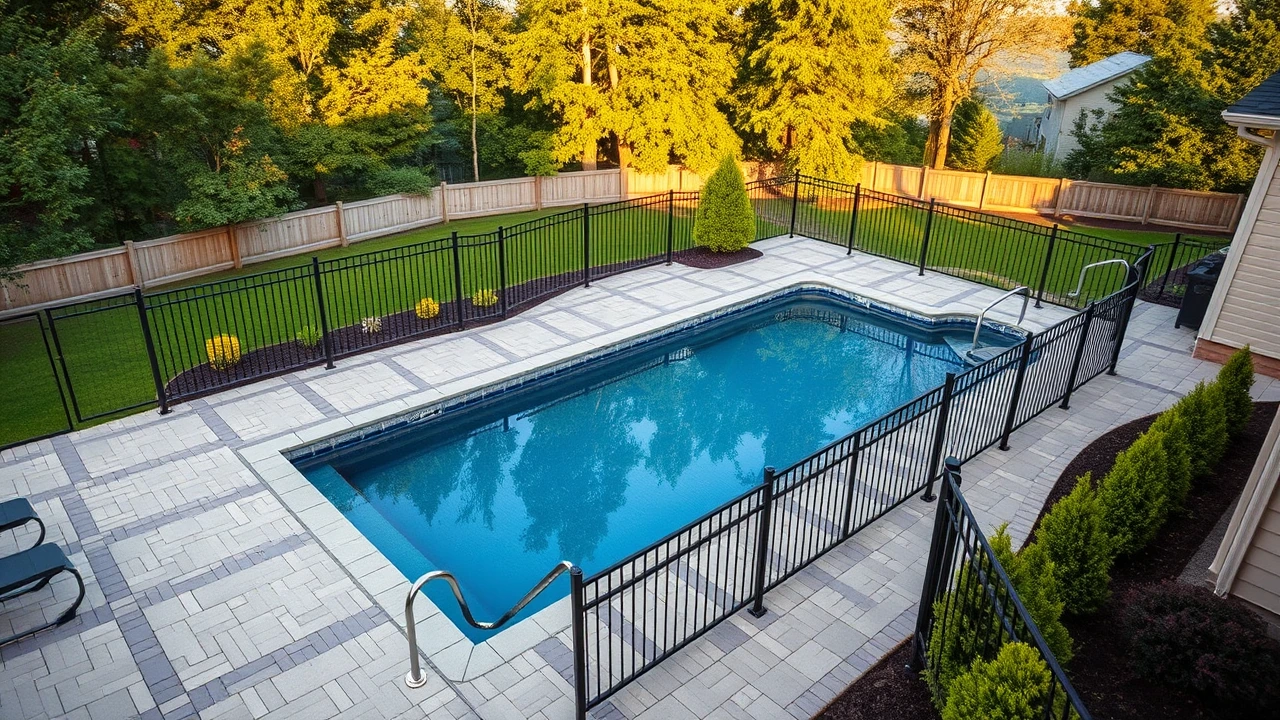
Hamilton is a complicated place to put a pool in the ground, and most homeowners only learn that after the first quote lands. The Mountain sits on heavy clay that holds water through every spring thaw and turns excavation into a winter-long project if the timing slips. Old Stoney Creek and Winona drop steeply toward the lake, and a sloped lot changes everything about wall height, deck step-down and retaining engineering. Ancaster has the lot size for a real backyard pool but also the heritage tree canopy that complicates equipment access. Westdale lots are tight enough that the excavator may not fit through the side yard at all. And the City of Hamilton pool enclosure bylaw is strict: a 1.5 m non-climbable enclosure measured from the highest ground within 1.0 m of the fence, no gap that passes a 4-inch (100 mm) sphere and a self-latching, self-closing gate. Build it wrong and the pool does not pass inspection.
Quick verdict for Hamilton homeowners
For a properly installed, code-compliant pool in Hamilton in 2026, expect $8,000 to $18,000 turnkey for a quality above-ground build, $30,000 to $55,000 for a semi-inground, $75,000 to $130,000 for a fibreglass inground with paver deck, and $120,000 to $250,000+ for a concrete (gunite) inground with full hardscape, automation and a pool house. A typical Hamilton fibreglass inground build runs 6 to 10 weeks on site, weather permitting. Concrete builds run 12 to 20 weeks. The City of Hamilton pool enclosure bylaw is non-negotiable, ESA inspection on the bonding and pool panel is mandatory, and any pool within 30 m of the escarpment or a regulated creek pulls Conservation Hamilton into the timeline. Always get a written scope showing pool shell, equipment pad, gas and electrical chases, ESA coordination, fence detail and the deck spec before signing.
2026 Hamilton pool installation cost
Prices below are turnkey 2026 costs for Hamilton, including excavation, shell or panel system, plumbing, equipment pad, gas and electrical chases, ESA-inspected bonding and panel, basic backfill, water and startup. Deck, fence, landscaping and any pool house are itemised separately on the quote. They assume a standard residential lot with reasonable access.
| Tier | Pool type and size | Turnkey cost | Lifespan | Best fit |
|---|---|---|---|---|
| Basic | Above-ground steel-wall, 15 to 24 ft round or 12x24 oval, 52 in wall | $8,000 to $18,000 | 10 to 18 years | Mountain rentals, smaller Stoney Creek yards, families testing pool ownership |
| Mid-grade | Semi-inground steel or composite panel, 14x28 to 16x32, 4 ft buried depth | $30,000 to $55,000 | 20 to 30 years | Sloped Stoney Creek lots, Dundas terraced yards, mid-budget Mountain rebuilds |
| Premium | Fibreglass inground, 14x28 to 16x36 shell, integrated steps and bench, paver deck | $75,000 to $130,000 | 30 to 50 years | Most Ancaster and Westdale family yards, mid-tier Mountain rebuilds, faster build window |
| Luxury | Concrete (gunite) inground, custom shape and depth, vanishing edge or tanning ledge, automation, premium hardscape | $120,000 to $250,000+ | 50+ years | Ancaster estate lots, Mountain brow view properties, Dundas valley luxury rebuilds |
For a side-by-side breakdown of the three inground options, the inground vs above-ground vs semi-inground pool guide covers cost, lifespan, maintenance and which lots suit each. For the deck around the pool, the Ontario paver patio cost guide covers the surround spec and the patio cost calculator lets you sanity-check the deck portion of any pool quote.
Common Hamilton pool projects we build
Mountain rear-yard fibreglass inground builds
Most of the Hamilton Mountain has the lot size and the flat-enough grade to host a clean fibreglass inground in the 14x28 to 16x36 range. The selling point of fibreglass on the Mountain is the build window: the shell drops in over two days, the equipment pad and plumbing get tied in over the following week, and the deck and fence can wrap inside 6 to 8 weeks total. That matters on a Mountain build because you do not want to lose a season chasing a 16-week concrete schedule. We coordinate the gas line for the heater, the dedicated electrical run for the pool panel (ESA-inspected and bonded), the equipment pad placement out of sightlines from the kitchen window, and a paver deck in 80mm Unilock or Techo-Bloc set on a real engineered base. The deck-to-coping detail matters: a 6 mm shadow gap and proper backer rod, not caulk poured straight against the shell.
Stoney Creek and Dundas sloped-lot semi-inground builds
Old Stoney Creek climbing up from Highway 8 and the Dundas valley side streets share a single pool problem: the grade. A fibreglass or concrete inground on a sloped lot needs major retaining work on the high side, and the wall and engineering costs can rival the pool itself. The smart spec is often a semi-inground composite or steel panel system buried 3 to 4 ft on the high side and exposed 1 to 2 ft on the low side, integrated into a terraced deck system. The exposed wall becomes a design feature with a cedar or composite cladding, the low side hosts the lounging deck at grade, and a 600 to 900 mm segmental block retaining wall manages the upslope. We design the pool, the retaining wall, the drainage and the deck as a single system, with the same crew on all of it, so nothing falls through the gap between trades.
Ancaster family-yard concrete (gunite) inground builds
Ancaster has the lot sizes that justify a concrete inground build with custom shape, depth, tanning ledge and integrated spa. These are 14x32 to 20x40 builds with vanishing edges, sunshelf entries and automation. The build window is 12 to 20 weeks from excavation through final, with steel cage, gunite shoot, tile and coping, plaster or PebbleTec finish, equipment and ESA-inspected electrical in sequence. The deck typically runs 800 to 1,500 sq ft of large-format 80mm pavers or natural stone, with a soldier course around the coping, a 2 percent slope away from the water, and a deck-to-coping detail that allows future coping replacement. The enclosure bylaw applies at full force, and ESA inspection on the bonding grid is mandatory before water goes in.
Westdale and Dundas tight-access compact pool builds
Westdale and downtown Dundas have heritage lots with side-yard access often under 1 m, which rules out most full-size excavators. The right spec here is usually a compact fibreglass inground in the 12x24 to 14x28 range, where the shell can be craned over the house from the street rather than driven through the side yard. We coordinate the crane lift, the temporary street closure permit if required, the gas and electrical runs (often hand-trenched), and a discrete equipment pad. The deck on a Westdale or Dundas build is usually 300 to 600 sq ft of premium paver in a colour matched to the heritage brick, with the enclosure fence integrated into the existing rear and side fencing.
Why DIY pool projects fail in Hamilton (and what we do differently)
The four failure modes we see on DIY or under-spec Hamilton pool builds repeat every season. First, enclosure failure: a fence installed at 1.5 m measured from the low side, not from the top of a raised deck or patio built within 1.0 m of the fence. The pool fails inspection, water cannot go in, and the fence has to be rebuilt taller at the homeowner cost. Second, electrical failure: bonding grid skipped, undersized panel, or no ESA inspection arranged. The Electrical Safety Authority will not connect the pool, and a Hamilton pool without ESA sign-off is uninsurable. Third, equipment pad placement: heater, pump and filter dropped against the house under a kitchen window, where the noise drives the homeowner crazy by July. Fourth, deck-shell detail: caulk poured straight against the coping, no backer rod, no shadow gap. Within two freeze-thaw seasons the caulk cracks, water gets behind the coping, and the deck starts to heave.
We do it differently on every Hamilton pool build. We measure fence height from the highest ground or hardscape within 1.0 m of the fence and build to that, with a self-closing, self-latching gate and no gap that passes a 4-inch sphere. We design the bonding grid into the steel and the deck reinforcement, coordinate ESA inspection at rough-in and final, and never schedule water before ESA sign-off. We place the equipment pad 5 to 8 m from any window, on an engineered slab with proper drainage. And we detail the deck-to-coping joint with a 6 mm shadow gap, backer rod and a polyurethane sealant rated for chloride exposure if the pool runs salt. For homeowners thinking about salt vs chlorine, the choice changes the paver spec: cheaper concrete pavers will pit within a decade under salt splash, and we will not warranty a salt pool deck built in basic 60mm product.
The Hamilton pool process timeline
- Free on-site visit. We measure the yard, check access, probe the soil, photograph existing grades and utility locations, and talk through how the pool will be used. You leave with a realistic Hamilton 2026 cost band for shell, deck and fence.
- Design and written quote. We send a fixed scope with shell type and size, equipment list, gas and electrical chases, ESA coordination, fence detail, deck spec, square footage and timeline. We also draft the enclosure plan against the bylaw before any digging starts.
- Permits, ESA and conservation. We pull the City of Hamilton pool enclosure permit and any lot-grading review, file the ESA notification for the bonding and panel work, and coordinate with Conservation Hamilton if the property sits near the escarpment or a regulated creek.
- Excavation and shell or panel install. We dig the hole, prep the bedding base, set the shell (fibreglass) or assemble the panel and pour the floor (semi-inground), plumb the skimmer, returns and main drain, and rough in the bonding grid.
- Equipment, gas, electrical and ESA inspection. We set the equipment pad, run gas to the heater, pull the dedicated electrical run to a properly-sized pool panel, complete the bonding grid, and book ESA inspection. Water does not go in until ESA signs off.
- Deck, fence and final commissioning. We build the paver or natural-stone deck on an engineered base with proper slope away from the pool, install the code-compliant enclosure with self-closing self-latching gate, fill the pool, start the chemistry, and walk through operation and winterization with the homeowner.
Permits and bylaws in Hamilton
The City of Hamilton requires a pool enclosure permit before any pool with more than 600 mm of water depth is filled. The enclosure bylaw rules that matter for the design: a minimum 1.5 m enclosure height measured from the effective ground level outside the fence, which Pool Enclosure By-law 16-184 defines as the highest ground within 1.0 m, nothing that makes the enclosure easy to climb, no opening that passes a 100 mm (4-inch) sphere, and a self-closing, self-latching gate with the latch on the inside at least 1.35 m above the bottom of the enclosure, plus a lock on the inside. Any pool installation that changes lot grading triggers a lot-grading review, and a design that pushes runoff onto a neighbour will not be approved.
Electrical work on a Hamilton pool is governed by the Ontario Electrical Safety Code and must be ESA inspected at rough-in (bonding grid and panel) and at final connection. No insurance carrier will write a Hamilton pool that does not have ESA sign-off on file. For properties near the escarpment, the Mountain brow, regulated creeks or Conservation Hamilton lands, the conservation review can add 4 to 8 weeks to the timeline, and we build that into the plan. The full picture of what permits, what inspects and what triggers a review across Hamilton, Burlington and Oakville sits in our landscaping permits guide.
Frequently asked questions
How long does a Hamilton pool installation take?
6 to 10 weeks for a fibreglass inground from excavation to swim-ready, 8 to 12 weeks for a semi-inground, and 12 to 20 weeks for a concrete (gunite) inground. Above-ground pools install in 1 to 3 weeks. Conservation review adds 4 to 8 weeks at the front when it applies.
Fibreglass, vinyl liner or concrete: which is right for a Hamilton yard?
Fibreglass for fast build window, low maintenance, smooth surface and 30 to 50 year lifespan on a standard shape and size. Vinyl liner for the lowest upfront inground cost, with liner replacement every 8 to 12 years. Concrete (gunite) for fully custom shape, depth, tanning ledge, vanishing edge and 50+ year lifespan, at the highest cost and longest build window. The pool comparison guide has the full side-by-side.
What does the Hamilton pool enclosure bylaw require?
Under Pool Enclosure By-law 16-184: an enclosure at least 1.5 m high measured from the highest ground within 1.0 m outside it, no opening that passes a 100 mm (4-inch) sphere, nothing that helps a child climb it, and a self-closing, self-latching gate with the latch on the inside at least 1.35 m above the bottom of the enclosure and a lock on the inside. Permit required before the pool is filled.
Is ESA inspection mandatory on a Hamilton pool?
Yes. The Electrical Safety Authority must inspect the bonding grid and pool panel at rough-in and the full connection at final. Water does not go in until ESA signs off. No insurance carrier will write a Hamilton pool without ESA documentation on file.
Salt or chlorine: does it change the deck spec?
Yes. Salt-water pools push chloride onto the surrounding deck through splash and overspray, and cheap 60mm concrete pavers will pit within a decade. We spec a premium 80mm paver or natural stone for any salt pool deck, with a sealant rated for chloride exposure. We will not warranty a salt-pool deck built in basic 60mm product.
Where does the equipment pad go?
5 to 8 m from any window, on an engineered slab with proper drainage, ideally screened from primary sight lines from the house or entertaining patio. Gas and electrical chases run from the pad in dedicated trenches at proper depth and separation. We never drop the equipment pad under a kitchen or bedroom window.
Can you build the pool, deck and fence as a single project?
Yes, and on most Hamilton projects it is the right call. Combining the pool, paver deck, enclosure fence and any retaining or landscape work into one mobilisation gives a single warranty across the assembly, prevents finger-pointing between trades, and lines up the bylaw and ESA reviews against one schedule.
How is a Hamilton pool winterized?
Water is lowered below the skimmer and returns, the lines are blown out with a compressor and plugged, antifreeze is added to the plumbing, the equipment is drained and stored, and a safety cover is installed before freeze-up. We winterize in October or early November, and open in mid-to-late April depending on the season. Both are included in standard service contracts.
Where we work across the City of Hamilton
Hamilton amalgamated in 2001, so the city limits reach a long way past the lower city. We take on pool builds and pool decks right across it, and the ground changes more than most homeowners expect between one community and the next.
- Ancaster: escarpment-side lots with heavier clay and long approach driveways.
- Dundas: valley properties with mature tree canopy and tight rear access.
- Stoney Creek: benchland above the escarpment with a lake-moderated microclimate.
- Waterdown: newer subdivisions on former farmland, often shallow topsoil over till.
- Flamborough: larger rural properties where well and septic locations dictate layout.
- Glanbrook: flat former farmland with heavy clay and slow natural drainage.
If you are in any of those communities, you are inside our core service area and the pricing on this page applies to your property.
Ready to talk about your Hamilton pool? Request a free quote and we will book a site visit, usually within 2 business days. While you are scoping, the Hamilton landscaping hub shows the rest of what we build across town, the pool building service page covers shell types, equipment and finishes, and the pool comparison guide walks through the trade-offs between the three inground options. For the deck around the pool, the Ontario paver patio cost guide covers the surround spec end to end.
Fencing the pool? See the Hamilton pool fence rules compared with nearby towns.