
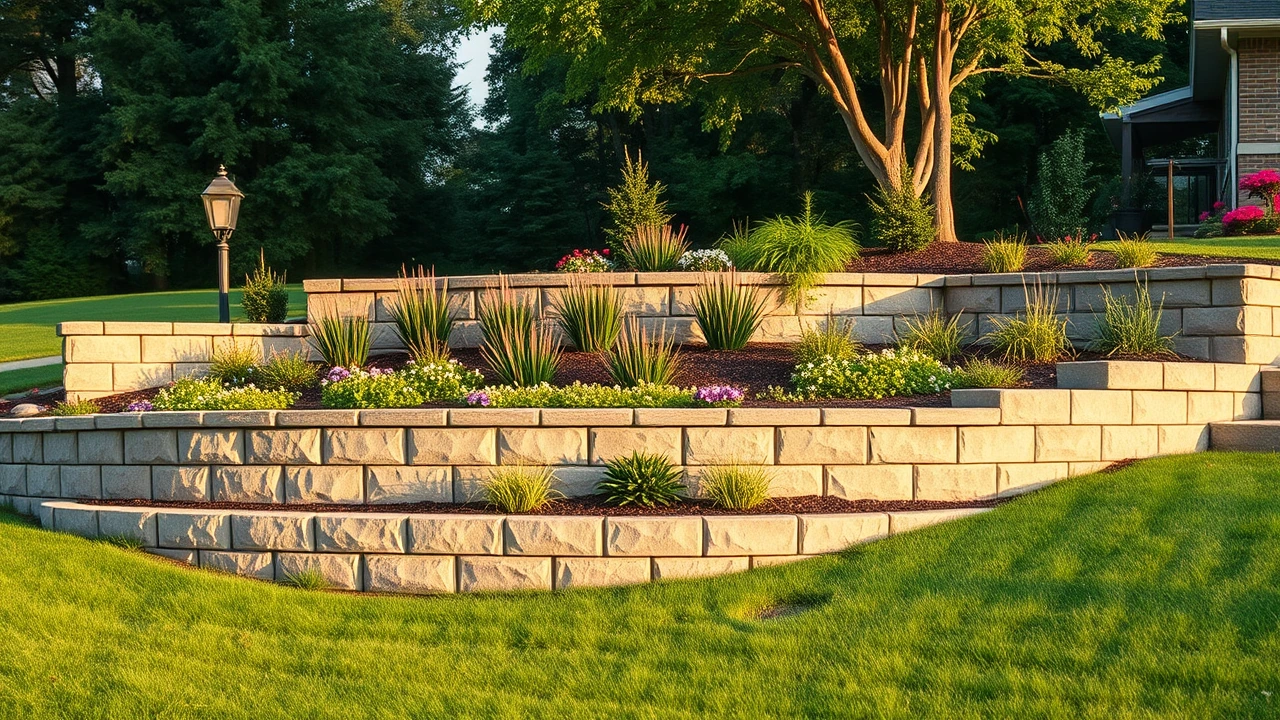
Milton sits on a band of heavy clay subsoil that runs from the Hamilton Mountain north through Halton, and any retaining wall built on it has to fight two things at once: hydrostatic pressure from poor-draining clay, and lateral movement from 80 to 100 freeze-thaw cycles per season. The Mattamy and Heathwood subdivisions across Beaty, Willmott, Hawthorne Village, Bristol Survey, Coates, Scott, Bowes, Cobban and Ford were graded with engineered swales running between back-to-back lots, and many homes ended up with usable rear yards only because a retaining wall holds the grade somewhere in the middle. Old Milton south of Main Street has narrow heritage lots with grade changes against neighbouring properties that were never properly walled in the first place. Near Kelso and Rattlesnake Point, the Niagara Escarpment Plan area boundary changes everything: a wall that looks routine in Beaty becomes a development permit conversation in escarpment-edge Milton. Building a Milton retaining wall right means designing for the clay and the freeze, not pretending they are not there.
Quick verdict for Milton homeowners
A properly built, code-friendly segmental retaining wall in Milton in 2026 runs $55 to $135 per face square foot turnkey for most residential walls under 1.2 m tall, with engineered walls above 1.2 m, walls supporting driveways or pools, and escarpment-edge builds running $120 to $220 per face square foot. A typical 200 to 500 face sq ft Mattamy backyard wall takes 6 to 14 working days on site, weather permitting. The Ontario Building Code threshold for engineered drawings is 1.2 m exposed height (or anything supporting a surcharge), and Conservation Halton review is triggered within 30 m of Sixteen Mile Creek and its tributaries. Niagara Escarpment Commission development permits apply inside the Niagara Escarpment Plan area near Kelso, Rattlesnake Point and the Kelso Conservation Area. Get a written scope showing block spec, base depth, geogrid layers, weeping tile and capstone before signing.
2026 Milton retaining wall cost
Prices below are turnkey installed face-square-foot costs for Milton in 2026, including excavation, geotextile, compacted granular base, segmental block, geogrid where required, weeping tile, clear-stone drainage chimney, capstone and site cleanup. They do not include engineered drawings on walls over 1.2 m, Conservation Halton review fees, or Niagara Escarpment Commission permit fees.
| Tier | Block and wall type | Cost per face sq ft | Lifespan | Best fit |
|---|---|---|---|---|
| Basic | Permacon Stackstone gravity wall, under 600 mm, no geogrid | $55 to $85 | 25 to 40 years | Garden bed terracing, low borders in Scott and Bowes |
| Mid-grade | Techo-Bloc Mini Creta or Unilock Roman, 600 mm to 1.2 m, geogrid every 2 courses | $75 to $120 | 40 to 75 years | Most Beaty, Willmott and Hawthorne Village grade walls |
| Premium | Techo-Bloc Aberdeen, Unilock Lineo Dimensional, 1.2 m+ engineered, full geogrid embedment | $110 to $175 | 75+ years | Bristol Survey terraced yards, Cobban driveway walls, pool surrounds |
| Luxury | Large-format engineered SRW with cap and pillar features, integrated lighting, multi-tier escarpment edge | $160 to $220 | 75+ years | Old Milton custom builds, Kelso and Rattlesnake Point escarpment-edge estate lots |
To sanity check the numbers, run them through our retaining wall cost calculator and read the full Ontario retaining wall cost guide for the line-item breakdown.
Common Milton retaining wall projects we build
Mattamy backyard grade walls in Beaty, Willmott and Hawthorne Village
Mattamy built Beaty, Willmott and Hawthorne Village with engineered drainage swales running between back-to-back lots, and the standard graded yard often has a 600 mm to 1.0 m grade change where the rear of the lot meets the neighbour. Without a wall, that slope is unmowable. We rebuild these as segmental block gravity walls in Techo-Bloc Mini Creta or Unilock Roman, with a 150 to 200 mm compacted granular base buried below grade, geogrid embedded into the retained soil every two courses for walls over 600 mm, a perforated weeping tile at the base daylighted to a side-yard discharge, and a 300 mm wide clear-stone drainage chimney wrapped in non-woven geotextile up the back. Capstone is glued with concrete adhesive, and the wall is battered back 1 in per course so it leans into the retained soil. Done correctly, the same wall is still plumb at year 40.
Engineered driveway and pool walls in Bristol Survey and Cobban
Bristol Survey and the newer Cobban builds have lots with 1.5 m to 2.5 m grade changes between the street and the rear yard, and the side-yard walls supporting the driveway or holding back a pool are almost always above the 1.2 m OBC threshold for engineered drawings. We engage a stamped engineer for the wall design (typical fee $1,800 to $4,500), and the design specifies block spec, geogrid grade and layer spacing, embedment depth (typically 60 to 80 percent of wall height per layer), base depth, drainage detail and surcharge loads. We build to the stamped drawing and the engineer signs off on the as-built. This is non-negotiable if the wall is over 1.2 m, holds up a driveway, or holds back a pool.
Sixteen Mile Creek and ravine-edge walls under Conservation Halton review
Any retaining wall within 30 m of Sixteen Mile Creek, its tributaries or any regulated watercourse through Milton triggers Conservation Halton review. The application process can add 4 to 12 weeks to the timeline, and CH asks for an erosion and sediment control plan, the wall's drainage detail, and confirmation that the wall does not block the regulated flow path or destabilise the bank. We handle the CH application as part of the build and silt-fence the active work zone for the duration of construction. For homeowners with a wall already leaning toward a watercourse, our leaning retaining wall diagnostic covers when to repair and when to rebuild.
Niagara Escarpment Plan area walls near Kelso and Rattlesnake Point
The Niagara Escarpment Plan area boundary runs through the western edge of Milton near Kelso, Rattlesnake Point, the Kelso Conservation Area and the Bruce Trail corridor. Any retaining wall on a property inside the Plan area requires a Niagara Escarpment Commission development permit before construction begins. NEC review looks at visual impact from the escarpment face, drainage, vegetation removal, and consistency with Plan policies. Permit timelines run 6 to 16 weeks, longer if a hearing is required. We know the application package the NEC expects: site plan, elevation drawings, drainage detail, materials and colour, vegetation plan. We do not start excavation in the Plan area without the NEC permit in hand.
Why DIY retaining walls fail on Milton clay (and what we do differently)
The four failure modes we see on torn-out Milton DIY walls repeat every spring. First, no drainage behind the wall: block stacked directly against retained clay with no clear-stone chimney and no weeping tile. The freeze cycle locks water behind the wall, hydrostatic pressure builds, and the wall bulges out by year three. Second, no geogrid in walls over 600 mm: gravity walls hold only up to that height in clay. Anything taller has to mechanically tie back into the retained soil with geogrid, or the wall pivots forward at the base.
Third, shallow base: 100 mm of bagged paver base placed on unimproved clay. The base has to be 150 to 200 mm of compacted granular A or 3/4 clear, on a stripped and compacted subgrade, buried at least one course below grade. Fourth, ignored OBC and permit triggers: walls over 1.2 m built without engineered drawings, walls inside Conservation Halton regulated areas built without review, and walls in the NEP area built without NEC permits. Any one of these can become an order to remove and rebuild. We do it differently: confirmed permit path, base buried one course below grade, geogrid per the design, perforated weeping tile and clear-stone chimney behind every wall, capstone glued, 1 in per course batter, and as-built sign-off where engineering applies.
The Milton retaining wall install timeline
- Free on-site visit. We measure the grade change, probe the clay subsoil, locate any regulated watercourse or escarpment plan boundary, photograph existing drainage and downspouts, and talk through how the wall has to perform. You leave with a realistic Milton 2026 cost band.
- Design and written quote. We send a fixed scope with block spec, base depth, geogrid layers, drainage detail, capstone, face square footage and timeline. For walls over 1.2 m or supporting a surcharge, we line up the engineered drawing.
- Permit and review path. We confirm whether Conservation Halton review applies (Sixteen Mile Creek and tributaries within 30 m), whether Niagara Escarpment Commission permit applies (inside Plan area near Kelso and Rattlesnake Point), and whether the Town of Milton building permit applies (engineered walls). We file and wait on the approvals before mobilising.
- Demo, excavation and base. We strip vegetation, excavate the wall footprint and the geogrid bench behind it, lay non-woven geotextile, place 150 to 200 mm of granular base, and compact in 75 mm lifts dead-level.
- Block, geogrid and drainage. First course is set and levelled course by course, with geogrid layers embedded into the retained soil at the design spacing, a perforated weeping tile sleeved in filter sock at the base behind the wall daylighted to a discharge, and a 300 mm wide clear-stone chimney wrapped in non-woven geotextile up the back of the wall.
- Capstone, backfill and cleanup. Capstone is glued with concrete adhesive on the 1 in per course batter, the retained zone is back-filled in lifts and compacted, surface drainage is graded to send runoff to the side yard, and we walk the wall with you before invoicing.
Permits and bylaws in Milton
The Town of Milton requires a building permit for any retaining wall over 1.0 m exposed height supporting a surcharge, and the Ontario Building Code requires stamped engineered drawings for any wall over 1.2 m regardless of surcharge. Walls under 1.0 m with no surcharge generally do not need a Town permit, but the wall must drain to the homeowner's property and not push runoff onto a neighbour.
Conservation Halton review is triggered within 30 m of Sixteen Mile Creek, its tributaries or any other regulated watercourse, and for walls inside the regulated flood plain. Application timelines run 4 to 12 weeks. The Niagara Escarpment Commission development permit is required for any wall on a property inside the Plan area near Kelso, Rattlesnake Point and the Kelso Conservation Area. NEC review runs 6 to 16 weeks. We handle the permit path, engineered drawing, CH review and NEC application as part of the build. Our Hamilton, Burlington and Oakville landscaping permits guide covers the broader Halton picture.
Frequently asked questions
What kind of warranty do you offer on a Milton retaining wall?
Our standard Peace Love Landscaping warranty is 1 to 2 years on workmanship across the assembly (base, block layout, geogrid placement, drainage detail, capstone), on top of the manufacturer warranty on the block itself (Techo-Bloc, Unilock and Permacon carry 25-year to lifetime transferable warranties against structural defects). For engineered walls, the engineer's sign-off applies to the structural design. Full terms are in the signed contract.
Do I need engineered drawings for my Milton retaining wall?
Yes if the exposed height is over 1.2 m, or if the wall supports a surcharge (driveway, pool, structure) regardless of height. Engineered drawings specify block grade, geogrid layers and embedment depth into the retained soil, base depth, drainage detail and surcharge loads. The engineer signs off on the as-built once the wall is complete. Typical engineering fees in Milton run $1,800 to $4,500 depending on wall area and complexity.
What is geogrid and why does my Milton wall need it?
Geogrid is a high-tensile polymer mesh placed in horizontal layers between block courses and extending back into the retained soil. It mechanically ties the retained mass into the wall face so the assembly acts as one block of reinforced soil rather than a stack of loose units. Walls over 600 mm on Milton clay generally need geogrid because gravity alone cannot hold the retained soil. Embedment depth is typically 60 to 80 percent of wall height per layer, set at every other course or per the engineered design.
How do you handle drainage behind a Milton wall?
Three layers of defence. A perforated weeping tile sleeved in a filter sock at the base behind the wall, daylighted to a side-yard discharge point. A 300 mm wide clear-stone (3/4 clear) chimney up the full height of the wall, wrapped in non-woven geotextile so retained clay fines cannot migrate into the drainage. And surface grading at the top of the wall that sheds runoff away from the retained zone rather than into it. Milton clay holds water, so the drainage detail matters more here than on sandy soils.
What is the batter angle on a segmental retaining wall?
1 in per course (roughly 25 mm), which works out to around 6 to 7 degrees of lean back into the retained soil. The batter is built into most engineered segmental wall blocks: each course steps back from the one below it. Battering the wall back distributes the lateral pressure from the retained soil and makes the wall self-supporting. Walls built plumb or leaning out fail much faster.
What is Conservation Halton review and when does it apply?
Conservation Halton review is the regulatory approval required for any work within a CH regulated area, including 30 m of Sixteen Mile Creek and its tributaries through Milton, and any regulated flood plain. The application asks for site plan, drainage detail, erosion and sediment control plan, and confirmation that the work will not destabilise the bank or block the regulated flow path. Timelines run 4 to 12 weeks.
What is the Niagara Escarpment Commission permit and when does it apply?
The NEC development permit is required for any development, including retaining walls, on a property inside the Niagara Escarpment Plan area. In Milton, the Plan area runs along the western edge near Kelso, Rattlesnake Point, the Kelso Conservation Area and the Bruce Trail corridor. NEC review looks at visual impact from the escarpment face, drainage, vegetation removal, and Plan policy consistency. Timelines run 6 to 16 weeks, longer if a hearing is required.
Can you tie the retaining wall into a new patio, fence or driveway?
Yes, and on sloped Bristol Survey or Cobban lots it is usually the right call. Combining the wall, the patio, the fence and any driveway replacement into one mobilisation saves three to five days of setup costs and gives a single warranty across the whole assembly. The same crew that builds the wall handles the patio, fence and driveway work.
Ready to talk about your Milton retaining wall? Request a free quote and we will book a site visit within 2 business days. Our retaining walls and hardscaping service page covers block and engineering options, the Ontario retaining wall cost guide plus cost calculator let you sanity-check any quote, and the leaning, bulging and cracking wall diagnostic tells you whether to repair or rebuild. Our Milton interlocking patio page shows how we sequence wall and patio work.