
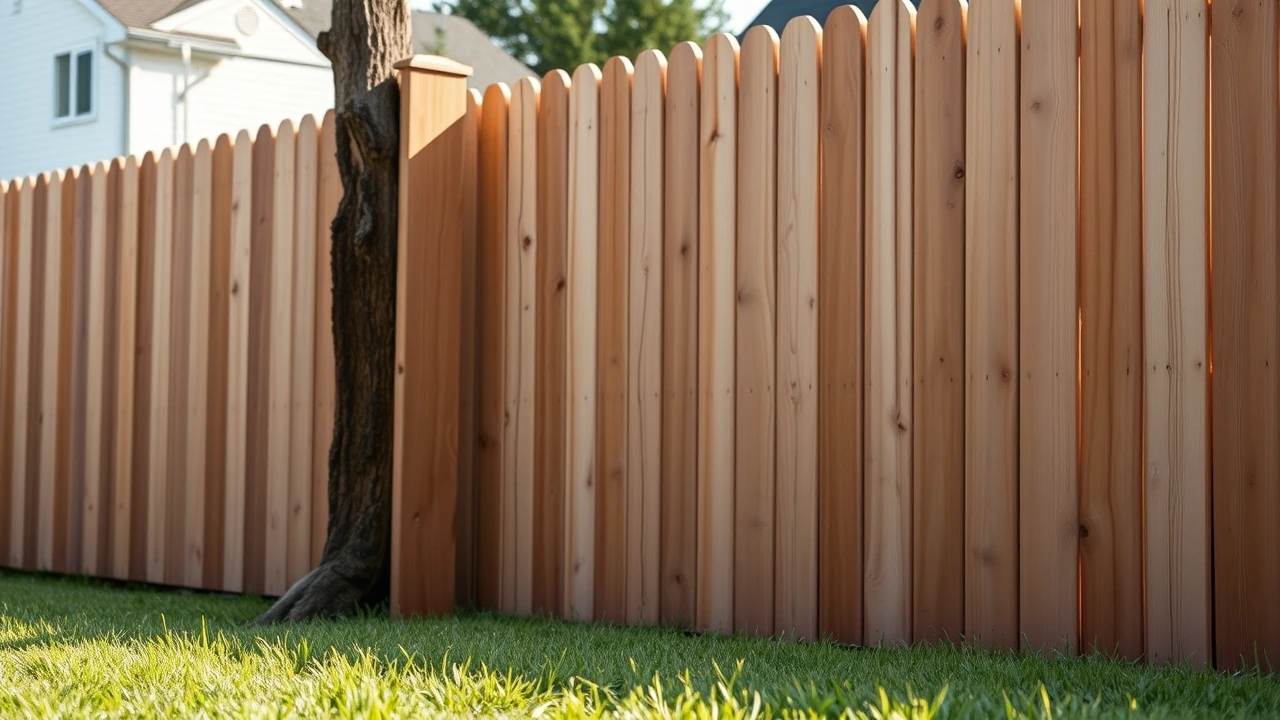
A cedar fence has one weak point: where the post meets the ground. 9 out of 10 failing fences in our region are not rotting in the boards, they are rotting at or just below grade where moisture, soil contact and frost meet wood. This guide shows you how to test each post, identify whether you have post-base rot, frost heave, missing concrete collars, gate sag or simple end-of-life, and what it costs in 2026 to repair vs replace. We rebuild fences across Hamilton, Burlington, Oakville and Niagara every week, and the diagnosis is almost always faster than people expect.
Quick diagnosis
Grab the top of each post and push. If it wobbles, the problem is at or below grade: either the post is rotted, the concrete collar is missing or broken, or frost has lifted it. Cedar fences in Ontario typically last 15 to 25 years. Pressure-treated (PT) posts last 20 to 35 years. If your fence is past those numbers and multiple posts wobble, you are looking at a rebuild, not a repair. If only 1 or 2 posts wobble on an otherwise solid fence, you can replace those posts and add 5 to 10 years.
Diagnostic table: match your symptom to the cause
| Symptom you see | Likely cause | DIY-fix | Pro-fix cost range |
|---|---|---|---|
| Post wobbles, soft and dark at grade, snaps when pushed | Post-base rot from wood-ground contact | Replace post if isolated | $250 to $450 per post |
| Post still solid but tilted, concrete pad visible above grade | Frost heave, footing too shallow | No | $300 to $500 per post to reset deeper |
| Post sunk in dirt with no concrete | Missing concrete collar, original install shortcut | Replace post with concrete | $250 to $450 per post |
| Concrete collar cracked or crumbling | Failed collar, poor mix or freeze-thaw | Replace post and collar | $280 to $500 per post |
| Gate drags or will not latch | Sagging gate, single hinge or weak post | Add anti-sag cable kit | $200 to $600 gate rebuild |
| Multiple posts wobble, fence is 20+ years old | End of life, system-wide rot | No | Full rebuild, $50 to $90/ft for cedar |
| Boards rotted only at bottom 6 inches, posts fine | Wood-ground contact at boards, no gravel base | Replace bottom boards or add kickboard | $15 to $30/ft for board replacement |
| Specific section leaning toward neighbour | Neighbour drainage or grading pushing soil | No, drainage fix required | $1,500 to $5,000 plus fence repair |
1. Post-base rot from wood-ground contact
The single most common reason a cedar fence fails. Cedar is naturally rot-resistant in the boards and rails, but the post-base sits in moist soil for decades. Even cedar will rot at the grade line, usually in the 1 inch zone right at soil level where oxygen and moisture meet.
How to confirm
Push the top of the post hard. If it wobbles, dig down 4 inches at the base and probe the wood with a screwdriver. If the tip sinks in easily or the wood is dark and stringy, the post is rotted at grade. Often the post snaps clean if you rock it side to side.
How to fix
If only 1 or 2 posts on a healthy fence: dig out the old post and concrete, install a new pressure-treated 4x4 (better than cedar for posts), set in fresh concrete with a sloped crown so water sheds away. Reattach existing rails and boards.
What it costs
$250 to $450 per post replaced, including disposal, concrete, new post and reattachment. If you have 5 or more rotted posts, full rebuild becomes the smarter spend.
2. Frost heave lifting posts out of the ground
Ontario frost depth is about 4 ft. A post buried only 24 to 30 inches will lift a fraction of an inch every winter as the soil freezes and expands. After 8 to 15 winters the post is visibly tilted, sometimes with the concrete pad rising above grade.
How to confirm
Sight down the fence line. If posts are tilted but the wood is still solid, look at the base: if you can see concrete above grade, frost is lifting it. Probe around the post, a shallow footing will hit clay at 24 to 30 inches instead of going below 4 ft.
How to fix
Dig out and reset the post with the concrete extending at least 42 inches deep, with a bell shape at the bottom and a sloped crown at top. The wider base resists frost grip on the post.
What it costs
$300 to $500 per post reset deeper, more if access is tight or there are tree roots.
3. Missing concrete collar (post sunk in dirt only)
Some builders, especially on older or budget fences, set the post directly in tamped dirt or gravel with no concrete. This works for about 5 to 10 years before the post rots at grade or the soil washes out and the post wobbles.
How to confirm
Dig 6 inches around the post base. If you find dirt, gravel or crushed limestone with no concrete, that is your problem. The post has been wicking soil moisture for years.
How to fix
Replace the post (it is almost certainly rotted) and set in concrete, 42 inches deep, crowned at top.
What it costs
$250 to $450 per post. If most of the fence was built this way, full rebuild is the right call.
4. Cracked or crumbling concrete collar
Bad concrete mix (too much water, no air entrainment) or repeated freeze-thaw can crack a collar within 10 to 15 years. Water then gets into the wood-collar interface and accelerates rot.
How to confirm
Visible cracks radiating from the post through the concrete, often with the post wobbling. The collar may look like it is in two or three pieces.
How to fix
Full post and collar replacement with proper bagged concrete (Sakrete High Strength or QUIKRETE 5000), 42 inches deep, crowned.
What it costs
$280 to $500 per post.
5. Sagging gate (drags, will not latch)
Gates fail before the fence does. A standard 4 ft cedar gate is heavy and pivots on 2 small hinges off one post. The hinge post twists, the gate corner drops, the latch misses. We get this call almost weekly.
How to confirm
Open and close the gate. If the latch-side corner drags on the ground or sits an inch below the latch, the gate has sagged. Check the hinge post: if it leans toward the gate, the post is twisting.
How to fix
Three options: 1) install an anti-sag cable kit (turnbuckle + steel cable corner to corner) to pull the gate square, often a temporary fix; 2) rebuild the gate with a diagonal wood brace and 3 heavy-duty hinges; 3) reset or replace the hinge post with a 6x6 PT post.
What it costs
$60 to $120 for a DIY anti-sag kit. $200 to $600 for a pro gate rebuild including the hinge post if needed.
6. Wood species and end-of-life rebuild
Cedar fences in Ontario have a realistic 15 to 25 year life. Pressure-treated lasts 20 to 35 years. Once multiple posts are wobbling and boards are graying and cupping, you are at end of life. Patching one post a year buys very little time and the cumulative repair cost exceeds the rebuild.
How to confirm
Walk the fence and push every post. Count the wobbles. If more than 25% of posts wobble, or the fence is past 20 years and showing widespread rot at grade, rebuild.
How to fix
Full rebuild with PT posts (cedar boards still fine), 42 inch deep concrete collars, gravel base at the bottom rail to keep boards out of soil contact.
What it costs
$50 to $90 per linear foot for cedar in 2026, $35 to $60 for pressure-treated, $50 to $85 for vinyl. Use the fence cost calculator for your specific run.
7. Neighbour drainage and grading pushing the fence
If a single section of fence is leaning toward your yard (or theirs), check the grade. A neighbour who built up their soil with a garden bed, retaining wall or downspout discharge against the fence is hydraulically pushing the fence over. Wet soil weighs about 120 lb per cubic foot.
How to confirm
Look at the grade on both sides of the leaning section. If one side is 6 to 18 inches higher than the other, that height difference is loading the fence. Look for downspouts or sump discharges aimed at the fence.
How to fix
The grade has to be corrected before any fence repair holds. That may mean a small retaining wall on the high side, a French drain, or moving a downspout. Then reset or replace affected posts.
What it costs
$1,500 to $5,000 for drainage or small retaining wall work plus the per-post fence reset cost.
Repair vs rebuild: how to decide
The math is usually clear once you walk the fence:
- Repair if 1 to 3 posts wobble on an otherwise solid, plumb, under-15-year-old fence.
- Repair if only the gate is the problem.
- Replace bottom boards only if posts and rails are solid but boards are rotted at the base (add a gravel kickboard).
- Rebuild if more than 4 posts wobble, or the fence is over 20 years old, or you find systematic shortcuts (no concrete, shallow footings).
- Rebuild if you want to upgrade from cedar to a longer-life material like vinyl or aluminum.
A useful rule: if your patch quote is more than 30% of the rebuild quote, rebuild. You will spend the rest within 3 to 5 years anyway.
How to prevent it next time
- Use pressure-treated 4x4 or 6x6 posts even on cedar fences. Cedar boards on PT posts is the gold standard.
- Set posts in concrete at least 42 inches deep, crown the top so water sheds away from the post.
- Add a gravel kickboard or composite bottom rail so wood boards never touch soil.
- Install 3 heavy-duty hinges (not 2) on every gate, add a diagonal brace in the gate frame.
- Keep mulch, leaves and snow piles pulled back from the post base, they trap moisture.
- Re-stain or seal cedar every 3 to 5 years, especially the bottom 12 inches and the post tops.
- Fix grading and drainage on both sides of the fence before building. Water is the enemy.
Frequently asked questions
How long should a cedar fence last in Ontario?
15 to 25 years for an all-cedar build, 20 to 35 years for cedar boards on PT posts. Fences set in dirt only (no concrete) often fail within 8 to 12 years.
Can I just replace the rotted posts and keep the boards?
Yes if the boards and rails are still solid. We salvage existing rails and boards routinely when replacing individual posts. If boards are graying, cupping or rotting at the bottom, replace them while the post is out.
Should I use cedar or PT for posts?
Pressure-treated, always. PT is rated for ground contact and lasts 30 to 50% longer in the soil. Cedar is for the visible boards and rails where appearance matters.
How deep should fence post concrete go in Ontario?
At least 42 inches, below the 4 ft frost line. Shallower footings will heave every winter. 36 inches works for short ornamental fences but not for 6 ft privacy fences.
Do I need a permit to rebuild a fence in Hamilton or Burlington?
Fences under 2.0 m (about 6 ft 7 in) typically do not need a permit, but pool enclosure fences do and there are setback rules on corner lots. Check your municipal bylaw.
Can I use a fence post anchor or spike instead of concrete?
Not for a 6 ft privacy fence in Ontario clay. Metal spikes work for ornamental garden fences but will not hold a tall, wind-loaded privacy fence through our freeze-thaw cycles. Concrete below frost line is the only reliable answer.
My neighbour and I share the fence, who pays for repairs?
Ontario Line Fences Act covers shared boundary fences. Both owners are typically responsible for cost-sharing on a reasonable replacement. Talk to your neighbour first, your municipality has a fence viewer process if you cannot agree.
How much does a new cedar fence cost in 2026?
$50 to $90 per linear foot installed for 6 ft cedar in Hamilton, Burlington and Oakville, plus $400 to $900 per gate. Use our fence cost calculator for your specific yard.
If your cedar fence is rotting, leaning or loose, do not wait for it to fall on a windy night. Request a free quote and we will walk the fence with you, test every post, and give you a written repair vs rebuild scope. While you plan, read our Ontario fence cost guide, price your specific run with the fence cost calculator, and compare materials in our wood vs vinyl vs aluminum fence guide.
Pricing the repair? See 2026 fence repair costs for bracing, resetting and replacing posts.
Gate dropping as well? See the brace direction table and hinge post sizing in our fence gate guide.
Replacing posts? See how to set fence posts so they stay put in Ontario clay.