
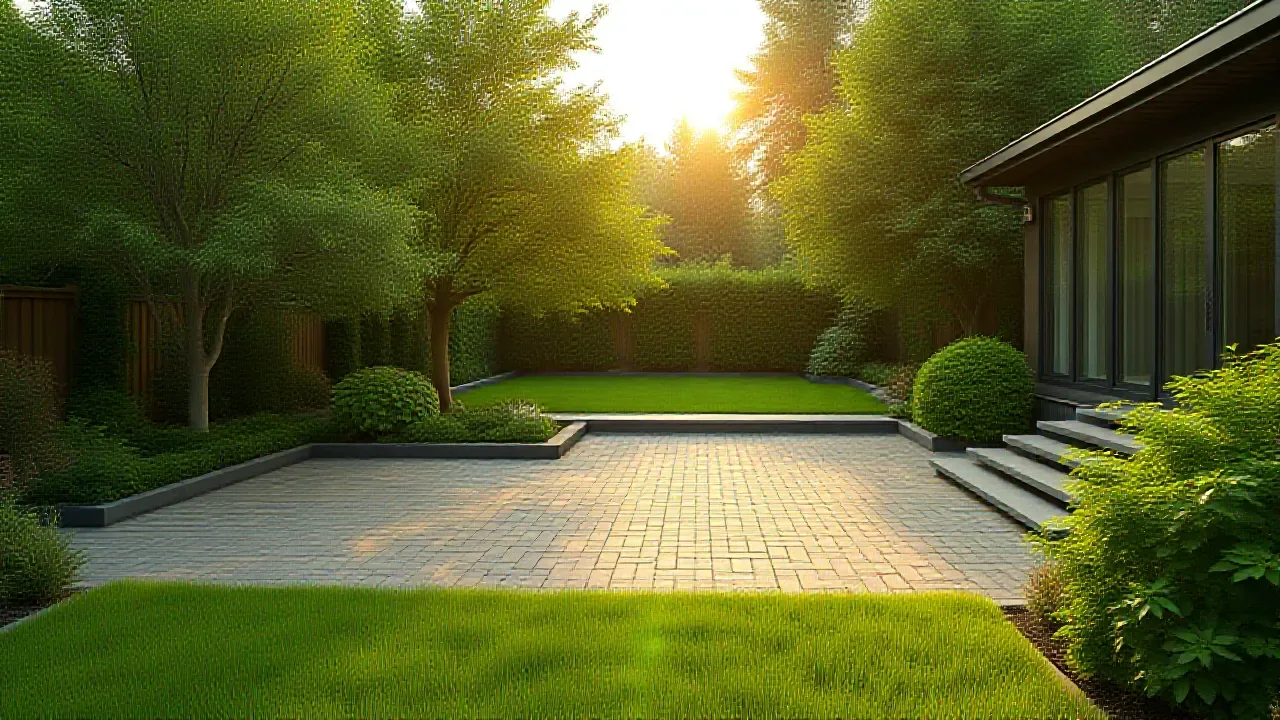
Low-maintenance does NOT mean low-design. The yards that actually need minimal work are the ones designed to need minimal work. Here are the choices that real Ontario homeowners make when they tell us they want to spend less time in the yard.
The big-picture choices
1. Reduce or eliminate the lawn
Lawn is the highest-maintenance surface in any yard. Mowing, watering, fertilizing, edging, dethatching, aerating, overseeding. Replacing 50% of your lawn with hardscape (patio, walkways), shrub beds and mulched perennials cuts maintenance time by half or more.
If you want some lawn for kids or pets, keep it small (under 50 m²) and well-defined with a clean edge.
2. Expand the hardscape
A larger paver patio, wider walkways, and gravel or stone seating areas all reduce planted area. Done properly (proper base, polymeric jointing) hardscape needs almost no maintenance for 25-30 years. Plan the layout to handle entertaining, BBQ access, walking paths from house to garden.
3. Pick the right plants
The lowest-maintenance plants are: established mature shrubs (no replanting), drought-tolerant perennials (no daily watering), ornamental grasses (no deadheading), and evergreen ground covers (no annual replanting). Skip annuals entirely. Skip plants that need pruning multiple times a year.
4. Design for plant density
The single biggest reason gardens get weedy is bare soil. Plants spaced too far apart leave gaps where weeds establish. Plant beds to FULL density from day one (groundcover plants between mid-height plants, no soil visible between them when mature). Initial cost is higher; ongoing weed work approaches zero.
5. Mulch generously
5 to 7 cm of shredded bark mulch across all garden beds. Refresh annually in spring. Mulch suppresses weeds, holds moisture, breaks down to feed the soil. The single most-effective weed-reduction strategy is just enough mulch.
Specific design ideas that work
The hardscape-first backyard
A large interlocking patio (40 to 60 m²) covering most of the usable yard, with a narrow shrub-and-perennial border along the property lines, and no lawn at all. Looks intentional, takes 30 minutes a week to maintain.
The structured-plant backyard
Boxwood spheres or low formal hedges define beds. Inside the beds: 3 to 4 plant varieties repeated for rhythm, mulched deep. The structural shapes give visual interest even without flowers. Pruning is once or twice a year.
The native-prairie backyard
Native perennial mix (coneflower, black-eyed Susan, asters, grasses) covering large areas. Establishes in 2 to 3 years to a self-sustaining ecology. Cut down once in late winter. Pollinator-friendly bonus.
The gravel-and-stone backyard
Crushed stone or pea gravel as the primary surface, with strategic island beds of drought-tolerant plants and a few large statement shrubs. Mediterranean feel, very low-maintenance once installed.
Specific plants for low-maintenance Ontario yards
Workhorses: Karl Foerster grass, sedum, daylily, coneflower, hosta, juniper (shrub form), boxwood, viburnum, hydrangea (panicle types specifically - they bloom on new growth and need only one annual cutback).
Skip: roses (most need spraying and pruning), most annuals, plants requiring deadheading, plants needing weekly watering, lawn alternatives that need overseeding.
What you give up
Honest: a low-maintenance yard usually has less seasonal variation than a high-maintenance one. No tulip displays, fewer pop-of-colour annuals, less ever-changing scenery. The trade-off is your weekends back.
Frequently asked questions
How small can the lawn be before it's not worth having?
Under 30 m² is usually not worth the maintenance for a few minutes of mowing each week. Either keep at least 50 m² for real use (kids, dogs, lounging) or eliminate the lawn entirely and gain back the time.
What about artificial turf?
Real option for ultra-low-maintenance. Modern artificial turf looks much better than the 1990s versions. Mid-grade residential turf costs around $14 to $20 per square foot ($151 to $215 per m²) installed in Ontario. Lifespan 15 to 20 years. Pros: zero maintenance. Cons: gets hot in summer sun, drainage requires proper sub-base.
Are wood chips or rock mulch better?
Wood chips for plant health. They break down to feed soil and don't superheat plant roots. Rock mulch (river stone, crushed stone) is lower maintenance (doesn't need refreshing) but harder on plants and gets very hot. Use rock around hardscape, wood around plants.
What if I want some flowers without high maintenance?
Reblooming daylilies (Stella d'Oro, Happy Returns), reblooming roses (Knock Out series, Drift series), reblooming salvia, catmint, sedum, panicle hydrangea. These flower long without deadheading.
How much does a low-maintenance backyard cost to install?
Higher upfront than a typical install because hardscape ratio is bigger. A 100 m² yard with 50 m² of patio, 30 m² of dense plant beds, and 20 m² of lawn typically runs $30,000 to $60,000 in Ontario. Use our backyard budget calculator to model your scenario.
How much time does low-maintenance design actually save?
Real numbers from typical Ontario residential yards.
Traditional yard (lawn-heavy, perennial beds with bare-soil gaps, annuals in containers, multiple shrub species needing pruning): 3 to 5 hours of maintenance per week during the growing season. Annual time investment: 100 to 150 hours.
Low-maintenance designed yard (50%+ hardscape, mulched mature shrub beds, drought-tolerant perennial drifts, minimal lawn): 0.5 to 1.5 hours per week during the growing season. Annual time investment: 20 to 40 hours.
Net time savings: 80 to 110 hours per year. At even modest valuation, that's a significant return on the upfront design investment.
Cost comparison: low-maintenance vs traditional
Year 1 cost
Low-maintenance design costs MORE up front. More hardscape (patios, walls) and mature shrubs cost more than lawn and small perennials. A 100 m² yard:
Traditional install: $12,000 to $20,000 (mostly lawn, perennial planting, basic patio).
Low-maintenance install: $25,000 to $45,000 (larger patio, mature shrub beds, drought-tolerant planting, no lawn).
Difference: $13,000 to $25,000 upfront for low-maintenance.
10-year ownership cost
Where low-maintenance pays back:
Traditional ongoing cost: Mowing, fertilizing, mulching, annual plant replacement, plus your time. Typical: $1,500 to $3,000 per year in materials and contracted services. Plus 100 to 150 hours of your time.
Low-maintenance ongoing cost: Mulch refresh, occasional plant replacement, almost no services needed. Typical: $300 to $700 per year. Plus 20 to 40 hours of your time.
Over 10 years, low-maintenance saves $10,000 to $25,000 in ongoing costs AND saves 800 to 1,100 hours of yard work.
Specific case study patterns
The empty-nester yard
Goal: enjoy the yard without the maintenance burden of when raising kids. Typical solution: expand the patio to 50 m² with quality outdoor furniture. Reduce lawn to a small ornamental section. Mature shrub borders replace mixed perennial beds. Annual hours: under 20.
The dual-income busy household yard
Goal: usable yard for occasional entertaining with minimal weekend work. Typical solution: medium patio, mulched shrub beds, minimal lawn (maybe just 30 m² for kids), drip irrigation on a timer for all beds, no annuals. Annual hours: 20 to 30.
The rental property yard (landlord perspective)
Goal: nice-looking yard tenants can't kill. Typical solution: aggressive hardscape coverage, indestructible plants (juniper, ornamental grasses, sedum), no plants requiring intervention. Annual hours: under 10.
Common mistakes when going low-maintenance
- Spacing plants too far apart. Bare soil is weed soil. Plant beds to maturity-density from day one, even if it looks crowded initially.
- Using rock mulch over poor soil. Looks low-maintenance but heats soil and stresses plants. Use rock mulch only over a proper landscape fabric base, and only in zones where you want zero growth.
- Eliminating ALL planted areas. A backyard that's 90% concrete looks barren. Aim for 30 to 50% hardscape, not 90%.
- Picking trendy plants over reliable ones. Most plants marketed as "low-maintenance" are reliable in their ideal conditions but fail in less-than-ideal sites. Stick to plants we've listed as proven Ontario performers.
- Not planning for drainage. Hardscape reduces planted area but increases runoff. Plan where water will go after hardscape goes in. French drains or swales are part of low-maintenance design.
More questions, answered
Are artificial turf yards really low-maintenance?
Yes for cutting grass, no for general care. Artificial turf needs occasional rinsing, pet-waste removal, and infill top-ups every few years. Lifespan 15 to 20 years before replacement. Mid-grade turf costs $14 to $20 per square foot installed. For dog-heavy or kid-heavy yards, the math often works.
How small can the lawn be before it's not worth having?
Under 30 m² you spend more time mowing than enjoying. Either commit to a lawn that's 50+ m² for real use, or eliminate it. The middle ground is the worst of both.
What plants survive complete neglect?
Juniper (most varieties), sedum, ornamental grasses, sumac, daylily, daffodils (after planting). These survive 3+ years of no care if soil and exposure are right at planting.
Will a low-maintenance yard look professional?
When designed well, yes. The difference between designed and default is often the willingness to repeat just a few plants in large quantities rather than collect many different species. Design beats variety for low-maintenance impact.
Want the front just as easy? See low-maintenance front yard ideas including salt-tolerant planting along the street.
Using stone instead of mulch? See landscaping rocks and rock garden ideas that stay weed-free.
Tired of trimming the beds? See garden edging that holds its line for 20 years or more.
Planting a bed that closes over? See garden bed design ideas and spacing for dense, low-care planting.