
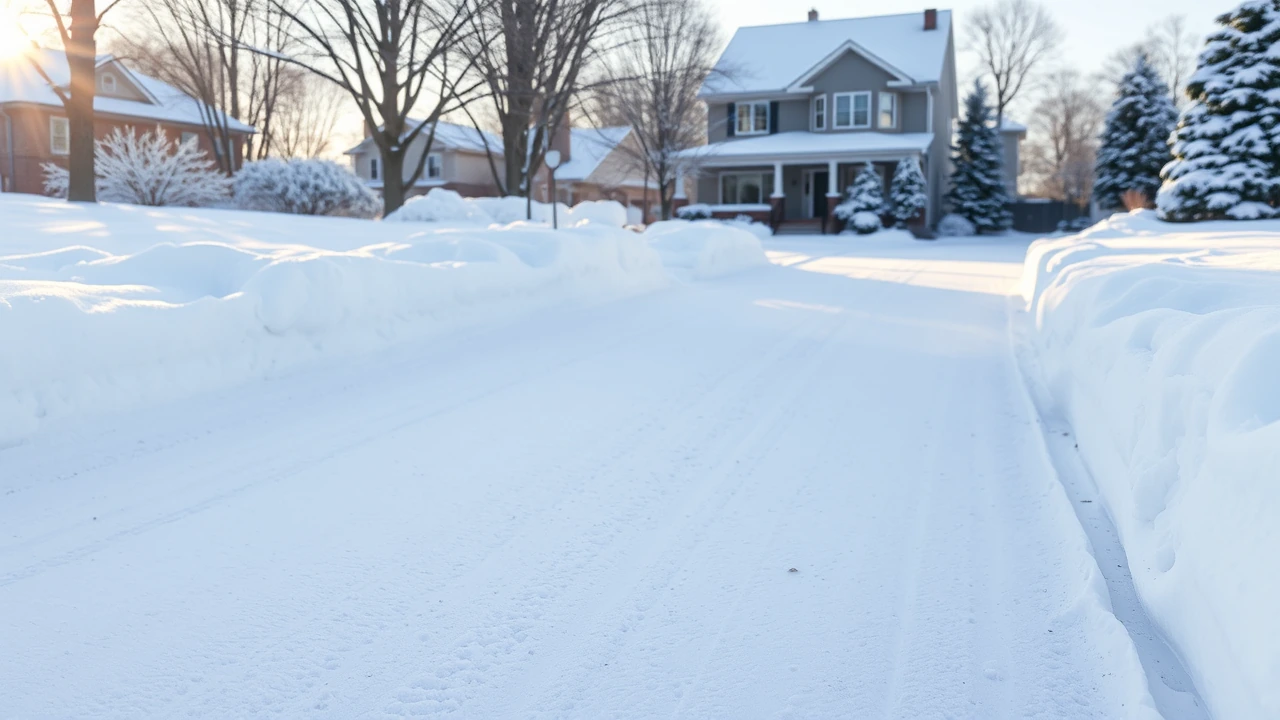
If you live in Hamilton, Burlington, Oakville, or anywhere along the Niagara escarpment, snow removal is not a luxury. It is the difference between getting to work on a Tuesday morning and spending two hours behind a shovel with a sore back. This guide walks through what residential snow removal actually costs in Ontario in 2026, why prices vary so much from one quote to the next, and how to pick a contract that matches your driveway, your schedule, and your tolerance for risk.
The numbers below are the ranges we see across the GTA west and the Golden Horseshoe. Your quote may land at the top or bottom of these ranges depending on driveway size, slope, salting needs, response time, and how many storms the season actually delivers.
Pricing models: per-visit, per-storm, seasonal, and hourly
Almost every Ontario snow contractor uses one of four pricing structures. The right one for you depends on how often it snows where you live, how flexible your schedule is, and whether you would rather pay a predictable flat fee or only pay when the plough actually shows up.
Per-visit pricing
You pay each time the contractor clears your driveway. A visit is usually triggered when snowfall hits a set depth, often 5 centimetres or 2 inches. Per-visit pricing works well for households with light driving needs, a short driveway, or a flexible work-from-home schedule. It is the most common model for one-off storm clean-ups.
Per-storm pricing
Similar to per-visit, but the contractor commits to clearing once per storm event, no matter how long the storm lasts. If a Niagara squall dumps 30 centimetres over 18 hours, that is still one storm and one charge. Per-storm pricing rewards homeowners who do not mind waiting until the snow has stopped falling.
Seasonal flat-rate contracts
You pay one price for the whole season, typically November through April, and the contractor comes out as often as needed. This is the most popular residential model in Hamilton and Burlington because it removes the guessing game. In a heavy season you get great value. In a mild season the contractor wins. Over a five-year average, most homeowners find it balances out.
Hourly pricing
Less common for residential work but standard for commercial sites. Hourly rates run roughly $90 to $160 for a truck and operator, more for a loader or skid steer. Most homeowners avoid hourly because there is no cap on what a long storm can cost.
Real 2026 ranges by service tier
Here are the ranges we see across residential properties in the Hamilton, Burlington, Oakville, and Niagara corridor. These assume a standard suburban driveway that fits two cars side by side, roughly 6 by 12 metres. Larger lots, country properties, and long rural drives sit well above the top of each range.
Driveway only, per visit
Expect $40 to $80 per visit for a standard two-car driveway in 2026. Smaller single-car driveways trend toward the low end. Triple-wide or extra-long driveways trend toward the high end or beyond. Add roughly $15 to $30 if a walkway is included.
Driveway plus walkways, seasonal
A typical seasonal contract for driveway and front walkway runs $450 to $750 for the season. This usually covers unlimited visits at a set trigger depth, with the contractor deciding when to come based on weather.
Full property with salt, seasonal
Driveway, walkways, porch, and salting on every visit lands in the $700 to $1,200 range for residential properties in 2026. Salting is the variable that pushes prices up the most. Salt is not cheap, and applying it correctly takes time.
Premium tier: priority response, ice management, post-storm clean-up
Some contractors offer a top tier with guaranteed response times, second visits after storm tails, and full ice management. Expect $1,000 to $1,600 for the season on a standard residential property. This tier is popular with seniors, shift workers, and homeowners on steep escarpment streets.
What actually drives the price
Two houses on the same street can get quotes that differ by hundreds of dollars. Here is what changes the number.
Driveway size and shape
A 6-metre single-car driveway is a five-minute job. A long rural drive in Flamborough or rural Burlington can be a 30-minute job with multiple passes. Length, width, and turning room all matter.
Slope and the escarpment factor
Hamilton mountain driveways, escarpment-access streets, and the steep ravines around Ancaster and Dundas need more salt, more care, and sometimes specialised equipment. Sloped driveways often see a 15 to 25 percent premium.
Accessibility and obstacles
Tight turns, fences close to the drive edge, low-hanging branches, parked cars, and basketball nets all slow the job down. Contractors price the time it actually takes, not the time a clean driveway would take.
Salting frequency
Salt-every-visit contracts cost more than salt-on-request. Some homeowners only want salt during freezing rain events. Others want it on every visit. Decide before you ask for quotes so you can compare apples to apples.
Trigger depth
A 2-inch trigger means the plough comes more often than a 4-inch trigger. Lower triggers cost more because the contractor visits more times in a season.
Response time guarantee
Standard service usually means cleared within 6 to 12 hours after a storm ends. A 2-hour or 4-hour guarantee costs noticeably more because the contractor has to keep route capacity in reserve for you.
Regional notes across the Golden Horseshoe
Snow does not fall evenly across our service area. Pricing reflects that.
Hamilton and the escarpment
Hamilton mountain, Stoney Creek mountain, and the access roads up the escarpment see heavier salt use and more frequent clearing. Lake-effect events off Lake Ontario can stack centimetres in a hurry. Expect quotes here to sit at or slightly above the Ontario average, with salt-heavy contracts more common than in flatter areas.
Burlington and Oakville lakeshore
The lakeshore strip from Aldershot through Bronte and Oakville often sees less total snow than the rest of the GTA west, but it gets hit harder by freezing rain and ice events. Salt and ice management matter more here than raw snow volume. Seasonal contracts in this area often emphasise ice response over plough frequency.
Niagara region squalls
Grimsby, Beamsville, and the Niagara escarpment see Lake Erie squalls that can drop 20 to 40 centimetres in a single event. Per-storm pricing can get expensive in heavy years. Many Niagara homeowners prefer seasonal contracts precisely because squall season is unpredictable.
Halton Hills and the rural fringe
Rural properties with long driveways need bigger equipment and more time per visit. Expect quotes 30 to 60 percent above suburban pricing for the same service tier.
Seasonal contract vs per-visit: the math
This is the question we get asked the most. Should you pay one flat fee or pay each time?
A typical southern Ontario winter delivers somewhere between 10 and 18 plough-worthy events on a 5-centimetre trigger. Some years it is fewer. The 2023 to 2024 season was famously light. The 2021 to 2022 season was the opposite.
If your seasonal contract is $600 and per-visit is $55, you break even at about 11 visits. Below 11 visits per-visit wins. Above 11 visits seasonal wins. Most Hamilton homes hit somewhere between 12 and 16 visits in an average winter, which is why seasonal contracts are popular here.
There is also the value of certainty. A seasonal contract means you do not stare at the forecast wondering if you should book a clearing. The plough just shows up. For shift workers, parents on a school-run schedule, and anyone with mobility limits, that certainty is worth real money even in a mild year.
Salt, sand, and eco-friendly options
What goes on top of your driveway after the plough has done its work matters almost as much as the plough itself.
Rock salt (sodium chloride)
The standard. Cheap, effective down to about minus 9 Celsius, and what most contractors apply by default. Heavy salt use can stain interlock, damage concrete edges, and harm nearby lawns and garden beds. Salt-included visits typically add $10 to $20 per application.
Calcium chloride and magnesium chloride
More expensive but work in colder temperatures, down to minus 25 Celsius. Often used in blends. Premium ice-management contracts use these on freezing rain events. Expect a 30 to 50 percent premium on per-application pricing.
Sand and grit
Provides traction but does not melt ice. Some homeowners with interlock or stamped concrete prefer sand because it does not chemically damage the surface. Sand needs to be swept up in spring.
Eco-friendly de-icers
Beet juice blends, calcium magnesium acetate, and similar products are gentler on concrete, vegetation, and pet paws. They cost roughly 2 to 4 times more than rock salt. Worth it if you have a young dog, a new interlock walkway, or garden beds that hug your drive.
What to look for in a contract
A good snow contract is a one-page document, not a handshake. These are the items that matter.
- Trigger depth. The snow accumulation that prompts a visit. Common triggers are 5 cm and 7.5 cm for residential work.
- Response time. How many hours after the snow stops will you be cleared. 6 to 12 hours is standard. Anything faster is premium.
- Salting policy. Salt every visit, salt on request, or salt only during ice events. Confirm in writing.
- After-storm clean-up. Will the contractor return after the plough has been by the street and walled off your driveway? This is the moment you actually need them.
- Liability insurance. Ask for a certificate. A contractor without insurance is a liability hiding in your driveway.
- Damage policy. What happens if a plough nicks the interlock or scrapes the garage door. Good contractors carry insurance for this and document driveway markers before the season.
- Payment schedule. Seasonal contracts often split into two or three payments. Lump-sum prepay sometimes carries a small discount.
- Cancellation terms. What happens if you move mid-season or sell the property.
The cost of not having a contract
Skipping a contract feels like a saving until something goes wrong. Two real costs to consider.
Slip-and-fall liability
Ontario homeowners have a legal duty of care to keep walkways reasonably safe. If a delivery driver, postal worker, or visitor slips on an uncleared icy walkway, you can be on the hook. Insurance covers a lot of this, but claims push premiums up and a documented contract with a professional is one of the strongest defences against a negligence claim.
Ice damming and freeze-thaw damage
Ice that builds up against a garage door, along a concrete edge, or in front of a basement window can cause real damage. A contractor who shows up consistently and salts proactively prevents most of this. The cost of one ruined garage door seal or one cracked walkway slab is often more than a full season of service.
The shovel-injury reality
Hospitals across Ontario see a spike in cardiac events and back injuries every major snowstorm. For homeowners over 55, or anyone with a heart condition or back history, the medical case for paying someone else to clear the drive is straightforward.
When to book: September pricing vs January panic
Snow contractors fill their books in September and October. Prices in early autumn are the lowest you will see all year because contractors are competing to lock in routes. By mid-November most established crews have a waiting list.
If you wait until the first storm has already hit, you are now a panic call. Panic calls cost more, often 25 to 40 percent above seasonal rates, and many contractors will not take new seasonal customers after December 1. Per-visit pricing is still available in January but you are paying storm-by-storm at a premium.
The smart play: get quotes in September, sign a contract by mid-October, and forget about snow until April.
Frequently asked questions
Is snow removal cheaper if I sign before the first snowfall?
Yes, almost always. Contractors price aggressively in September and October to fill their routes. By the first major storm of the season, prices on remaining slots rise 20 to 40 percent, and many crews stop taking new seasonal customers altogether after December.
What is included in a typical residential seasonal contract?
Most residential contracts cover the driveway and front walkway, with unlimited visits triggered by a set snowfall depth (commonly 5 centimetres). Salting, porch clearing, and after-plough clean-up are usually add-ons or premium-tier inclusions. Always confirm the trigger depth, response time, and salt policy in writing.
How long after a storm should I expect my driveway to be cleared?
Standard residential service is 6 to 12 hours after the snow stops falling. Premium contracts offer 2 to 4 hour guarantees. During a major event, contractors run their full route in priority order, so the first storm of a long night may mean an early-morning rather than overnight clearing.
Do I really need salt on my driveway?
Salt is not strictly required, but it prevents the thin ice layer that forms after plough passes and during freeze-thaw cycles. If you have steps, a sloped drive, or anyone over 65 in the home, salt or a salt alternative is worth the small added cost. Interlock and new concrete owners should ask about gentler de-icers.
What happens if the plough damages my driveway or lawn?
A professional contractor carries liability insurance and marks the driveway edges with reflective stakes before the season starts. Minor lawn damage at the driveway edge is common and is usually repaired in spring as part of the contract. Serious damage to interlock, garage doors, or fences should be covered by the contractor's insurance.
Can I switch from per-visit to a seasonal contract mid-season?
Sometimes, but the price will be prorated and usually higher than if you had signed in autumn. Most contractors prefer not to add seasonal customers after the first major storm because routes are already full. Per-visit service stays available all winter for occasional clearings.
- Our snow removal service
- Lawn care & maintenance
- How to prepare your yard for winter
- When to start your landscape project
Want a quick estimate? Try our snow removal cost calculator for your project. Slide the inputs to see your real 2026 cost range in seconds.
Seasonal snow removal contract: what is included and what it costs
A seasonal snow removal contract in Ontario gives you a fixed price for the entire winter season, usually November 15 through April 15, regardless of how many storms hit. It is the most common arrangement for residential and small commercial properties in Hamilton, Burlington, Oakville and Halton because it makes budgeting predictable and guarantees priority service during big storms.
Standard 2026 seasonal contract pricing for an Ontario residential single-car driveway runs $450 to $700. A double-car driveway with walkway adds $200 to $350. Commercial properties run by lot size with separate line items for sidewalks, salting and ice management.
What a fair seasonal snow contract includes
- Plowing or blowing on every snowfall of 2 inches or more, 24/7
- Walkway and step clearing where contracted
- Salt or grit application (often a separate line item or per-visit charge)
- Response time guarantee: usually within 6 to 12 hours of storm end for residential, 2 to 4 hours for commercial
- Driveway-edge marker stakes installed in November
- End-of-season cleanup including salt residue rinse
Watch for these contract red flags
- Vague trigger depth: "we plow when we feel like it" instead of a 2-inch threshold
- No response-time guarantee
- Salt and ice control billed separately at unspecified rates
- Cancellation only allowed mid-season at full forfeiture
- No proof of WSIB clearance or commercial-liability insurance
For the full evaluation framework see our contract red-flags guide and our booking timeline guide. To estimate your own seasonal price, try the snow removal cost calculator.
2026 seasonal contract price bands across the Hamilton-Halton-Niagara territory
Direct from our 2026 residential snow-removal quote pipeline for the Golden Horseshoe. Prices are for a full-winter seasonal contract (Nov 15 through Apr 15, unlimited visits at trigger depth), all-inclusive of salting where noted.
| Property type | Driveway only (no salt) | Driveway + walk + salt | Notes |
|---|---|---|---|
| Townhouse / narrow single (single-lane driveway, one entry walk) | $420 to $580 | $620 to $840 | 2 to 3 minutes onsite per visit. |
| Semi-detached / small single (2-car driveway, one walk) | $540 to $720 | $780 to $1,080 | Bulk of Hamilton Mountain and Burlington quotes fall here. |
| Standard suburban single (2-car driveway, walk + porch) | $680 to $920 | $960 to $1,340 | Ancaster, Waterdown, Oakville standard lot. |
| Large lot / estate (extended driveway, multiple walks) | $920 to $1,480 | $1,380 to $2,200 | Rural Flamborough, north Oakville, Halton Hills lots. |
| Corner lot surcharge | +$120 to $220 | +$180 to $320 | Extra city-mandated sidewalk length. |
| Commercial / small-business plaza | Contact for quote | Contact for quote | Insurance minimums, response-time SLAs. |
Per-visit pricing runs $45 to $95 for a single driveway, $65 to $140 with walk and salt. Hourly hire is $110 to $180 per hour for a plow truck and $95 to $140 per hour for a skid-steer, with a 1-hour minimum. Salt-only visits (post-freeze, no plowable accumulation) run $25 to $55 per stop.
What a seasonal contract typically covers, and what surprises new signers
- Trigger depth: most Hamilton and Halton contracts trigger at 5 cm (2 inches) fresh accumulation. Some at 2.5 cm. Read the fine print.
- Visits per storm: a single 20 cm storm counts as one visit under most contracts (contractor comes when the storm ends), not multiple push-downs. Multi-storm long-tail events (Feb 2019, Dec 2022 style) rack up 2 to 3 visits.
- Salt tonnage: unlimited application on residential seasonal is standard. Some cheaper plans charge per bag ($8 to $14 per 20 kg bag applied).
- Response time: residential contracts typically promise onsite within 4 to 8 hours of storm-end. Commercial pushes down to 1 to 2 hours.
- End-of-driveway plow-in from City plows: included on all quality residential contracts. Do not sign anything that excludes it.
- Damage to sod, edging, decorative rock: reputable contractors carry $2M+ liability and repair spring-thaw damage. Ask for the insurance certificate.
Local suppliers and salt sources
- Bulk rock salt: Windsor Salt (from Compass Minerals, Ontario distribution), K+S Salt (Ojibway mine, distributed through GTA yards), TSC Waterdown and Home Depot Ancaster carry retail 20 kg bags.
- Eco-friendlier deicers: Magnesium chloride, calcium chloride and beet-juice blends (Xynyth EcoGuard) available at Terra Greenhouses Burlington and Waterdown, and through Sipkens Nurseries Guelph. Better on concrete and pet paws, roughly 2 to 3x the cost per kg.
- Fleet-scale contractors: named Landscape Ontario members in the Hamilton-Halton chapter run the mid-market seasonal contracts. Verify WSIB clearance and $2M+ liability before signing anything.
Hamilton homeowner? See Hamilton snow removal prices and rules for the 2026-27 season.
Oakville homeowner? See Oakville snow removal prices and the Town windrow program.
Burlington homeowner? See Burlington snow removal prices and the Snow Event parking rules.