
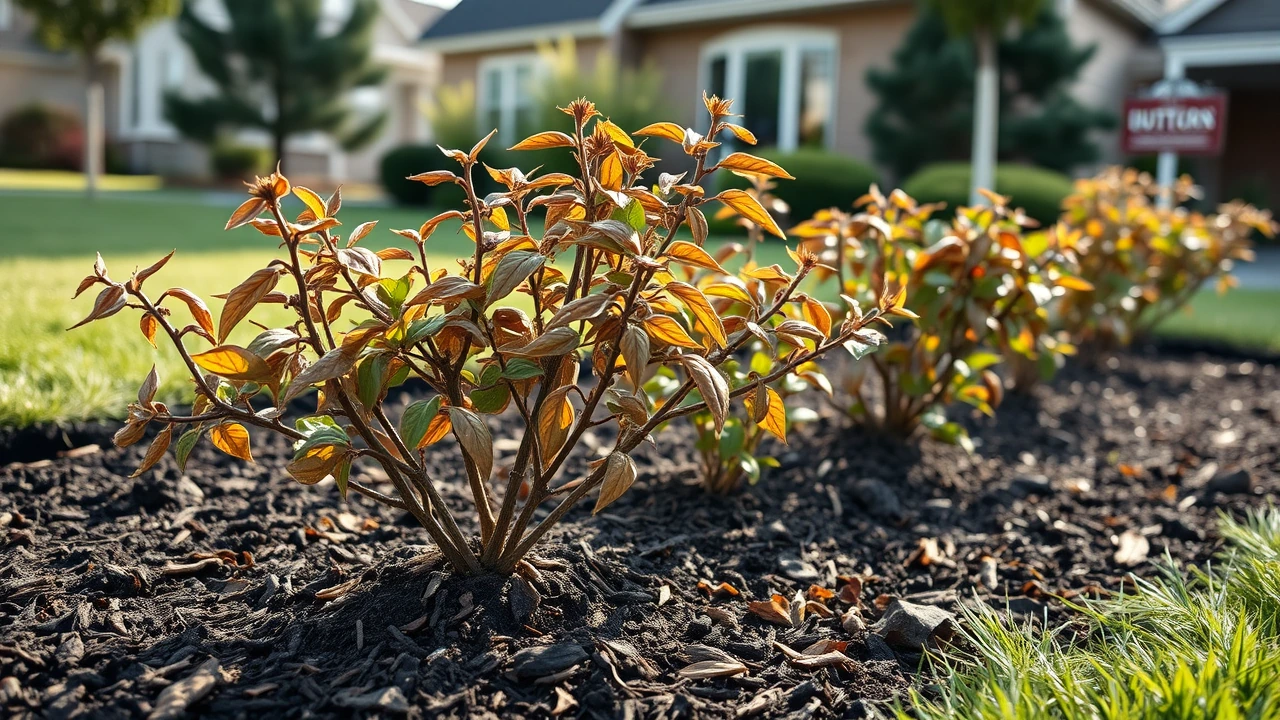
Most plant deaths in the first six weeks after install come down to four causes: transplant shock, the wrong watering rhythm, clay soil drowning roots, or the plant arriving root-bound from the nursery. The next tier is wrong-zone choices, fertilizer burn at planting, and deer or rabbit pressure. Each has a different fix and a different rescue window. This guide walks the symptoms we see on rescue calls across Hamilton, Burlington and Oakville, and tells you what is salvageable and what to replace.
Quick diagnosis
If a plant wilts in the first two weeks but the soil is moist, it is transplant shock, give it time. If leaves yellow from the bottom up and the soil is soggy, you are overwatering or the clay is not draining. If leaves crisp from the edges in and the root ball is dry an inch down, you are under-watering. If the plant looks fine then collapses overnight, suspect a root-bound rootball that never grew out, or fertilizer burn. Match your symptom in the table below.
Diagnostic table: match your symptom to the cause
| Symptom | Likely cause | DIY fix | Pro fix cost |
|---|---|---|---|
| Wilting, soil moist, week 1 to 4 | Transplant shock | Shade, deep water weekly | None, wait |
| Yellow leaves bottom-up, soggy soil | Overwatering or clay drowning | Stop watering, amend soil | $80 to $250 replant |
| Crispy brown leaf edges, dry root ball | Under-watering | Soak, mulch 3 in | None if caught early |
| Sudden full collapse | Root-bound or fert burn | Dig, score roots, replant | $60 to $180 per plant |
| Healthy June, dead January | Wrong zone or planted too late | None, replace | Plant cost only |
| Stripped stems, clean 45 deg cut | Deer or rabbit browse | Fence or repellent | $200 to $600 fencing |
| Stem rot at soil line | Planted too deep | Lift, expose root flare | $60 to $180 per plant |
1. Transplant shock (weeks 1 to 6)
Every plant loses 20 to 40 percent of its fine feeder roots in the dig and transport. For two to six weeks it cannot drink at full capacity, so it droops in the afternoon sun even when the soil is wet. This is normal and almost always recovers if you do not panic-water.
How to confirm
Stick a finger 2 in into the soil at the edge of the root ball. If it comes up cool and moist, the plant is not thirsty, it is shocked. Wilt that recovers overnight is shock. Wilt that gets worse day to day is something else.
How to fix
Shade with burlap or a patio umbrella for the first two weeks if installed in July or August. Water deeply once a week, not daily. Mulch 3 in deep and 2 ft wide, keeping mulch 2 in clear of the stem. Do not fertilize for 6 weeks.
What it costs
Nothing. Patience and a watering schedule. Most shrubs recover by week 6.
2. Wrong watering rhythm (deep weekly vs daily light)
Daily light watering trains roots to stay near the surface, then the plant fries in the first heat wave. Deep weekly watering (one long slow soak) pulls roots downward. Almost every dead-by-August new plant we are asked to diagnose was watered for five minutes every evening with a hand wand.
How to confirm
Dig 4 in down beside the root ball after a normal watering. If only the top 1 in is wet, you are watering too lightly. If it is soaking wet two days later, you are watering too often.
How to fix
Set a drip ring or soaker hose around each plant. Run it for 30 to 60 minutes once a week, twice a week in July and August heat. For containers, water until it runs from the drainage holes.
What it costs
$15 to $40 per plant for a Tree Gator bag or drip ring. Free if you already own a soaker hose.
3. Clay soil drowning roots
Most of Hamilton mountain, Stoney Creek and central Burlington sit on heavy clay. Dig a hole, fill it with water, and it can sit for 24 hours. Plant a shrub into that hole and the roots literally drown. We pull dead Hydrangeas and Boxwoods out of clay every spring with black, slimy roots.
How to confirm
Dig a 12 in deep hole near the dead plant. Fill with water. If it does not drain in 4 hours, you have a drainage problem. Smell the root ball when you pull the plant. Sour, sulphur smell confirms anaerobic rot.
How to fix
Do not just dig a bigger hole and backfill with compost, you create a bathtub. Either amend the entire bed with 4 in of compost and coarse sand tilled 12 in deep, or build a 6 to 8 in raised berm and plant on top so roots sit above the wet zone.
What it costs
$80 to $250 per plant to lift, amend and replant. $400 to $1,200 to build a proper raised planting bed for a small group.
4. Wrong USDA zone for Ontario
Niagara and lakefront Burlington are zone 6b. Hamilton mountain and inland Halton are 6a. Cooler pockets and rural Hamilton drop to 5b or even 5a. A plant tagged zone 7 at a box store will look perfect in June and be dead by March.
How to confirm
Look up the plant. If the tag says hardy to zone 7, it is a gamble in Hamilton. Some borderline plants survive in a sheltered courtyard but die in an open back yard.
How to fix
You cannot save a zone-7 shrub through an Ontario winter without serious wrapping. Replace with a zone 5 or 6 alternative. For Hydrangeas, choose Annabelle or paniculata, not macrophylla. For Lavender, choose Munstead or Hidcote, not French.
What it costs
Plant replacement cost only. $35 to $80 per 2-gallon shrub.
5. Root-bound at install
Nursery pots that sat one season too long produce a tight spiral of circling roots. If you drop that root ball straight into the ground, the roots keep circling and never explore the native soil. The plant lives off the original potting mix and dies in the first dry stretch.
How to confirm
Lift the dead plant. If the root ball still looks exactly like the pot, with white circling roots and the original potting mix intact, it was root-bound and never grew out.
How to fix
For new installs: score the root ball with a knife in four vertical cuts, then tease the bottom roots outward with your fingers. For a struggling existing plant, lift carefully, score, and replant at the same depth.
What it costs
$60 to $180 per plant for a lift-and-rescore service. Free if you do it at install.
6. Fertilizer burn at planting
Granular synthetic fertilizer dumped in the planting hole burns fine feeder roots on contact. We see this most often when DIY installers add a handful of 10-10-10 "for a good start". The plant looks fine for two weeks then collapses.
How to confirm
Was synthetic fertilizer added to the hole or watered in within the first two weeks? Are leaf edges scorched brown while the soil is moist? Both yes points to fertilizer burn.
How to fix
Flush the root zone with several deep waterings to leach salts. Mulch and wait. Use compost or a slow-release organic feed (Plant-tone, Espoma) after week six, not before.
What it costs
Flushing is free. If the plant collapses, $60 to $180 per plant to replace.
7. Deer and rabbit browse
Rural Hamilton, Ancaster and Waterdown have heavy deer pressure. Anywhere with a ravine has rabbits. A new tender shrub is candy. Cedars, Yews, Hostas, Daylilies and tulip foliage are first targets. Telltale 45-degree clean cuts on stems mean rabbit. Ragged tears at 4 ft mean deer.
How to confirm
Look for clean angled cuts on stems (rabbit, low) or torn ragged stems at chest height (deer). Tracks in soft soil. Pellets nearby.
How to fix
Liquid Fence or Plantskydd sprayed every 2 weeks. Chicken wire cages for the first season around any prized shrub. For chronic deer pressure, an 8 ft fence or a switch to truly deer-resistant species: Boxwood, Spirea, Russian Sage, Catmint, Yarrow.
What it costs
$25 to $60 in repellent per season. $200 to $600 for fencing on a single bed.
8. Planted too deep (root flare buried)
Every shrub and tree has a root flare where the trunk widens into the roots. Buried below grade, the flare rots in 1 to 3 years and the plant fails. This is the most common cause of slow tree death in Ontario, and it happens at install.
How to confirm
Brush soil and mulch away from the trunk. You should see the trunk widen visibly before disappearing into soil. If the trunk goes straight down like a fence post, it is too deep.
How to fix
Lift the plant carefully in spring or fall. Re-set so the root flare sits 1 in above grade. Backfill with native soil, not pure compost. Mulch 3 in deep, keep 2 in clear of the trunk.
What it costs
$60 to $180 per shrub, $200 to $500 for a mid-size tree.
Repair vs replace: how to decide
Most plants in the first 8 weeks are still recoverable if you act. After that, the decision tree is:
- Save if green wood is still visible when you scratch a stem with a thumbnail, even if leaves are gone.
- Save if roots are firm and white when you lift the root ball, even if the top looks rough.
- Replace if stems snap dry with no flex, roots are black and slimy, or you smell sulphur at the root ball.
- Replace and change species if the issue is wrong zone or chronic deer pressure. You cannot out-water a zone problem.
How to prevent it next time
- Buy plants tagged hardy to zone 5 or 6 unless you have a true sheltered microclimate.
- Score the root ball in four cuts before planting. Tease the bottom roots out.
- Set the root flare 1 in above grade. Never bury it.
- Backfill with the native soil mixed with no more than 25 percent compost.
- Mulch 3 in deep, 2 ft wide, keep 2 in clear of stems.
- Water deeply once a week for the first season, twice a week in July heat.
- Skip fertilizer at install. Top-dress with compost in year two.
Frequently asked questions
Is wilting in the first week always a problem?
No. Afternoon wilt that recovers by morning is normal transplant shock. Wilt that does not recover overnight, or worsens day to day, is a watering or root problem.
How often should I water a new shrub?
One deep soak per week for the first 8 weeks, twice a week in July and August heat over 28 C. Containers and recently planted trees benefit from a Tree Gator bag.
Should I fertilize at planting?
No synthetic fertilizer for the first 6 weeks. A handful of compost mixed with the backfill is fine. Slow-release organic feed (Espoma, Plant-tone) after week 6 is safe.
My Hydrangea has no blooms but the leaves look healthy.
Likely an Endless Summer or macrophylla pruned at the wrong time, or buds killed by a late frost. Switch to Annabelle or paniculata for reliable blooms in Hamilton, Burlington and Oakville.
Are dead-looking sticks always dead?
No. Scratch a stem with your thumbnail in May. Green underneath means alive. Brown and brittle means dead. Many shrubs leaf out in mid to late May in Ontario.
Does mulch really matter that much?
Yes. A 3 in mulch ring holds moisture, moderates soil temperature, and suppresses weed competition. It is the single highest-return action for a new plant.
What is a one-year plant warranty?
Most reputable Ontario landscapers replace failed shrubs and trees in year one if you water them as instructed. See our Ontario landscaping warranty guide for what is standard.
Can I plant in July or August?
Yes, but expect heavier transplant shock and a strict watering schedule. Spring (April to early June) and fall (September to mid-October) are easier on the plant.
If your new beds are failing, do not replace blindly. Request a free quote and we will diagnose drainage, soil and species fit before you spend on replacements. For deeper reading, see our planting services, plan the bed layout in our backyard layout guide, time your install with our best time to install guide, and review what plant warranty you should expect from any pro installer.
Is a mature tree the problem? See 2026 tree removal and crown thinning costs for Hamilton, Burlington and Oakville properties.