
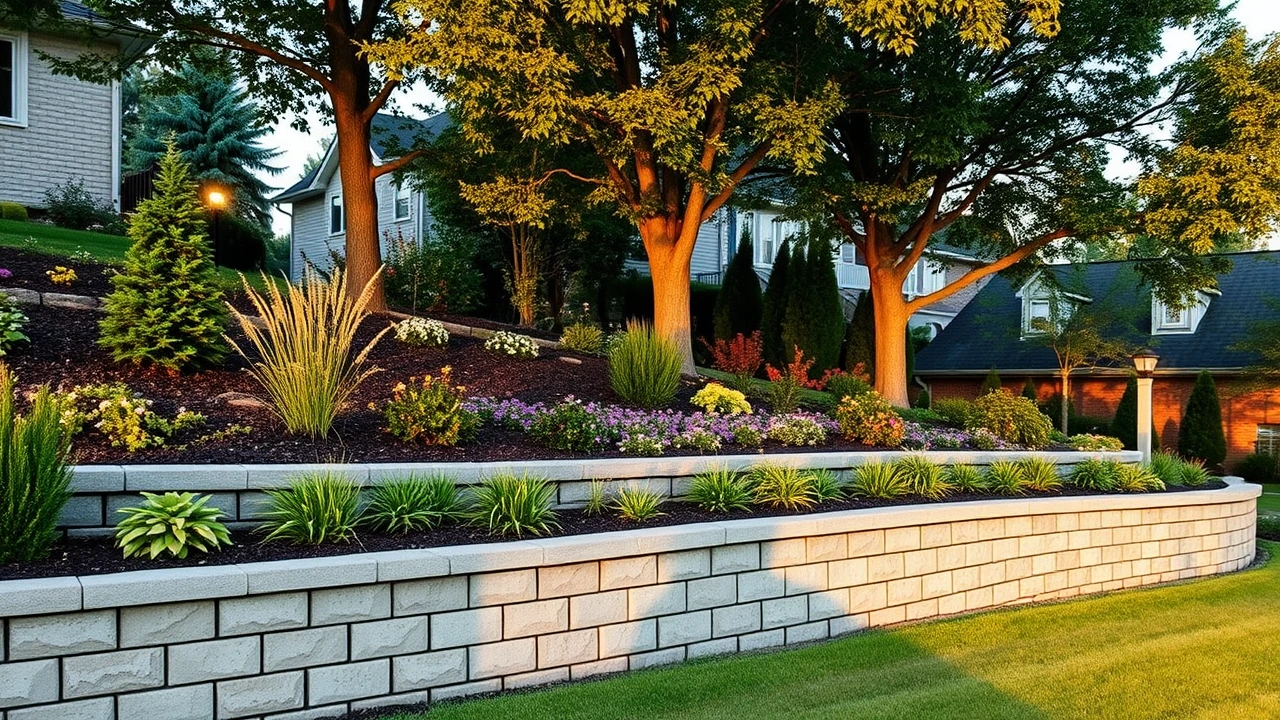
Burlington sits on some of the most retaining-wall-hungry geography in the GTA west. The Niagara Escarpment runs the length of the city, dropping grade from Mount Nemo down through Tyandaga, the central neighbourhoods step down toward Lake Ontario, and the lake-influenced clay across Aldershot pushes a high water table against any wall built without proper drainage. Old railway-tie walls from the 1980s are failing across Roseland and the central streets, leaning out a fist-width a year as the timbers rot from the back face forward. Ravine-edge lots near Bronte Creek and Grindstone Creek bring Conservation Halton review into the picture. Across all of it, the difference between a 50-year wall and a 5-year wall is base prep, drainage and proper geogrid embedment, none of which a homeowner can see from the front face.
Quick verdict for Burlington homeowners
For a properly built, code-friendly segmental block retaining wall in Burlington in 2026, expect to budget $55 to $130 per face square foot turnkey on most residential projects, with engineered geogrid-reinforced walls and natural stone gravity walls pushing $140 to $220. A typical 30 to 80 face-foot Burlington wall runs 4 to 10 working days on site. Any wall above 1.2 m of exposed face needs an engineered drawing under the Ontario Building Code. Any wall near Bronte Creek, Sixteen Mile Creek or Grindstone Creek triggers Conservation Halton review. Always get a written scope showing block system, base depth, drainage detail and geogrid layers before signing.
2026 Burlington retaining wall cost
Prices below are turnkey installed costs for Burlington in 2026, per face square foot (wall height multiplied by wall length), including excavation, geotextile, 6 to 12 inches of compacted 3/4 clear stone base, weeping tile at the back of the base course, block or stone supply, geogrid where required, drainage stone behind the wall and capstone install. They do not include engineered drawings on walls over 1.2 m, permit fees, or major regrading beyond the wall footprint.
| Tier | Wall system | Cost per face sq ft | Lifespan | Best fit |
|---|---|---|---|---|
| Basic | Permacon Tudor or Techo-Bloc Mini-Creta gravity wall, under 900 mm | $45 to $75 | 25 to 40 years | Garden beds, low front-yard walls in Orchard or Alton Village |
| Mid-grade | Techo-Bloc Bristol or Unilock Pisa2 segmental block, 900 mm to 1.2 m, partial geogrid | $70 to $110 | 40 to 60 years | Most Burlington side-yard and rear-yard walls, Millcroft terracing |
| Premium | Techo-Bloc Mini-Creta Pro or Unilock SienaStone, 1.2 m to 1.8 m, full geogrid reinforcement, engineered | $110 to $170 | 60 to 80 years | Tyandaga ravine-edge walls, Roseland pool-area walls, escarpment-influenced lots |
| Luxury | Natural armour stone or quarried limestone gravity walls, large-format block, custom capstone | $140 to $220 | 80+ years | Aldershot estate lots, Tyandaga ravine walls with viewing terraces |
To sanity check a quote on your own wall, read the full Ontario retaining wall cost guide for the line-item breakdown, and if your existing wall is moving, the failing wall diagnostic tells you whether it can be reset or has to come down.
Common Burlington retaining wall projects we build
Tyandaga escarpment-edge terraced walls
Tyandaga sits hard against the Niagara Escarpment, and the half-acre lots running along Tyandaga Park Drive and the streets feeding into the golf course commonly drop 1.5 m to 3 m from the back door to the rear ravine fence. A single tall wall is rarely the right answer here. We design these as two- or three-tier segmental block systems, each tier 750 mm to 1.1 m of exposed face, with a planted bench between tiers that lets the slope breathe and keeps each individual wall below the 1.2 m engineered-drawing threshold where the design allows. Where the back fence runs against the ravine and Conservation Halton has jurisdiction, we coordinate the review before excavation starts. Each tier gets a 12 inch compacted 3/4 clear base, perforated weeping tile at the back of the base course piped to daylight, drainage stone the full height of the wall and geogrid layers extending 60 to 100 percent of the wall height back into the retained soil.
Roseland and central Burlington railway-tie wall rebuilds
Roseland, the streets around Spruce Avenue and New Street, and the central blocks south of Fairview are full of original 1980s and 90s landscape walls built from creosote railway ties or pressure-treated 6x6 timbers. By 2026 most of them are 30 to 40 years old, the timbers have rotted from the back face forward, and the wall is leaning out a fist-width or more. We tear out the failed timber assembly, excavate behind the original footprint to install proper drainage stone and geogrid, then rebuild in mid-grade Techo-Bloc Bristol or Unilock Pisa2 segmental block at the same or improved height. The new wall sits on 8 to 10 inches of compacted 3/4 clear, has weeping tile at the base piped to a side-yard discharge, and gets a proper concrete-cap capstone glued with construction adhesive. The same footprint, 40 more years of life.
Aldershot lake-influenced low boundary walls
Aldershot from Plains Road down toward LaSalle Park has a high water table, lake-influenced clay and gentle grade changes that suit lower boundary and garden walls more than tall structural walls. The challenge here is hydrostatic pressure: groundwater wants to push against any wall built without proper drainage stone and weeping tile, and within five years a poorly drained wall will rotate forward at the base. We over-excavate the base trench, set 10 to 12 inches of compacted 3/4 clear, wrap the drainage stone column behind the wall in non-woven geotextile so clay fines cannot clog the voids, and pipe the weeping tile out to a swale or downspout-style discharge. Mid-grade Techo-Bloc or Unilock block with a soldier capstone is the right spec for Aldershot front-yard and side-yard work.
Millcroft, Alton Village and Orchard subdivision grade walls
The newer north-Burlington subdivisions through Millcroft, Alton Village and the Orchard have lots that were graded to manage stormwater across the development, often leaving a 600 mm to 1.2 m grade change at the property line or along a side yard. We build these as single-tier segmental block walls in Techo-Bloc Bristol or Unilock Pisa2, with care taken to preserve the original lot-grading certificate and stormwater flow. Most of these walls land under the 1.2 m engineered-drawing threshold by design, sit on 8 inches of compacted 3/4 clear base, and use partial geogrid layers at the second and fourth courses where the retained soil warrants it. The capstone is glued, the batter is set to roughly 1 inch of set-back per course, and the wall ties into the existing fence line cleanly.
Why DIY walls fail in Burlington (and what we do differently)
The four failure modes we see again and again on torn-out Burlington DIY walls are the same every season. First, no drainage: a wall built tight against retained soil with no drainage stone column and no weeping tile. Within three winters the hydrostatic pressure rotates the wall forward at the base and pops the lower courses out of alignment. Second, no geogrid: any segmental block wall over 900 mm needs geogrid layers extending back into the retained soil to resist overturning, and DIY walls almost never have it. The wall looks fine for two years, then starts to lean as the upper courses pivot on the unreinforced base.
Third, a shallow base: 4 inches of screening on top of native clay instead of 8 to 12 inches of compacted 3/4 clear. The base settles unevenly through freeze-thaw, and the wall develops a wave along its length. Fourth, no batter: blocks stacked dead-vertical instead of set back 1 inch per course toward the retained soil. A vertical wall has no built-in resistance to forward rotation. We do it differently on every Burlington wall: compacted 3/4 clear base sized to wall height, perforated weeping tile at the back of the base course piped to daylight, drainage stone column wrapped in non-woven geotextile, geogrid layers placed per the manufacturer block-wall design tables, proper 1 in per course batter and a glued capstone.
The Burlington wall process timeline
- Free on-site visit. We measure wall length and height, probe the soil, check upslope drainage and downspout discharge, photograph existing grades and any failed wall to be torn out, and talk through usage. You leave with a realistic Burlington 2026 cost band.
- Design and written quote. We send a fixed scope with block system, base depth, drainage detail, geogrid layers, batter angle, capstone treatment, face square footage and timeline. Walls over 1.2 m of exposed face include the engineered drawing path.
- Permit, engineering and Conservation Halton check. Walls over 1.2 m need an engineered drawing under the Ontario Building Code and a City of Burlington building permit. Walls within the regulated area of Bronte Creek, Sixteen Mile Creek or Grindstone Creek need Conservation Halton review. We handle both paths before mobilising.
- Demo and excavation. We tear out the failing timber or block, excavate the base trench 12 to 18 inches below finished grade and 1.5 to 3 wall heights back into the retained soil for geogrid embedment, and haul away the spoils.
- Base, drainage and base course. Non-woven geotextile lines the trench, 8 to 12 inches of 3/4 clear stone goes in 2 inch lifts and compacts to dead-flat, perforated weeping tile sits at the back of the base course piped to daylight, and the first course of block sets level and true.
- Wall build, geogrid and capstone. Each subsequent course steps back 1 inch toward the retained soil, drainage stone backfills the void in lifts as the wall rises, geogrid layers extend back per design, and a glued concrete or natural-stone capstone finishes the top. We walk the site with you before final cleanup.
Permits and bylaws in Burlington
The City of Burlington does not require a building permit for a residential retaining wall under 1.2 m of exposed face that sits inside the lot, is not part of a pool enclosure and does not change lot grading onto a neighbour. Above 1.2 m of exposed face, the Ontario Building Code requires an engineered drawing and the City of Burlington requires a building permit before construction starts. Setback rules apply: walls cannot be built tight against a property line in a way that compromises a neighbour, and the City takes lot-grading certification seriously, so any wall that alters surface drainage may trigger a re-certification.
For Burlington walls within the regulated area of Bronte Creek, Sixteen Mile Creek, Grindstone Creek or any escarpment-influenced slope, Conservation Halton review is required and can add 4 to 8 weeks to the timeline. Tyandaga ravine-edge walls almost always need this review, as do Aldershot lots near Grindstone Creek. We handle the engineered drawing, the permit path and the Conservation Halton review as part of the build, so you are not chasing City forms while the crew waits.
Frequently asked questions
What kind of warranty do you offer on a Burlington retaining wall?
Our standard Peace Love Landscaping warranty is 2 years on workmanship across the assembly (base, drainage, geogrid placement, block layout, capstone adhesion), on top of the manufacturer warranty on the block (Techo-Bloc, Unilock and Permacon carry transferable structural warranties of 25 years to lifetime). Engineered walls carry the engineer of record sign-off as well. Full terms are in the signed contract.
When does a Burlington wall need an engineered drawing?
The Ontario Building Code triggers an engineered drawing at 1.2 m of exposed face. A 1.1 m wall is design-table territory and can be built to the block manufacturer specifications. A 1.3 m wall needs a stamped drawing by a P.Eng. and a City of Burlington building permit before construction starts. We arrange the engineering and the permit on any wall that crosses the threshold.
Gravity wall or segmental block, which do I need?
Gravity walls (large natural stone, oversized armour stone, large-format block) rely on their own weight to resist the retained soil and work well up to about 900 mm without geogrid. Segmental block walls use a lighter unit reinforced with geogrid layers extending back into the retained soil, and scale economically up to 4 m or more. Most Burlington residential walls 900 mm to 1.8 m are segmental block. Tyandaga estate work often picks armour stone for the look.
How deep does the geogrid go?
Geogrid embedment depth is 60 to 100 percent of the exposed wall height, set per the block manufacturer design tables or per the engineered drawing on walls over 1.2 m. A 1.5 m wall typically has geogrid layers at the second, fourth and sixth courses, each extending 1.0 to 1.5 m back into the retained soil. The fabric has to be properly tensioned and buried in compacted fill, not just laid loose.
Do I really need weeping tile at the base?
Yes, on any retaining wall in Burlington over about 600 mm. Hydrostatic pressure from groundwater behind the wall is the single biggest cause of failure on Aldershot and Roseland walls. A 4 inch perforated weeping tile at the back of the base course, piped out to daylight or a side-yard discharge, takes the water pressure off the wall and triples its working life.
What batter angle do you use?
We set walls to roughly 1 inch of horizontal set-back per course toward the retained soil. On a typical 200 mm tall block, that is about a 6 degree batter from vertical. The set-back gives the wall built-in resistance to forward rotation, and on a 1.5 m wall the top course lands roughly 75 mm behind the base course. The block manufacturer specifies the exact batter on engineered systems.
Can you build a wall in winter in Burlington?
No. Our Burlington wall season runs May through October, with some flex into early November. We do not place block on frozen base, and the drainage stone column has to be installed in conditions that let us compact properly and not trap ice in the fill. Most clients book in late winter for a May to August build slot.
Will Conservation Halton review affect my project?
If your wall is within the regulated area of Bronte Creek, Sixteen Mile Creek, Grindstone Creek or an escarpment-influenced slope, yes. Conservation Halton review adds 4 to 8 weeks to the timeline and may add conditions around erosion control, vegetation and the wall footprint. We file the application on your behalf and coordinate the review as part of the project.
Ready to talk about your Burlington retaining wall? Request a free quote and we will book a site visit, usually within 2 business days. While you are scoping the project, the Burlington landscaping hub shows the rest of what we build in town, the retaining walls and hardscaping service page covers materials and finishes, the Ontario retaining wall cost guide breaks down the line items, and if your current wall is moving, the failing wall diagnostic tells you whether to reset or rebuild.