
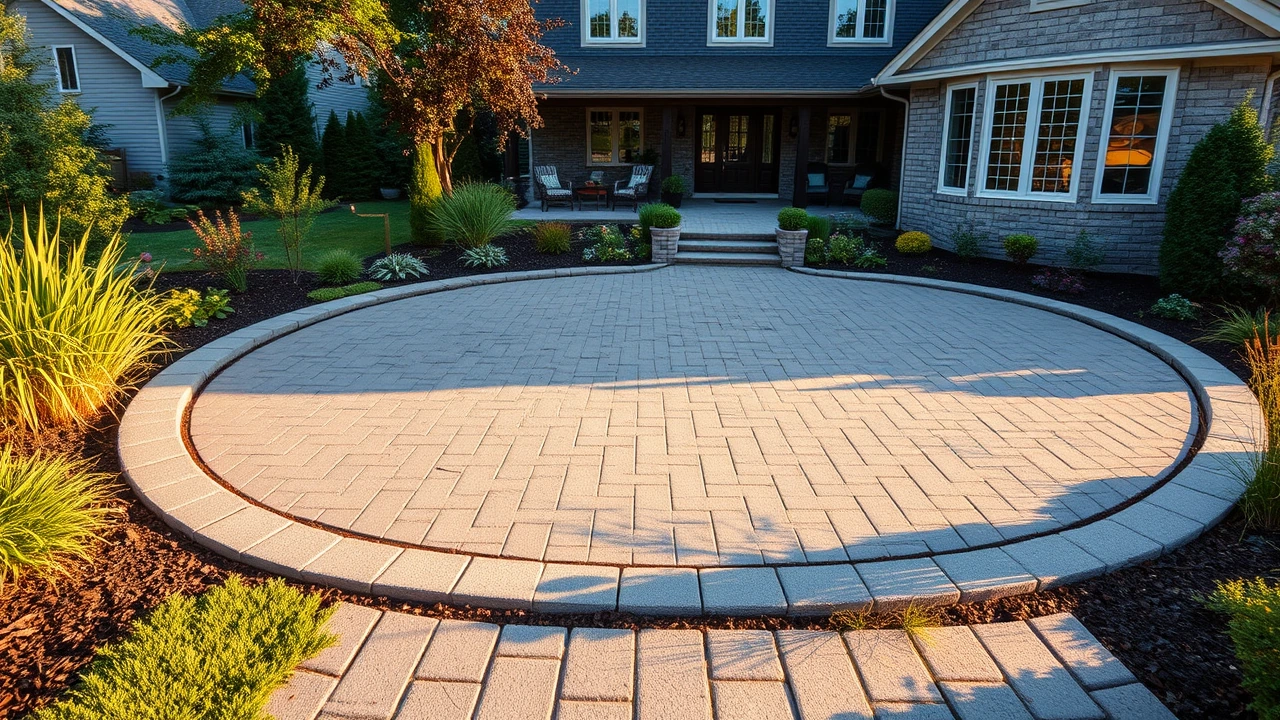
St Catharines is the easiest soil in our service area to build a patio on, and the easiest to get wrong. The Niagara fruit-belt loam is light and well-draining compared to the heavy Hamilton clay just up the QEW. A St Catharines patio often only needs 4 to 6 inches of compacted 3/4 clear, where the same patio on Hamilton Mountain would need 8. Zone 7a temperatures mean a longer install window, from April through early November in most years. But that lighter loam still freezes, still moves, and still pumps fines if you skip the geotextile. The neighbourhoods all have their own quirks. Old Glenridge sits on heritage lots with mature trees and original brick walks heaving every five years. Port Dalhousie is waterfront and breezy with sandy pockets near the harbour. Western Hill and Vansickle are mid-century family streets with generous lots and original concrete pads ready to be replaced. Grantham, the older north-end, runs closer to clay in places. Each needs a base spec tuned to its own ground.
Quick verdict for St Catharines homeowners
For a properly built, code-friendly interlocking patio in St Catharines in 2026, expect to budget $35 to $80 per square foot turnkey on most residential projects, with premium pool decks and luxury Old Glenridge builds running $90 to $140. A typical 300 to 500 sq ft St Catharines backyard patio takes 5 to 11 working days. The lighter Niagara fruit-belt loam means base depth can often drop to 4 to 6 inches of compacted 3/4 clear (versus 6 to 8 inches in Hamilton), which trims excavation cost. The longer Zone 7a build season also gives you more booking flexibility, with patios going in from mid-April through early November in most years. Any project near the Twelve Mile Creek system or other regulated watercourse needs the Niagara Peninsula Conservation Authority position settled before excavation. Always get a written scope showing base depth, geotextile, edge restraint and polymeric product before signing.
2026 St Catharines interlocking patio cost
Prices below are turnkey installed costs for St Catharines in 2026, including demolition of existing surfaces, excavation, geotextile, 4 to 6 inches of compacted 3/4 clear stone (more on Grantham clay pockets), bedding sand, paver supply, polymeric joint sand, edge restraint and site cleanup. They do not include lighting, outdoor kitchens, or NPCA permit fees.
| Tier | Paver brand and size | Cost per sq ft | Lifespan | Best fit |
|---|---|---|---|---|
| Basic | Permacon Melville or Techo-Bloc Blu 60mm, standard rectangular | $22 to $40 | 20 to 30 years | Side yards, Vansickle utility patios, basic Western Hill rear yards |
| Mid-grade | Unilock Beacon Hill, Techo-Bloc Industria 60mm | $38 to $65 | 30 to 50 years | Most St Catharines family backyards, Port Dalhousie walkway-patio combos |
| Premium | Unilock Series 3000, Techo-Bloc Blu Slate, large-format 80mm | $60 to $95 | 50 to 75 years | Old Glenridge heritage patios, pool surrounds, premium Port Dalhousie builds |
| Luxury | Unilock Umbriano, Techo-Bloc Aberdeen, Permacon Lamina XL | $90 to $140 | 75+ years | Old Glenridge estate lots, wine-country adjacent outdoor kitchens, lake-view builds |
To sanity check a quote on your own square footage, run the numbers through our patio cost calculator and read the full paver patio cost guide for Ontario for the line-item breakdown.
Common St Catharines interlocking patio projects we build
Heritage rear-yard patios in Old Glenridge
Old Glenridge, the streets around Glen Ridge Avenue and St Pauls Crescent, has some of the most beautiful heritage homes in Niagara. The lots are mature, the trees massive, and the original concrete walks have been heaving for decades. We rebuild these as 250 to 500 sq ft mid-grade or premium patios in colours that complement the brick and stone of the home, with a 4 to 6 inch engineered base over non-woven geotextile, careful root-tunnelling, and a single soldier course on every open edge. The detail that matters most in Old Glenridge is restraint: heritage homes look wrong with oversized luxury pavers fighting the period detail. We spec coursed Unilock Beacon Hill or Techo-Bloc Industria in a muted tone and let the architecture stay the focal point.
Waterfront-adjacent patios in Port Dalhousie
Port Dalhousie, the streets running between Lakeport Road and the harbour around Lock Street and Main, has waterfront-adjacent lots with sandy pockets, lake breezes and slightly milder microclimates than the rest of the city. The patio failures we tear out here are usually under-restrained perimeters that walked toward the lake under freeze-thaw, and polymeric joints that washed out in the wind-driven rain off the harbour. We build Port Dalhousie patios as 300 to 600 sq ft mid-grade or premium fields with extra-aggressive edge restraint, a generous soldier course on the windward sides, and a quality polymeric activated only on dry days. Paver colours pull from the harbour palette, blues, greys and warm sand tones, and pattern choices reference the older brick walks of the Port. For waterfront-adjacent owners adding a hot tub or fire pit, we coordinate the pad work into the patio build.
Family-yard pool deck patios in Western Hill and Vansickle
Western Hill and Vansickle, the mid-century family streets running west toward Pelham Road, have generous lots and a lot of original 1960s and 70s concrete pool decks reaching end of life. The right project here is usually a full 600 to 1,200 sq ft pool deck rebuild in premium 80mm Unilock or Techo-Bloc pavers, with a 2 percent slope away from the pool basin, a soldier course around the coping, and proper slip-resistance for wet feet. The City of St Catharines pool enclosure bylaw measures fence height from any hardscape within 1.2 m of the water, so we plan the deck height, fence and pool gate together. The lighter loam in this part of the city means base prep is faster and excavation cheaper than the same job in Hamilton.
Wine-country adjacent estate patios in Grantham and along Niagara Street
Grantham and the larger lots on the Niagara Street corridor heading out toward wine country host some of the most ambitious patio projects in the city. Half-acre lots with vineyard and orchard views in some pockets give the design room to breathe. We build these as 600 to 1,500 sq ft premium 80mm patios with full outdoor kitchen pads, fire-pit landings and pergola footings, often in a luxury Techo-Bloc Aberdeen or Unilock Umbriano spec that holds up to entertaining traffic and chloride exposure from any nearby pool. Grantham clay pockets sometimes push base depth back up to a full 6 to 8 inches, closer to the Hamilton spec than the lighter Glenridge loam. If your slope needs structural support, the same crew handles the retaining wall and hardscaping piece in a single mobilisation.
Why DIY patios fail in St Catharines (and what we do differently)
The four failure modes still repeat in St Catharines, even with the easier fruit-belt loam. First, base failure: 2 to 3 inches of bagged paver base placed directly on the native loam without geotextile. The fines pump up through the gravel over the first three freeze-thaw cycles, the base loses bearing, and the field starts to dish. Yes, the loam is lighter than Hamilton clay, but it still moves. Second, frost-heave: Niagara frost depth is closer to 3.5 ft than 4 ft, which is better but not free. A patio with a base under 4 inches of compacted 3/4 clear sits inside the active frost zone.
Third, missing edge restraint: this is the most common Port Dalhousie and waterfront-adjacent failure mode. Snap-edge plastic spiked into sandy loam pulls within a single windy season, and the perimeter pavers walk outward through the spring thaw. Fourth, polymeric joint mistakes: bagged big-box polymeric applied to wet pavers or over-watered during activation. It crusts on the surface, never bonds inside the joint, and washes out by year two, faster on a windy harbour lot. We do it differently on every St Catharines job: 4 to 6 inches of 3/4 clear compacted in 2-inch lifts over non-woven geotextile (6 to 8 inches on Grantham clay pockets), bedding sand screeded to 1 inch, factory pavers cut on a wet saw, spiked aluminum or steel edge restraint on every open side, and a contractor-grade polymeric activated only in dry conditions.
The St Catharines patio install timeline
- Free on-site visit. We measure the space, probe the soil to confirm loam versus clay-pocket conditions, check drainage from the foundation and downspouts, photograph existing grades, and confirm proximity to Twelve Mile Creek or other NPCA-regulated watercourses. You leave with a realistic St Catharines 2026 cost band.
- Design and written quote. We send a fixed scope with paver spec, base depth tuned to your soil, drainage detail, edge restraint type, polymeric product, square footage and timeline. No vague single-line quotes.
- Permit and conservation check. Most City of St Catharines residential patios do not need a building permit, but the City lot drainage bylaw applies. If the site is near a regulated watercourse, we open the NPCA file before mobilising.
- Demo and excavation. We strip sod or break out the failing concrete or pavers, excavate 8 to 12 inches below finished grade on most loam sites (more on Grantham clay), and haul away the spoils.
- Base and compaction. Non-woven geotextile on the subgrade, then 4 to 6 inches of 3/4 clear placed in 2-inch lifts and compacted with a reversible plate compactor. Final base is dead-flat and pitched 1 to 2 percent away from the house.
- Bedding, pavers and polymeric. We screed 1 inch of bedding sand, lay the field in the agreed pattern, cut the perimeter on a wet saw, set spiked aluminum edge restraint, sweep and activate polymeric joint sand, and walk the site with you before final cleanup.
Permits and bylaws in St Catharines
The City of St Catharines does not require a building permit for most at-grade residential interlocking patios that sit on the ground, are not attached to a deck above 600 mm, and do not affect drainage onto neighbouring properties. The City does have a lot drainage bylaw, and a patio that pushes runoff onto a neighbour or back toward a foundation can trigger a complaint and an order to rectify even when no permit was needed. The triggers that do require a permit or review: a patio attached to a raised deck, a patio inside a pool enclosure (which pulls in the pool fence and grading bylaws), or any work that changes lot grading enough to require attention.
The bigger St Catharines variable is the Niagara Peninsula Conservation Authority. Properties near the Twelve Mile Creek system, its tributaries, or other regulated watercourses can require an NPCA permit for any meaningful grading or fill placement, which adds 4 to 10 weeks to the timeline. The Garden City has a lot of small creeks threading through older neighbourhoods, so the NPCA check is worth doing at the quote stage even if you do not think your lot is affected. We confirm the permit path, handle the NPCA submission where required, and coordinate the inspections so you are not chasing forms while the crew waits.
Frequently asked questions
What kind of warranty do you offer on a St Catharines patio?
Our standard Peace Love Landscaping warranty is 1 to 2 years on workmanship across the assembly (base, bedding, paver layout, edge restraint, polymeric activation), on top of the manufacturer warranty on the pavers themselves (Unilock, Techo-Bloc and Permacon all carry 25-year to lifetime transferable warranties against structural defects). Full terms are in the signed contract.
Is the base really shallower in St Catharines than in Hamilton?
Usually yes. The Niagara fruit-belt loam in most of St Catharines drains and behaves better than the heavy Hamilton clay, so a 4 to 6 inch compacted 3/4 clear base is often enough for residential family patios. Grantham and some pockets with clay subsoil push back up to 6 to 8 inches. We probe the soil at the site visit and spec accordingly. Geotextile is still mandatory in every case.
Can you build a patio in early spring or late autumn in St Catharines?
Yes, more flexibly than further north. The Zone 7a climate and lighter loam let us run the install season from mid-April through early November in most years. We still avoid placing pavers on frozen base or activating polymeric in cold or wet conditions, but the booking window is wider than in Hamilton or Halton Hills.
How do you handle drainage on St Catharines loam?
Three layers of defence. Non-woven geotextile between the loam subsoil and the gravel base so fines cannot migrate up. Four to 6 inches of compacted 3/4 clear stone, which both carries the load and drains laterally. And a 1 to 2 percent positive surface pitch away from the house, with edge restraint set so water leaves the field instead of ponding behind it. On Grantham clay pockets we step the base depth up and may add a perimeter weeping tile.
How do you pick the right paver for a heritage Old Glenridge home?
Quietly. We pull colours from the existing brick or stone of the home, pick a coursed format like Unilock Beacon Hill or Techo-Bloc Industria that reads as period-appropriate, and avoid oversized luxury pavers that fight the architecture. Our how to choose pavers guide walks through the full selection process.
What maintenance do polymeric joints need on a windy Port Dalhousie lot?
A bit more attention than an inland lot. Sweep the patio a few times a season, hose it down occasionally, and watch the joints for any that have washed low under wind-driven rain. Top up with matching polymeric every 4 to 6 years on a waterfront-adjacent St Catharines patio. Do not pressure-wash the joints directly, which will erode the polymeric faster than the harbour weather does.
Do I need a Niagara Peninsula Conservation Authority permit?
Maybe. If your property is near the Twelve Mile Creek system, its tributaries, or another regulated watercourse, any meaningful grading or fill placement can require an NPCA permit. The map is publicly available, and we confirm your address against it at the site visit. Outside regulated areas, the City of St Catharines lot drainage bylaw applies but no NPCA permit is needed.
Can you tie the patio into a new retaining wall or driveway?
Yes, and on Old Glenridge or wine-country adjacent lots it is often the right call. Combining the patio, retaining wall and any driveway replacement into one mobilisation saves two or three days of setup costs and gives a single warranty across the whole assembly. The same crew that builds the patio handles the wall and driveway work.
Ready to talk about your St Catharines interlocking patio? Request a free quote and we will book a site visit, usually within 2 business days. While you are scoping, the St Catharines landscaping hub shows the rest of what we build across Old Glenridge, Port Dalhousie, Western Hill, Vansickle and Grantham, the interlocking patios and driveways service page covers materials and finishes, and the Ontario paver patio cost guide plus patio cost calculator let you sanity-check any quote you receive. Still choosing materials? Our how to choose pavers guide walks through colour, format and finish for a Garden City build.
Need a fence around your St Catharines patio? See our dedicated St Catharines fence installation page for local cost, permit rules and our build process.