
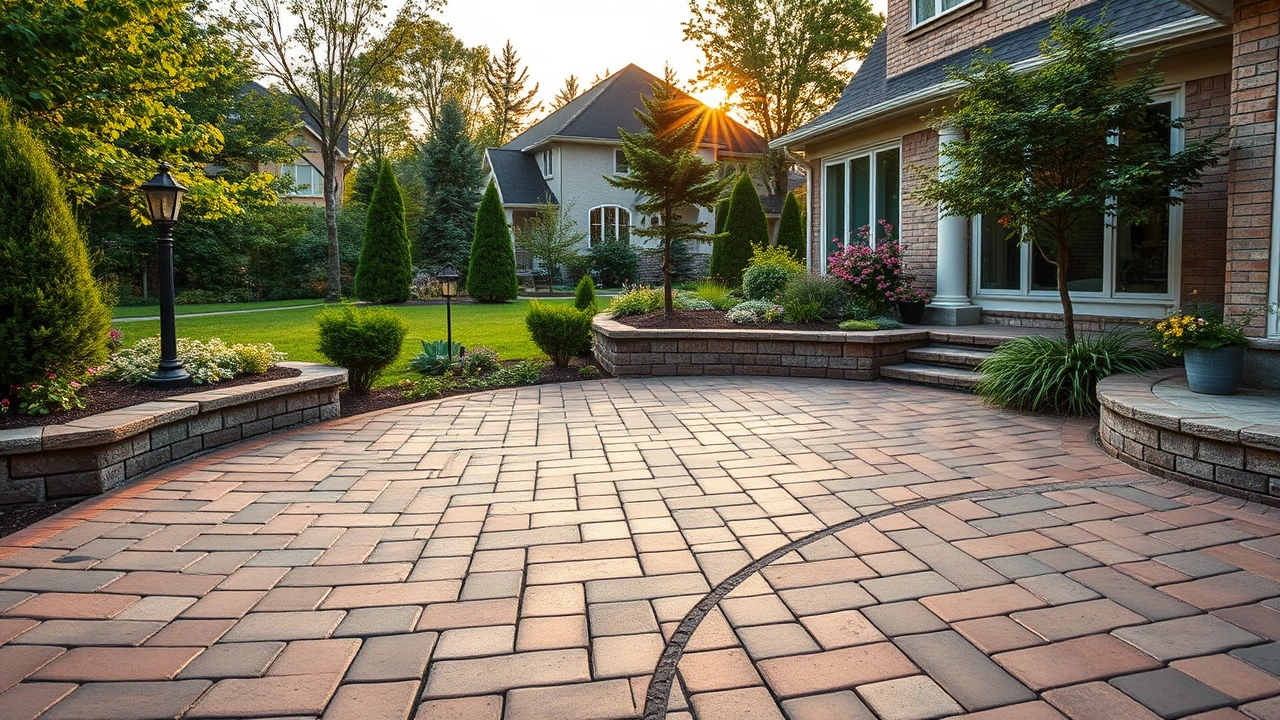
Interlocking pavers are built to last, but over the years they fade, the joints wash out, weeds creep in and sections can settle. The good news is that tired pavers can be brought right back to life. Peace Love Landscaping provides paver cleaning, re-sanding, re-levelling and sealing across Hamilton, Burlington, Oakville and the Greater Toronto Area, restoring and protecting your investment.
Our paver restoration services
- Deep cleaning, removing dirt, stains, moss and weeds
- Re-sanding joints with fresh polymeric sand
- Re-levelling settled or sunken sections
- Sealing to protect and enrich the colour
- Weed and moss treatment for clean, tight joints
- Repairs, replacing damaged or stained pavers
Bring tired pavers back to life
You would be amazed how much a proper restoration transforms a patio or driveway. Years of dirt, faded colour, weedy joints and a few settled spots make even good pavers look tired and neglected. A deep clean, fresh joint sand, re-levelling and a quality seal can make a ten-year-old surface look close to new, often for a fraction of the cost of replacement. Before you consider tearing out and rebuilding, it is well worth seeing what a restoration can do.
Why sealing matters
Sealing is the step that protects your pavers and keeps them looking great. A quality sealer guards the surface against stains, fading from UV, and the wear of weather and salt, and it locks the joint sand in place so weeds and ants stay out. It can also enrich the colour, giving the pavers a richer, more vibrant look, in either a natural matte or a wet-look finish depending on your preference. Sealing every few years is the single best thing you can do to extend the life and looks of an interlocking surface.
Re-sanding and weed control
Over time the sand in paver joints washes out, which loosens the surface and opens the door to weeds and ants. We clean the joints out and refill them with fresh polymeric sand, which hardens to lock everything tight. Combined with weed and moss treatment, this restores the crisp, clean joint lines that make a paver surface look sharp, and keeps weeds from coming back through the joints.
Re-levelling settled sections
One of the great advantages of interlocking is that settled or uneven sections can be fixed without replacing the whole surface. Where pavers have sunk or lifted, we take them up, correct the base underneath, and re-lay them level. It is invisible once done, and it is far cheaper and less disruptive than a rebuild. If part of your patio or driveway has gone uneven, re-levelling is usually the answer.
Restore or replace?
Sometimes a surface is too far gone, or you want a different look, and replacement makes sense. But far more often, restoration is the smart, cost-effective choice. We will give you an honest assessment: if a clean, re-sand, re-level and seal will bring your pavers back beautifully, we will tell you, and save you the cost of an unnecessary rebuild. If a section genuinely needs rebuilding, we will say that too.
What affects the cost
Cost depends on the size of the area, its condition, how much cleaning, re-sanding and re-levelling is needed, and the sealer chosen. A simple clean and seal is an accessible service; extensive re-levelling and repairs cost more. We assess the surface and provide a clear written quote.
Our process
We start with a visit to assess the condition of your pavers and your goals. We provide a written quote, then deep-clean the surface, re-level any settled areas, refill the joints with fresh polymeric sand, treat weeds and moss, and apply a quality sealer. We leave you with a paver surface that looks close to new and is protected for years.
A fraction of the cost of replacement
The most compelling reason to restore rather than replace is simple economics. Tearing out and rebuilding an interlocking patio or driveway is a major project. A full restoration, clean, re-sand, re-level and seal, typically costs a fraction of that and, on a structurally sound surface, delivers a result that looks close to new. Unless the base has genuinely failed across the whole area, restoration is almost always the smart financial choice. Many homeowners assume their tired pavers need replacing and are pleasantly surprised when we show them what a proper restoration can do for far less. Before you budget for a rebuild, it is well worth having us take a look.
What restoration actually involves
A proper restoration is several steps done well, not just a quick pressure-wash. We start by deep-cleaning the surface to strip away years of dirt, grime, moss and organic staining, which alone makes a dramatic difference. We address any settled or lifted sections by re-levelling them. We clean out the old, washed-out joint material and refill with fresh polymeric sand that hardens to lock the surface tight. We treat weeds and moss at the root. And finally we apply a quality sealer that protects everything and brings the colour back to life. Each step matters, and skipping any of them, as cheaper "clean and seal" jobs do, leaves you with a result that does not last.
Protecting your original investment
You paid good money for your interlocking when it was installed, and restoration protects that investment for years more. Sealing in particular acts like a shield, guarding against the staining, fading, salt damage and weed intrusion that slowly degrade an unsealed surface. A patio or driveway that is cleaned and sealed every few years can stay looking sharp for decades, while a neglected one ages quickly and eventually does need replacing. Regular restoration is genuinely the cheapest way to get the longest life and best looks out of the hardscape you already own.
Honest advice on restore versus rebuild
Because we build new interlocking too, we have no incentive to push you toward one option, and we will give you a straight assessment. If your pavers are structurally sound and just tired, we will recommend restoration and show you the likely result. If a section has genuinely failed, where the base has washed out or the surface is badly heaved, we will tell you honestly that a rebuild of that area is the right call, and we can do that too. Either way, you get an honest recommendation aimed at the best outcome for your property and budget, not the biggest invoice.
Signs your pavers are ready for restoration
It is easy to tell when a paver surface would benefit from restoration. The colour looks dull, grey or washed out compared with how it started. Weeds or moss are growing up between the pavers. The joints look empty or the sand is visibly gone. There are stains from oil, leaves, rust or general grime that washing alone will not shift. A few pavers have settled, lifted or become uneven. Any of these is a sign that a clean, re-sand and seal, and possibly some re-levelling, would bring the surface back and protect it from further decline.
Catching it at this stage is ideal, because the issues are still cosmetic and easily reversed. Left for years, washed-out joints lead to shifting pavers, weeds establish deeper, and minor settling spreads, turning what could have been a simple restoration into a partial rebuild. A periodic restoration is the maintenance that prevents the bigger, costlier problems down the road.
The right time to seal
Timing matters for sealing. Pavers should be clean and fully dry, and the weather mild and dry, for a sealer to bond and cure properly, which makes late spring through early fall the prime window in our climate. New installations are often best sealed after they have weathered briefly and the initial joint sand has set. For existing surfaces, any time the pavers can be properly cleaned and dried during the season works well. We schedule the work for the right conditions so the seal performs and lasts, rather than rushing it and getting a poor finish.
Once sealed, a simple cycle of resealing every two to three years keeps a paver surface looking its best more or less indefinitely. It is a modest, predictable bit of upkeep that protects a significant investment, and it is something we are glad to handle for you on a regular basis so your patio or driveway never slips back into that tired, faded state.
Why homeowners choose Peace Love Landscaping
We are a local, full-service landscaping company that has served the Hamilton and Burlington area since 2008. You get one accountable team, transparent written quotes, quality materials, proper construction including the parts you cannot see, a clean site and a workmanship guarantee. We treat your property with respect and build to last, which is why so much of our work comes from referrals and repeat clients across the region.
Serving Hamilton, Burlington, Oakville and the GTA
We serve homeowners across Hamilton, Burlington, Oakville, Ancaster, Dundas, Stoney Creek, Waterdown, Milton, Mississauga and the surrounding Greater Toronto Area.
Frequently asked questions
Can old, faded pavers really be restored?
Yes, often dramatically. A deep clean, fresh joint sand, re-levelling and a quality seal can make a tired surface look close to new, usually for a fraction of replacement cost.
How often should pavers be sealed?
Every few years. Sealing protects against stains, fading and salt, locks the joint sand in place to resist weeds, and can enrich the colour.
Will sealing change how my pavers look?
It can enrich the colour for a richer look, available in a natural matte or a wet-look finish depending on your preference. We will show you the options.
Why do weeds grow in my paver joints?
Usually because the joint sand has washed out. We clean and refill the joints with polymeric sand, which locks tight and strongly resists weeds and ants.
Can you fix sunken or uneven pavers?
Yes. We lift settled sections, correct the base underneath and re-lay them level, invisibly and far more cheaply than a rebuild.
Should I restore or replace my pavers?
Usually restore, it is far more cost-effective. We give you an honest assessment and only recommend rebuilding a section if it genuinely needs it.
How much does paver sealing cost?
It depends on the area, condition and work needed. A clean and seal is accessible; extensive re-levelling costs more. We provide a clear written quote.
How long does sealer last?
Typically two to three years before it benefits from a refresh, depending on traffic, sun and weather exposure. We can reseal on a regular cycle for you.
Will sealing make my pavers slippery?
A standard sealer does not make pavers notably slippery. For areas of concern we can use a non-slip additive for extra grip.
Can you remove stains and tire marks?
Often yes. Our deep cleaning lifts most dirt, organic staining, moss and many oil and tire marks. Stubborn stains may need a paver swapped, which we can do.
Matte or wet-look finish, which should I choose?
A matte finish keeps a natural look while protecting the surface; a wet-look enriches and darkens the colour for more pop. We show you both so you can choose.
How long does a restoration take?
A clean and seal is usually a day or two depending on size and drying time; adding re-levelling and repairs takes longer. We give you a schedule with your quote.
How often should I have my pavers restored?
A reseal every two to three years keeps them protected and looking sharp. A fuller restoration with re-sanding and re-levelling is needed less often, as conditions warrant.
Can you match replacement pavers to my existing ones?
We do our best to match colour and style. Pavers fade over time, so a new one can look slightly different at first, but it weathers in. Sealing helps blend the look.
Do you seal new patios and driveways too?
Yes. Sealing a new interlocking surface (once the joint sand has set) protects it from day one and is a great way to extend its life and looks.
Which areas do you serve?
Hamilton, Burlington, Oakville and the surrounding Greater Toronto Area.
Related services
The standards we work to
Sealing, re-sanding and paver restoration follows ICPI guidance on cleaning, jointing and sealer application. Sealers we use are paver-specific and freeze-thaw-rated for the Ontario climate. We are Landscape Ontario-aligned on documentation and homeowner protection.
Related reading
Wondering what this costs? Read our 2026 paver sealing cost guide with per-square-foot pricing, sealer types compared and the times sealing is a waste of money.
Pavers sinking as well as tired? See what a patio relevel or relay costs compared with a clean and seal.