
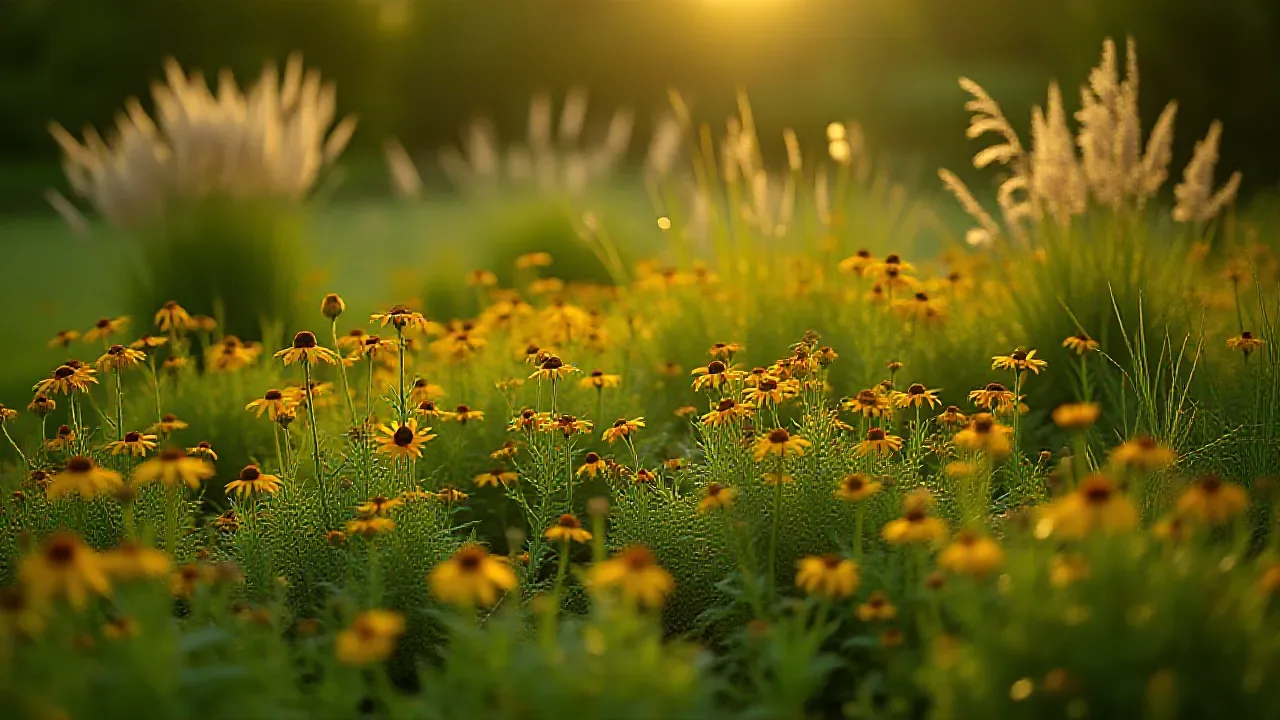
After hundreds of garden installations across Hamilton, Halton and Niagara, these are the perennials we plant most often. Every one has earned its spot by returning year after year, tolerating our climate, and giving real bloom or foliage interest. Skip the trendy stuff that needs babying.
The reliable backbone (full sun)
Daylily (Hemerocallis)
The unkillable perennial. Tolerates clay, sand, drought, partial shade, neglect. Modern reblooming varieties (Stella d'Oro, Happy Returns) flower from June through frost. Plant in groups of 3 or 5 for impact. Divide every 4 to 5 years.
Peony
Plant once, enjoy for 50+ years. June bloom in pink, white, coral, red. Needs full sun and well-drained soil but tolerates Ontario clay if planted at the right depth (eyes no more than 5 cm below grade). Stake the heavy blooms or pick disease-resistant Itoh hybrids.
Coneflower (Echinacea)
Native pollinator magnet. Pink, white, orange, yellow varieties. July-September bloom. Drought-tolerant once established. Pair with black-eyed Susan and ornamental grasses for the classic Ontario prairie look.
Black-eyed Susan (Rudbeckia)
Bright yellow daisies July through October. Self-seeds gently to fill gaps. Native, low-maintenance, and looks great long into fall when most perennials are done.
Russian Sage (Perovskia)
Silver foliage and lavender-blue spires July-September. Drought-tolerant once established. Cut back hard in spring; flowers on new growth. Pair with grasses for a Mediterranean-feel that survives our winters.
Salvia and Catmint (Nepeta)
Long-blooming purple-blue spires May-July. Deer-resistant. Cut back after first bloom for a second flush in fall. Catmint 'Walker's Low' is the workhorse variety we plant most often.
The shade workhorses
Hosta
The shade-garden staple. Hundreds of varieties from miniatures to giants like 'Empress Wu' (1.5 m wide). Tolerates Ontario clay. Slugs love them; copper edging or beer traps help. Pair with ferns and astilbe for layered shade beds.
Astilbe
Feathery plumes in pink, white, red July-August. Needs moisture; struggles in dry shade. Pair with hostas in part-shade beds. Cut back in fall, returns reliably in spring.
Hellebore (Lenten rose)
The earliest bloom in the garden, often pushing through snow in March/April. Evergreen foliage year-round. Tolerates deep shade and dry conditions once established. A garden-changer for early-spring interest.
Heuchera (Coral bells)
Foliage in burgundy, lime, caramel, near-black. Year-round structure even in mild winters. Part shade preferred. Pair with hosta and Japanese forest grass.
Structural and accent plants
Karl Foerster feather reed grass
The most reliable ornamental grass for Ontario. Upright 1.5 m form, golden plumes from July through winter. Cut back to 15 cm in early spring. Won't flop or self-seed everywhere.
Siberian Iris
Sword-like foliage with blue, purple or white iris blooms in June. Much tougher than bearded iris, tolerates wet feet, deer-resistant. Looks great by water features or pond edges.
Sedum (Hylotelephium)
'Autumn Joy' is the classic - broccoli-like flower heads August-October that age from pink to russet. Tolerates pure drought, attracts pollinators, looks great with frost on it. Low-growing varieties make excellent groundcover.
How to combine them for Ontario gardens
The simplest formula for a successful sunny perennial bed: one tall structural plant (Karl Foerster), three mid-height bloomers in complementary colours (e.g. coneflower + black-eyed Susan + Russian sage), and one low edging plant (catmint or sedum). Repeat the combination in groups of three down the bed length for rhythm.
For shade: hostas as the structural plant, astilbe and heuchera as mid-height, and hellebore at the front for early interest. Add ferns for texture.
Frequently asked questions
Will deer eat these?
Most are deer-resistant. Daylilies, hostas and tulips are the favourites of deer. If you have deer pressure, lean into Russian sage, salvia, catmint, ornamental grasses, hellebore, peony and coneflower - those are largely left alone.
What plants should I avoid for an Ontario garden?
Plants rated below zone 5: lavender (struggles in clay and zone 5 winters), most rosemary, gardenia, camellia, southern magnolias, bay laurel. Aggressive spreaders also worth avoiding: lily of the valley, mint, gooseneck loosestrife, ribbon grass.
How many perennials do I need for a typical bed?
Rule of thumb: 4 to 6 plants per square metre for most perennials, denser for low groundcovers. A 3 m by 1 m bed typically holds 12 to 18 plants. Group in threes or fives for visual impact.
When should I plant perennials in Ontario?
Spring (after last frost, mid-May) or early fall (September). Avoid mid-summer heat for new transplants. Container-grown plants from nurseries can technically go in anytime but established faster in shoulder seasons.
Are these plants native?
Some are (coneflower, black-eyed Susan, native grasses). Many traditional perennials (peony, hosta, daylily) are non-native but well-behaved in Ontario gardens. If pure native is a priority, ask your nursery for the 'straight species' rather than horticultural cultivars.
If you want help designing the garden
- Garden building & planting service
- How to plant in Ontario clay soil
- Best shade plants for Ontario backyards
- Landscape design service
The Ontario perennial bloom calendar
One of the most useful exercises when designing an Ontario perennial bed is to plan for continuous bloom through the season. Here is when each workhorse plant typically blooms in the Hamilton/Halton/Niagara region:
| Month | Plants in bloom |
|---|---|
| April-May | Hellebore (often pushing through snow), bleeding heart, brunnera, lungwort, creeping phlox |
| May-June | Peony, Siberian iris, catmint, bearded iris, lady's mantle, columbine |
| June-July | Daylily (early types), salvia, geranium, foxglove, baptisia, lupine |
| July-August | Coneflower, black-eyed Susan, daylily (reblooming), Russian sage, phlox, astilbe |
| August-September | Sedum 'Autumn Joy', sneezeweed, Japanese anemone, ornamental grass plumes, late asters |
| September-October | Aster, goldenrod, mum, sedum (faded heads), grasses with seasonal colour |
The trick is to include at least 2 to 3 plants from each row in any given bed. That way something is always blooming or providing visible interest from April through October.
Designing by sun exposure: specific bed recipes
Full sun bed (6+ hours direct sun)
The classic Ontario sun-bed combination: Karl Foerster grass (structural backbone, 1.5 m tall) at the back, three groups of coneflower (mid-height pink-purple) in the middle, drifts of black-eyed Susan (yellow) interspersed, Russian sage as silver accents, catmint 'Walker's Low' as the low edging. This combination peaks July through September and looks great even in winter when the grasses go golden.
Part shade bed (2 to 4 hours direct sun, mostly morning)
One of the most rewarding exposures because both sun-loving and shade-loving plants overlap here. Try: peony in a few key spots (spring star), Siberian iris for June, astilbe in the middle for summer plumes, heuchera for season-long colour-leaf interest, hellebore at the front for early-spring blooms and year-round evergreen leaves.
Deep shade bed
Even deep shade has options: hosta (mix of leaf sizes from giant 'Sum and Substance' to small 'Patriot'), ferns (ostrich at the back, Japanese painted in the middle, Christmas fern for winter interest), brunnera 'Jack Frost' for silver foliage, sweet woodruff as groundcover.
Regional Ontario considerations
Lakeshore areas (south Burlington, south Oakville, lakeshore St Catharines)
Lake-effect creates microclimates 1 to 2 weeks warmer than further inland. You can push hardiness limits with plants like Russian sage, certain lavender varieties, and some less hardy salvias. Wind exposure on lakefront lots is the main constraint.
Niagara fruit belt (Lincoln, Grimsby, St Catharines)
The lightest, best-drained soil in our service area. Wider plant palette than the rest of the region. Mediterranean herbs (lavender, sage) actually thrive here whereas they struggle in Hamilton clay.
Escarpment-adjacent (Tyandaga, Ancaster, Dundas)
Cooler microclimate, often 1 to 2 weeks behind the lakeshore for spring bloom. Stick to fully hardy zone 5 plants. Hostas, daylilies, peonies, coneflowers all thrive here.
Rural / large-lot (Halton Hills, north Burlington, Flamborough)
Often more variable soil and exposure across one property. Wind exposure on open lots requires either windbreak planting or wind-tolerant choices. Native prairie-style plantings (echinacea, rudbeckia, big bluestem, switchgrass) suit these properties beautifully.
Combinations that always work
Modern minimal: Karl Foerster grass + dark-burgundy heuchera + chartreuse sedum 'Angelina'. Three plants, repeated in drifts, looks intentional and contemporary.
Cottage garden: peony + Siberian iris + lady's mantle + catmint + delphinium + foxglove. Layered, romantic, peak in early summer.
Native prairie: coneflower + black-eyed Susan + little bluestem + butterfly weed + bee balm. Pollinator-supporting, drought-tolerant, evolves through the season.
Heritage formal: peony + hosta + lady's mantle + boxwood edging. Suits older brick homes; reads classic and timeless.
More questions, answered
How many different plants should I use in one bed?
Aim for 5 to 9 different plants in a typical residential bed, with each plant repeated in 3 or 5 groups. More varieties than that creates visual chaos; fewer than 5 can feel sparse. The trick is repetition: each plant should appear at least 3 times in the bed for rhythm.
Do I have to deadhead these plants?
Most of them no. Daylilies, coneflower, black-eyed Susan, sedum, ornamental grasses, hostas all look fine left alone. Peonies and Siberian iris benefit from deadheading after bloom. Reblooming daylilies (Stella d'Oro) flower more if deadheaded. Skip the others.
Are these all hardy in zone 5?
Every plant listed is solidly hardy in Ontario zone 5. Most are also fine in zone 4. The marginal ones (some salvia varieties, certain catmints) we've called out when they need warmer microclimate.
Can I plant these in pots?
Most no. Perennials in containers usually don't survive Ontario winter because the root ball freezes solid. Annuals, herbs and small ornamental grasses can work in pots but plan to compost them in fall. Long-term containers need to be very large (60+ cm wide) and may still struggle through winter.
Related reading
Lost a new perennial? See our plant-failure diagnostic guide.