
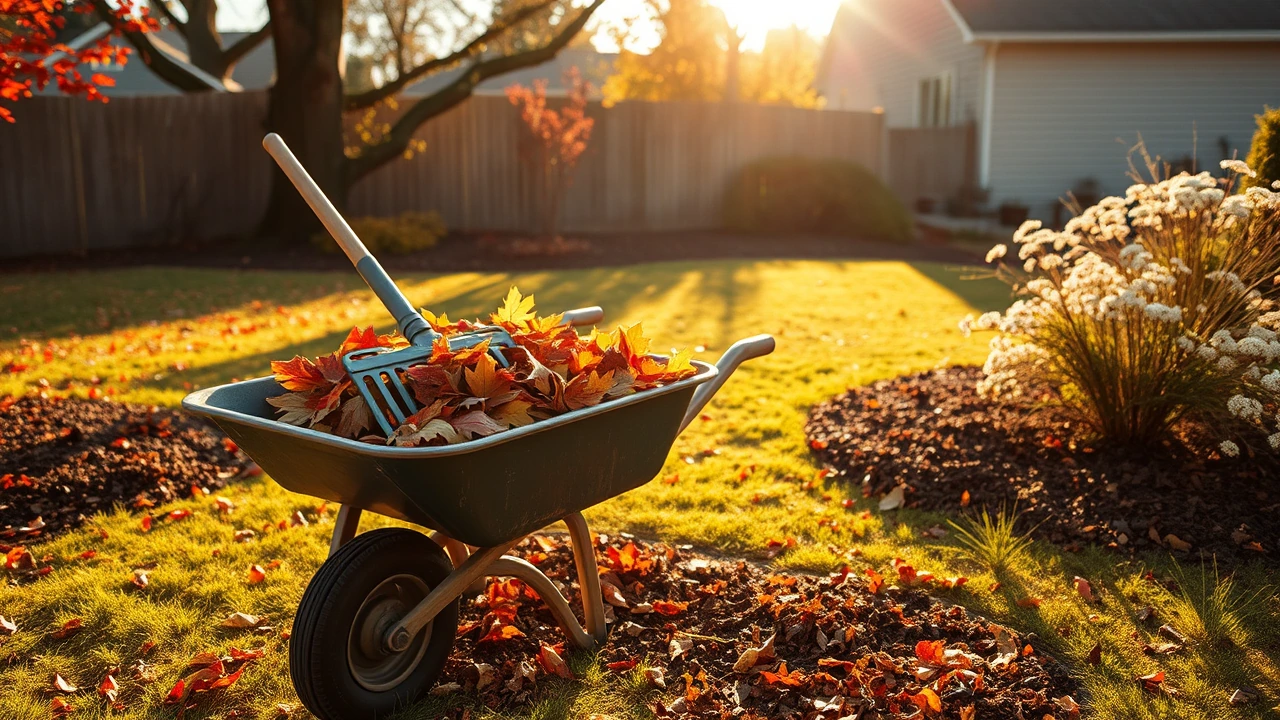
Fall is the most important season for your yard in southern Ontario. What you do (or skip) between Labour Day and the first hard freeze decides how your lawn, patio and garden beds come out of winter. We've been working Hamilton, Burlington and Oakville properties since 2008, and the homeowners who get a strong spring almost always did the same handful of fall tasks the year before.
Why fall matters more than spring in Ontario
Cool nights, warm soil and steady rain make September and October the best growing window of the year for cool-season grasses (Kentucky bluegrass, perennial ryegrass, fine fescue) - the exact mix that grows in 95% of GTA lawns. Roots keep developing until soil temperatures drop below about 4 Celsius, which in our region usually happens in mid to late November. That means every dollar and hour you put into the lawn in fall does roughly 2 to 3 times the work of the same effort in spring.
It's also the cheapest time to fix hardscape. Polymeric sand cures properly in cool, dry weather. Sealers cure faster without summer humidity. And contractors (us included) have shorter wait times in October than in May.
1. Late August (last 2 weeks): aerate and apply fall fertilizer
If you only do one thing for your lawn this year, do this. Core aeration pulls finger-sized plugs out of the soil, breaks up compaction and gives roots, water and nutrients a path down. Heavy clay soil (which covers most of Hamilton mountain, Stoney Creek and Ancaster) compacts faster than sandy soil and benefits the most.
Timing: anytime from August 20 to September 15. Earlier is better because the soil is still warm enough for the grass to grow into the open channels before dormancy.
Right after aeration, apply a fall-formula fertilizer. Look for something in the 10-0-20 to 12-0-24 range (higher potassium, lower or zero phosphorus). The potassium helps roots store energy and improves winter hardiness. A second feed in late October (a winterizer) is optional but worth it on lawns that took heavy summer traffic.
2. September week 1 to 2: raise the mower, overseed and top-dress
Drop the mower deck back up to 3 inches for the rest of the season. Taller blades shade weed seeds, build deeper roots and trap morning dew that grass uses to recover from summer heat stress.
This is also the prime overseeding window. Soil is warm, nights are cool, and weed pressure is low. For bare patches:
- Rake out the dead thatch and rough up the soil surface.
- Spread a quality sun or shade mix (whichever matches the spot) at the rate listed on the bag.
- Top-dress with about a quarter inch of screened topsoil or compost.
- Water lightly twice a day for the first 10 to 14 days, then taper.
For whole-lawn renovation, slit-seeding or overseeding right after aeration gives the best germination because the seed falls into the aeration holes and stays in contact with soil instead of drying on the surface.
3. Late September: reseal interlock and refresh polymeric sand
Interlock patios, driveways and walkways take the worst beating of any surface on your property: freeze-thaw cycles, road salt, plough scrape and UV. Fall is the best time to reset them because the pavers are dry, daytime temperatures are still above 10 Celsius and there's less pollen and dust to stick in the sealer.
Walk the surface and check for:
- Open or washed-out joints - if you can see more than a couple millimetres of gap, refill with polymeric sand on a dry day, sweep in, compact lightly with a tamper or plate, then mist with water exactly as the bag directs.
- Sinking or rocking pavers - usually a base failure. See our guide on how to fix a sinking paver patio before sealing over the problem.
- Sealer wear - if water no longer beads on the surface, it's time to reseal. Full how-to: how to seal pavers.
Skip this and one bad freeze-thaw winter can turn a $40 sand refill into a $4,000 relay.
4. October: leaf management - mulch, don't just bag
Leaves left in thick mats over the lawn smother grass crowns and create perfect conditions for snow mould. But hauling every leaf to the curb wastes free organic matter.
Our rule: while leaves are still light and dry (early to mid-October), run them over with a mulching mower at the 3 inch setting. Shredded leaves drop between the grass blades, break down over winter and feed the soil. The University of Guelph turf research backs this up - mulched leaves do not increase thatch when chopped finely.
Once leaves are wet, matted or piled more than a couple inches deep (usually by late October), switch to raking or blowing and a final cleanup. Garden beds get a 2 to 3 inch leaf-mulch layer left in place; it insulates roots and feeds worms.
5. October: prune the right things (and leave the rest)
Prune in fall:
- Dead, damaged or diseased wood on any plant, any time.
- Summer-flowering shrubs that bloom on new wood (potentilla, spirea japonica, hydrangea paniculata like Limelight, smooth hydrangea like Annabelle).
- Yew, juniper and most evergreen hedges (light shaping only).
Do NOT prune in fall:
- Spring bloomers that set buds the previous summer: lilac, forsythia, rhododendron, azalea, mophead hydrangea (macrophylla), magnolia, weigela. Pruning these now cuts off next May's flowers.
- Maples, birches, walnuts and grapes - they bleed sap heavily. Wait until full dormancy in January or February.
- Roses - leave the canes long over winter to protect the crown. Hard prune in April.
6. October: cut back perennials selectively
Cut back now: hosta (turns to mush), peony (carries fungal disease into spring), bearded iris, daylily foliage, anything that flopped or got mildewed.
Leave standing until spring: ornamental grasses (winter interest plus they shelter beneficial insects), coneflower and black-eyed Susan (the seed heads feed goldfinches and chickadees), sedum (the dried heads catch snow beautifully), Russian sage, lavender, ferns.
7. Mid-October: irrigation winterization
If you have an in-ground sprinkler system, this is non-negotiable in our climate. A single freeze in a charged line can split a manifold, crack a backflow preventer or burst PVC underground - any of which costs more to fix than 10 years of winterizations.
- Shut off the water supply to the system at the indoor isolation valve.
- Open the backflow test cocks to drain the assembly.
- Connect a compressor (you need real CFM, not a small tire compressor - typically 50+ CFM for residential systems) and blow each zone out individually until only mist comes out, then move on.
- Leave the test cocks at 45 degrees open for winter.
8. Late October: protect young trees and shrubs
- Burlap wraps on boxwood, cedar hedges close to roads and any evergreen on the windward side of the house. Wrap loosely; the goal is wind and salt protection, not insulation.
- Mulch rings 2 to 3 inches deep around the dripline of young trees (not piled against the trunk).
- Trunk guards on young thin-barked trees like maple, linden and serviceberry to prevent rabbit and vole girdling and southwest winter sun-scald.
- Deer fencing if you're on the escarpment, in Ancaster, Dundas or rural Flamborough. Cedar, yew and arborvitae are deer candy from January onward.
9. Late October: plant spring bulbs
If you want tulips, daffodils, alliums or crocus in April, they need to go in the ground now. Bulbs need 12 to 14 weeks of cold to bloom properly, and they root before the soil freezes.
- Tulips and daffodils: 6 to 8 inches deep.
- Alliums (large): 6 to 8 inches deep.
- Crocus, snowdrop, scilla: 3 to 4 inches deep.
Plant pointy end up, mix a small handful of bone meal or bulb fertilizer into the planting hole, water once after planting, then leave alone. In our region, October 15 to November 10 is the sweet spot.
10. November: book snow removal and the final yard walk
By early November, lock in your snow contract. Good contractors fill seasonal routes by mid-November and the late callers end up on per-visit pricing or waitlists. Our full breakdown is in when to book snow removal in Ontario.
- Gutters clean and flowing - a clogged gutter in December becomes an ice dam in February.
- Downspout extensions directing water at least 6 feet away from the foundation.
- Garden hoses drained, coiled and stored indoors.
- Patio furniture covered or stored.
- De-icer - buy now while stock is full. Calcium chloride or a calcium-magnesium blend for any surface near plants or pets.
- Snow shovels and roof rake staged where you can actually get to them in December.
Regional notes: Hamilton, Burlington, Oakville and the escarpment
- Lakeshore (south Burlington, south Oakville, Stoney Creek lakefront): first hard frost typically November 5 to 15. Longest fall window in our region.
- Hamilton lower city, downtown Burlington, central Oakville: first frost late October to early November. Standard timing for everything above.
- Hamilton mountain, Ancaster, Dundas, Waterdown, north Oakville: first frost mid to late October. Push every task on this list 7 to 10 days earlier.
- Niagara escarpment slopes and rural Flamborough: can frost as early as October 5. The full checklist should be done by Halloween.
Frequently asked questions
When is the last safe day to seed grass in Ontario?
For reliable germination before dormancy, finish overseeding by September 30. You can dormant-seed in late November (after the soil is consistently below 5 Celsius) for a head start on spring, but expect lower germination rates and more competition from weeds.
Should I leave fallen leaves on the lawn?
Mulch them in with the mower while they're dry and light - yes. Leave them in thick wet mats - no. If you can still see green grass through the leaves after a pass with the mower, you're fine. If not, rake or blow the excess into garden beds where they'll insulate roots and feed the soil over winter.
When should I plant spring bulbs in the GTA?
October 15 to November 10 is the ideal window for Hamilton, Burlington and Oakville. The soil needs to be cool (below about 13 Celsius) but not frozen.
What should I never prune in fall?
Anything that flowers in spring on old wood: lilac, forsythia, rhododendron, azalea, mophead hydrangea, magnolia, weigela. Also avoid heavy pruning on maple, birch, walnut and grape vines (heavy sap bleed) and on roses (leave canes long, hard prune in April).
Fall vs spring fertilizer - which matters more?
Fall, by a wide margin, on cool-season Ontario lawns. A fall feed (high potassium, low or no phosphorus) goes into root storage and powers spring green-up from the inside. If you're only going to fertilize once a year, do it in October.
Do I really need to winterize my irrigation if I've had mild winters?
Yes. A single overnight dip to -10 Celsius with water sitting in the backflow preventer is enough to crack the assembly. The repair (typically $400 to $900 for a new RPZ) is many times the cost of a $90 to $150 blowout.
- How to prepare your yard for winter
- When to book snow removal in Ontario
- Lawn care & maintenance
- Snow removal service
Want the full year in one view? Read the maintenance-timing guide with month-by-month tasks for Hamilton, Halton and Niagara yards.
Cleaning the deck before winter? See how to clean it safely and when to leave staining until spring.