
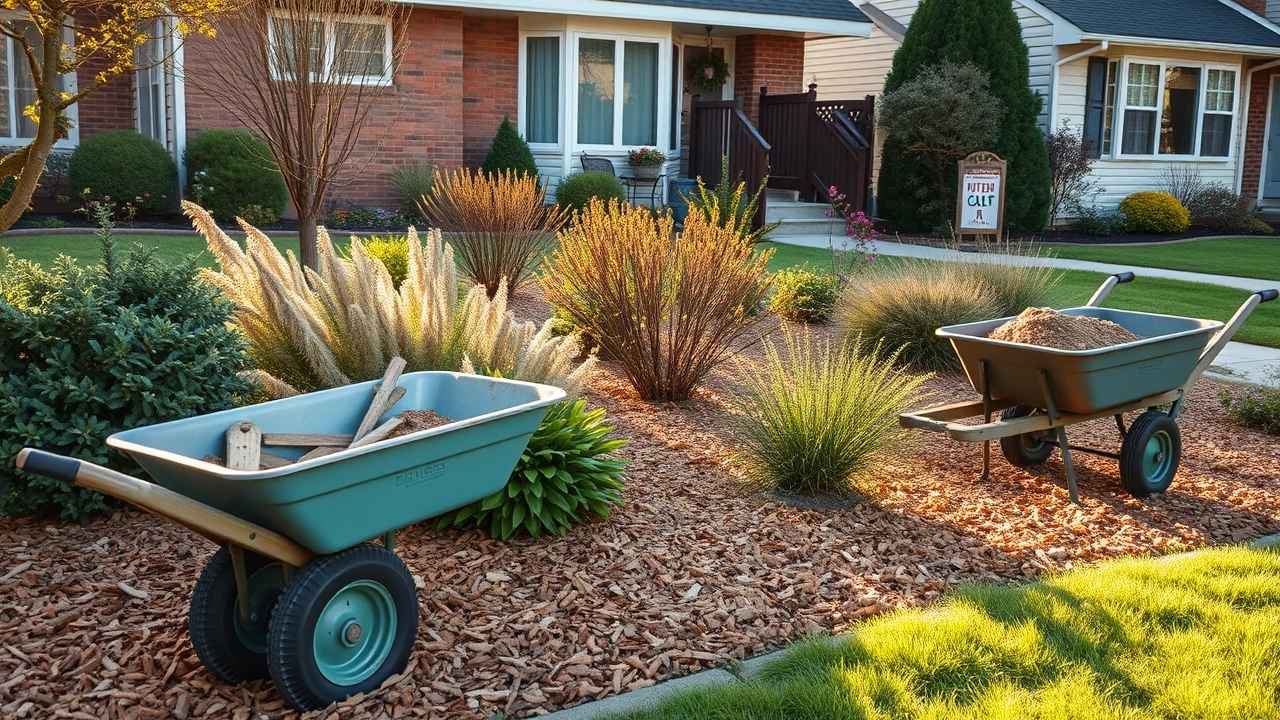
Figuring out how much mulch or topsoil you need should not require a spreadsheet. Punch in your bed length, width and depth, pick a material, and this calculator returns cubic yards plus a 2026 delivered price range for Hamilton, Burlington and Oakville. It is the same quick math our crew runs on the truck before every drop.
Material needed: 0 cubic yards
Estimated cost: $0 to $0
How the math works
Mulch and topsoil are sold by the cubic yard. The formula is straightforward:
(Length in feet × Width in feet × Depth in inches) ÷ 324 = cubic yards
The 324 comes from converting inches to feet (12) and square feet to cubic yards (27), so 12 × 27 = 324. A 30 ft by 4 ft bed at 3 inches deep works out to (30 × 4 × 3) ÷ 324, or about 1.11 cubic yards.
Depth choice drives almost everything. Use 2 to 3 inches of mulch for established beds (enough to suppress weeds and lock in moisture without smothering roots). Bump to 4 inches on brand-new beds where weed pressure is high. For topsoil top-dressing on lawns, stick to 0.25 to 0.5 inches per pass. For building up a new bed or levelling a low spot, 4 inches or more of triple-mix is normal.
Pro tip: order 5 to 10 percent extra. Mulch settles, edges always take more than you expect, and the bulk yard will not let you buy half a wheelbarrow on a Saturday. Better to have a small pile left over than to run out at 4 p.m.
What the estimate includes (and excludes)
Included: bulk material at 2026 Hamilton, Burlington and Oakville rates, delivery surcharge if selected (one drop on a paved driveway, accessible by a tandem truck), and optional pro spread and rake by our crew (wheelbarrow from the driveway, spread to even depth, light edge cleanup).
Excluded: bed prep, weeding, edging install, landscape fabric, bed expansion or shaping, plant removal or installation, and haul-away of old mulch. Tight backyard access, stairs, long carries past 100 ft, or anything requiring tarps over interlock is quoted separately. HST is extra. If you need a real number for your property, send photos and we will come back with a fixed quote.
Material guide
Cedar mulch is the workhorse in our region. It is decay-resistant, holds its natural reddish-brown colour for a season or two, and has a clean smell. Great for ornamental beds and around shrubs. Slightly pricier than hardwood but lasts longer.
Pine bark is acidic as it breaks down, which makes it the right choice around rhododendrons, azaleas, blueberries and other acid-loving plants. Coarser nuggets last longest; shredded pine breaks down faster but knits together better on slopes.
Dyed mulch (black or brown) gives the strongest visual contrast against green lawns and pops in front-yard beds. Verify the dye source: reputable suppliers use iron-oxide or carbon-based colourants on clean wood. Avoid mystery-source dyed mulch (it can contain treated pallet wood).
Triple-mix is one-third topsoil, one-third peat, one-third compost. It is the go-to for new beds, raised vegetable boxes, and anywhere you want soft, fertile growing medium. Screened topsoil is straight soil run through a screen to remove rocks and debris. Use it for lawn repair, levelling under sod, and grading. Triple-mix grows better; screened topsoil holds a grade better.
Frequently asked questions
How deep should I apply mulch?
Two to three inches on established beds, four inches on brand-new beds with high weed pressure. Deeper than four inches starts to suffocate roots and can hold too much moisture against stems.
Can I mulch directly over weeds?
Not if you want a real result. Pull or cut weeds first, especially anything with a taproot (dandelion, thistle) or runners (bindweed, quackgrass). A 3-inch mulch layer suppresses new weed seeds from germinating, but it will not kill what is already rooted.
How often do I refresh mulch?
Top up once a year, usually in May. You are adding roughly an inch to replace what broke down over the season. Full strip-and-replace is rarely needed.
Triple-mix or screened topsoil for new sod?
Screened topsoil. You want a firm, level base that holds its grade under foot traffic and a roller. Triple-mix is too fluffy and will settle unevenly, leaving low spots in the lawn within a year. Save triple-mix for garden beds and raised boxes.
Is dyed mulch safe for vegetable gardens?
We do not recommend it. Even when the dye itself is inert, the wood source for dyed mulch is often recycled construction or pallet material, which can contain treated wood. For vegetable beds, stick with straw, leaf mould, undyed cedar, or compost.
Do you deliver to my area?
Yes, we deliver and install across Hamilton, Burlington, Oakville, Dundas, Ancaster, Stoney Creek, Grimsby and Beamsville.
- Garden building & planting
- Lawn care & maintenance
- Sod cost guide (includes topsoil)
- Planting in Ontario clay soil
Not sure which material? Compare the trade-offs: Bulk vs bagged mulch (cedar vs hardwood).
Working out stone? See how much landscaping rock you need and what it costs.
Filling a raised bed? See the soil volume table by bed size in cubic feet, cubic yards and bags.