
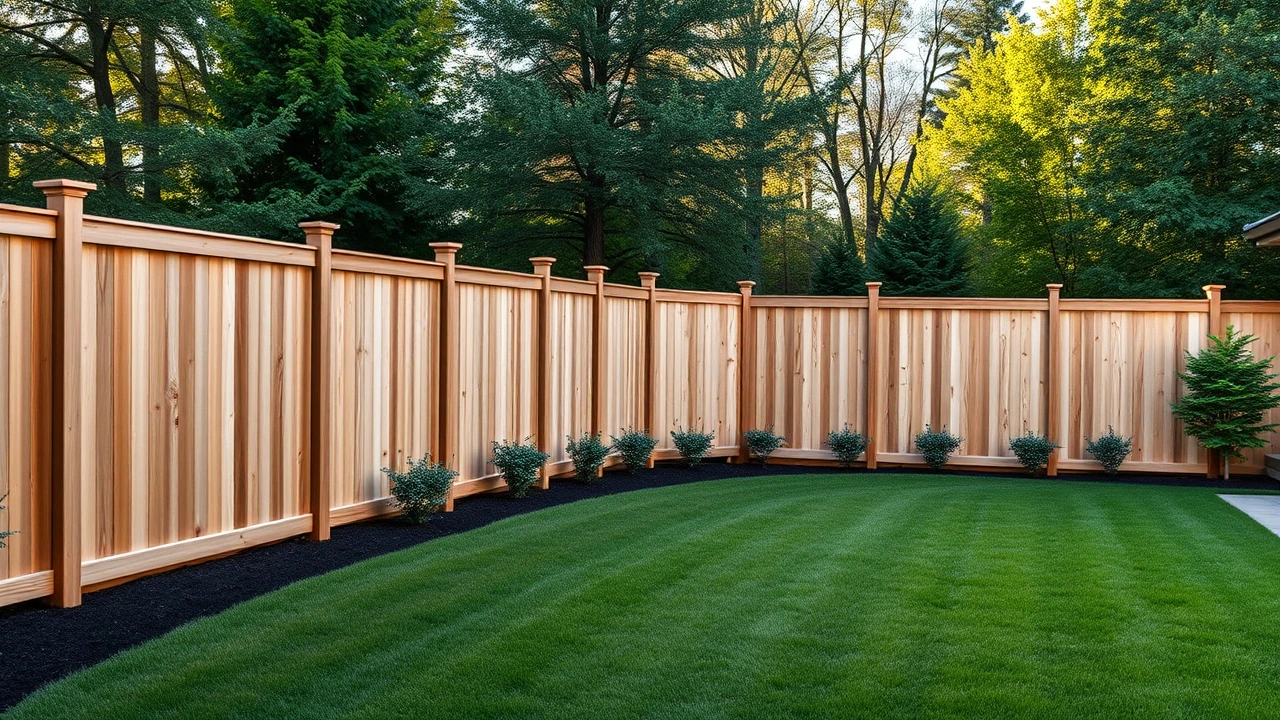
Oakville is a deceptively tricky town to build fences in. The Town of Oakville fence bylaw caps rear-yard heights at 2.0 m and front-yard heights at 1.5 m (with anything over 1 m in open lattice), and the pool enclosure by-law layers a separate 1.2 m minimum non-climbable barrier on top of that, with openings generally no larger than 38 mm and a self-latching, self-closing gate. Old Oakville sits inside a heritage conservation district where sightlines from the street are reviewed by Town heritage staff, and any front-yard fence over 1.0 m can trigger a permit conversation. Glen Abbey and Joshua Creek lots are full of mature trees protected under the Private Tree Protection Bylaw, which means a post hole drilled inside the critical root zone of a regulated tree can land the homeowner with an order to stop work. Add Ontario frost depth at 4 ft and the lake-influenced clay subsoil that holds water through every spring thaw, and a fence built right in Oakville looks nothing like a homeowner-grade kit from a big-box store.
Quick verdict for Oakville homeowners
A properly built, bylaw-compliant fence in Oakville in 2026 costs $65 to $180 per linear foot turnkey depending on material, height and site complexity. A standard 6 ft rear-yard cedar privacy fence on a flat Glen Abbey or West Oak Trails lot runs $70 to $95 per linear foot. A pool-code aluminum enclosure in River Oaks or Joshua Creek runs $110 to $160. Old Oakville heritage-district work and any fence inside a regulated tree root zone runs $130 to $200 because of the hand-dig and the design review. Posts must be set in concrete to 4 ft minimum to clear Ontario frost. Always get a written scope showing post depth, panel spec, gate hardware and bylaw height before signing.
2026 Oakville fence cost
Prices below are turnkey installed costs for Oakville in 2026, including layout, locates, 4 ft frost-depth post holes, concrete footings, posts, panels or pickets, gates with hardware, demo of an existing fence on the same line and site cleanup. They do not include arborist reports inside the tree bylaw critical root zone, heritage district review fees in Old Oakville, or survey work to confirm property lines.
| Tier | Material and spec | Cost per linear ft | Lifespan | Best fit |
|---|---|---|---|---|
| Basic | Eastern white cedar 6 ft board-on-board, pressure-treated posts, 4 ft footings | $55 to $75 | 12 to 18 years | Side and rear yards in West Oak Trails, College Park starter homes |
| Mid-grade | Rough-sawn western red cedar 6 ft board-on-board, steel post anchors, hot-dip hardware | $75 to $110 | 20 to 30 years | Most Glen Abbey, River Oaks and Bronte rear yards |
| Premium | Aluminum pool-code 1.5 m or 1.8 m, powder-coated, self-latching gate, vinyl 6 ft post-in-concrete privacy | $110 to $160 | 30 to 50 years | Pool enclosures in Joshua Creek and River Oaks, low-maintenance Bronte yards |
| Luxury | Heritage-spec cedar with custom caps and lattice, mixed cedar-and-aluminum, horizontal slat western cedar | $150 to $220 | 25 to 40 years | Old Oakville heritage lots, estate Joshua Creek frontages, ravine-edge Glen Abbey |
To sanity check the spend on your own run length, use our fence cost calculator, and read the full Ontario fence cost guide for a line-item breakdown. Choosing between materials is its own decision: our wood vs vinyl vs aluminum fence comparison walks through the trade-offs for Oakville lots specifically.
Common Oakville fence projects we build
Cedar privacy fences in Glen Abbey and West Oak Trails
Glen Abbey and West Oak Trails are classic Oakville family yards on flat to mildly sloped lots with mature backyard trees and original eastern white cedar fences now 25 to 35 years old and leaning into neighbours. We rebuild these as 6 ft rough-sawn western red cedar board-on-board, which holds colour and resists rot far better than eastern white cedar. Posts go 4 ft deep into concrete bell-bottom footings to clear Ontario frost, with galvanised steel post anchors keeping the wood out of the wet clay at grade. The 2.0 m Town of Oakville bylaw height limit governs rear-yard privacy here, and we run panels at 1.83 m (6 ft). On long property-line runs typical of West Oak Trails we step the panels with the grade rather than racking them.
Pool-code aluminum enclosures in Joshua Creek and River Oaks
Joshua Creek and River Oaks have the lot sizes for inground pools, and the Town of Oakville pool enclosure bylaw is strict: a minimum 1.2 m non-climbable barrier, openings no larger than 38 mm (or up to 100 mm where the enclosure is at least 1.52 m high with horizontal rails at least 1.22 m apart), and a self-closing, self-latching, lockable gate with the latch at least 1.22 m above grade. We build these as powder-coated aluminum at 1.5 m or 1.8 m depending on whether the fence doubles as the rear-yard privacy line, with magnetic self-latching hardware tested at install. Posts go 4 ft into concrete because frost-heave will lift an aluminum panel just as easily as a cedar one. We coordinate with the pool builder so the fence line, coping and equipment pad sit cleanly on the certified plan that goes to the Town inspector. For homeowners still scoping the pool itself, the inground vs above-ground vs semi-inground comparison covers how each style changes the enclosure geometry.
Heritage-district fences in Old Oakville
Old Oakville south of the QEW, the streets between Trafalgar and Kerr running down to the lake, sits inside the Old Oakville Heritage Conservation District. Front-yard fences are reviewed for sightlines, materials and detailing by Town heritage staff before a permit is issued. A vinyl picket fence that is fine in West Oak Trails will not pass review in Old Oakville. We design heritage-spec cedar here: 1.0 m to 1.2 m front-yard heights to satisfy both bylaw and sightline rules, square pickets with traditional spacing, mortised rails into solid 4x4 cedar posts, and custom caps matching the era of the home. The rear-yard run can go to the full 2.0 m bylaw height, stepped down through the side yard. Heritage review adds 4 to 8 weeks and we manage that paperwork.
Mature-tree-zone fences in Bronte and College Park
Bronte and College Park are full of mature maples, oaks and beeches protected under the Town of Oakville Private Tree Protection Bylaw. The bylaw defines a critical root zone (CRZ) around each regulated tree, typically 10 to 12 times the trunk diameter, and any soil disturbance inside that zone, including a fence post hole, can trigger an order to stop work. We survey the trees along the fence line before quoting, flag the CRZ, and offer two compliant options. First is hand-dug post holes inside the CRZ with no augering and bell-bottom footings flaring below root depth. Second is a pier-and-beam adjustment sliding post locations a few inches to thread between major roots while keeping panel spacing visually even.
Why DIY fences fail in Oakville (and what we do differently)
The four failure modes we see again and again on torn-out Oakville DIY fences are the same every season. First, post depth: kit fences sold at big-box stores ship with instructions to set posts 2 to 3 ft deep, which is half the Ontario frost depth. The first hard winter lifts the post, the panel racks out of plumb, and by year three the run is leaning. Second, wrong cedar: bagged eastern white cedar pickets rot from the ground up within 10 to 12 years on lake-influenced Oakville clay. Western red cedar, rough-sawn from a real lumber yard, lasts twice as long for a 20 percent premium. Our cedar fence rot diagnostic walks through how to tell which failure mode is which on an existing run.
Third, missing bylaw check: a homeowner builds a 1.5 m fence across the front yard in West Oak Trails and gets a Town complaint, because the front-yard limit is 1.2 m. Or worse, builds a 1.0 m pool fence with horizontal rails the bylaw classifies as climbable, fails inspection, and cannot fill the pool. Fourth, tree-bylaw violations: post holes augered through the CRZ of a regulated maple in Bronte without arborist review, which can carry fines into five figures plus restoration costs. We pull the bylaw map on every Oakville quote, set posts to 4 ft in concrete bell-bottoms, run western red cedar or pool-code aluminum, and coordinate any heritage or tree review before the first hole is dug.
The Oakville fence install timeline
- Free on-site visit. We walk the property line, check for survey pins, photograph existing trees, identify any regulated trees inside the CRZ of the fence line, measure run lengths and gate locations, and confirm the bylaw zone (rear, front, pool enclosure). You leave with a realistic Oakville 2026 cost band.
- Design and written quote. We send a fixed scope with material spec, post depth, footing detail, panel height by bylaw zone, gate hardware list, run length and timeline. No vague single-line quotes.
- Permits, locates and review. We file Ontario One Call locates, lodge the pool enclosure permit if applicable, submit heritage review documents for Old Oakville, and confirm the Town of Oakville tree bylaw compliance plan. Most rear-yard cedar fences in standard zones do not need a permit.
- Demo and layout. We remove the existing fence and posts, grub out failed concrete footings, and string the new line off survey pins or agreed property markers.
- Post setting. Hand or auger dig to 4 ft, bell-bottom footings to clear frost, set posts plumb in pre-mix concrete, brace overnight. Inside tree CRZs we hand-dig and flare footings around roots over 25 mm.
- Panels, gates and walk-through. Rails, pickets or aluminum panels go up next, gates hung with self-closing and self-latching hardware where required by pool code, hardware tested, site cleaned, final walk with the homeowner before pool enclosure inspection or invoicing.
Permits and bylaws in Oakville
The Town of Oakville fence bylaw caps rear-yard fences at 2.0 m and front-yard fences at 1.2 m measured from finished grade. Corner lots have a sightline triangle at the intersection where the front-yard limit extends along both flanking streets. Most rear-yard residential fences at or below 2.0 m do not require a building permit, but pool enclosures always do: the pool enclosure bylaw requires a 1.2 m minimum non-climbable barrier, openings no larger than 38 mm (or up to 100 mm where the enclosure is at least 1.52 m high with horizontal rails at least 1.22 m apart), and a self-closing, self-latching, lockable gate with the latch at least 1.22 m above grade. The pool cannot be filled until the enclosure passes inspection.
Old Oakville heritage conservation district adds a design review on any front-yard or street-facing fence work, with material, height and detailing checked against the district plan. The Town of Oakville Private Tree Protection Bylaw applies to most mature trees on private property; any soil disturbance in the critical root zone of a regulated tree, including a single post hole, can require an arborist review and tree-protection measures during construction. We pull all three documents (fence bylaw map, pool enclosure plan, tree bylaw screen) on every Oakville quote so the build clears inspection on the first visit. The full Halton permits guide covers what triggers each review.
Frequently asked questions
What kind of warranty do you offer on an Oakville fence?
Our standard Peace Love Landscaping warranty is 2 years on workmanship across the assembly (posts, footings, framing, panels, hardware) on top of the manufacturer warranty on aluminum and vinyl materials (most aluminum carries a 20-year powder-coat warranty, vinyl carries 20 to 30 years against cracking). Cedar is a natural product and not covered for weathering, but our build warranty covers any post or rail failure for 2 years.
How deep do fence posts need to go in Oakville?
Four feet minimum to clear Ontario frost depth. We set posts in bell-bottom concrete footings, flared at the base, so frost-heave cannot grip the side of the footing and lift it. Anything less than 4 ft will lift over the first three winters and rack the panels out of plumb. Pool-code aluminum posts get the same 4 ft depth even though the panels are lighter, because the gate posts in particular carry significant lateral load.
Can you build a fence in winter in Oakville?
Generally no. Our Oakville fence install season is mid-March through early December, with the limit being whether we can dig clean 4 ft footings without frozen ground. We do not set posts in frozen subsoil or pour concrete below 5 degrees C without cold-weather admixtures, because the bond will not develop properly. Most clients book in late winter for a spring or early-summer build.
What is the difference between western red cedar and eastern white cedar?
Western red cedar is denser, oilier and far more rot-resistant. Rough-sawn western red boards used as fence pickets last 25 to 35 years in Oakville conditions. Eastern white cedar is lighter, cheaper and is what most kit fences ship with: it lasts 12 to 18 years before pickets soften and rails rot at the post connection. The 20 percent material premium for western red is the single best value upgrade on a cedar fence in Oakville.
Do I need a permit for a pool fence in Oakville?
Yes. Every pool enclosure in Oakville requires a pool enclosure permit before the pool can be filled. The bylaw requires a 1.2 m minimum non-climbable barrier, openings no larger than 38 mm (or up to 100 mm where the enclosure is at least 1.52 m high with horizontal rails at least 1.22 m apart), and a self-closing, self-latching, lockable gate with the latch at least 1.22 m above grade. We file the permit and book the inspection as part of the build.
What about heritage rules in Old Oakville?
Old Oakville south of the QEW sits inside a heritage conservation district. Any front-yard or street-visible fence over 1.0 m triggers heritage review by Town staff. The review looks at material (cedar preferred, vinyl usually rejected), height, picket style and post detailing. We design to the district guidelines from the first sketch and submit the review package with the permit application. Review adds 4 to 8 weeks to the timeline.
How do you handle mature trees on the fence line?
We survey regulated trees on or near the fence line before quoting, flag the critical root zone (CRZ) per the Town tree bylaw, and either hand-dig posts inside the CRZ with bell-bottom footings that flare below root depth, or slide post locations a few inches to thread between major roots. We do not auger through the CRZ of a regulated tree without an arborist sign-off, because the bylaw fines and restoration costs run into five figures.
Will privacy plants extend the life of my fence?
Yes, in two ways. A planted hedge along the inside face of the fence shields the wood from sun and wind, slowing weathering and extending picket life by 3 to 5 years. It also gives you privacy that is decoupled from fence height, which matters in front-yard zones where the bylaw caps height at 1.2 m. Our Ontario privacy plant guide covers which species work in Oakville clay and exposure.
Ready to talk about your Oakville fence? Request a free quote and we will book a site visit, usually within 2 business days. While you are scoping, the Oakville landscaping hub shows the rest of what we build in town, the fence building service page covers materials and detailing, and the wood vs vinyl vs aluminum comparison, Ontario fence cost guide and fence cost calculator let you sanity-check any quote. If your current fence is already leaning or rotting, the cedar fence diagnostic tells you whether to repair or rebuild.
Need a gate? See fence gate ideas, widths and hardware for Oakville fences.
Front yard picket fence? See picket fence costs and the front yard lattice rule.