
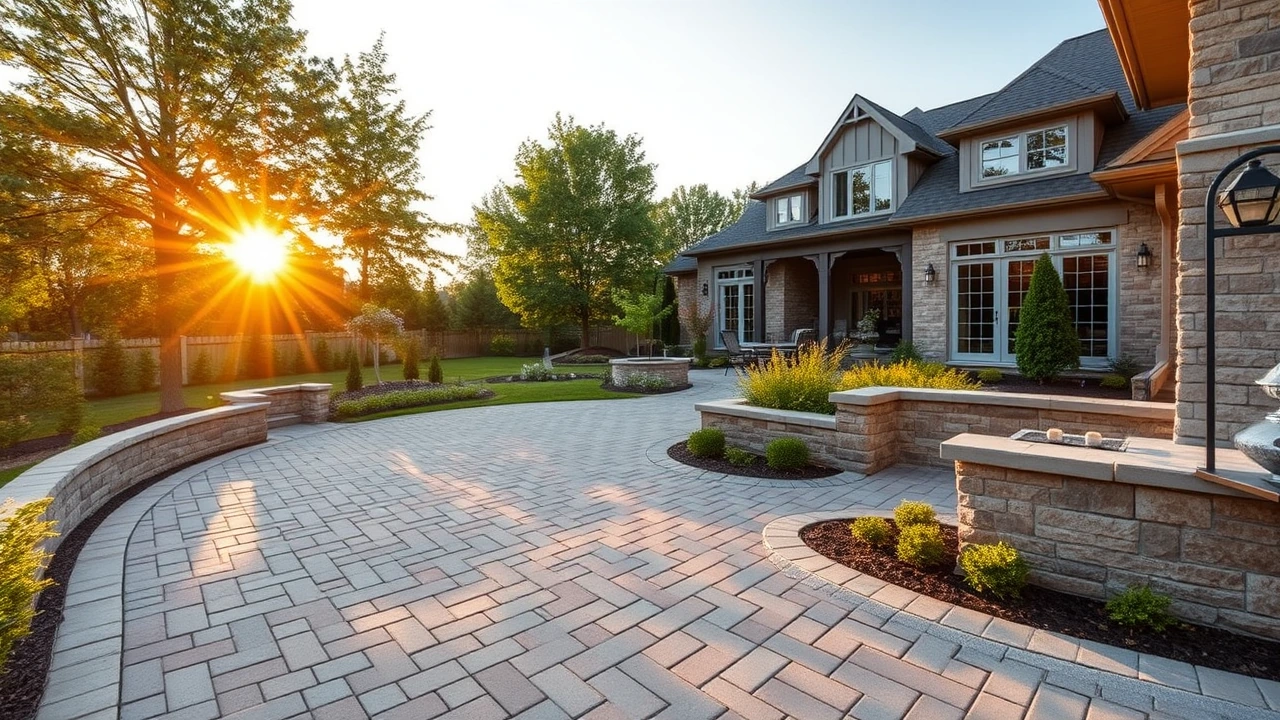
Ancaster is the most demanding patio market we work in west of Oakville, and the spec sheet has to match. Old Ancaster Village around Wilson Street has heritage homes on mature lots where any new hardscape has to respect Victorian streetscapes and the tree canopy. Meadowlands through the mid-2000s subdivisions has uniform suburbia on heavy clay where developer-grade patios are already failing 15 years in. Ancaster Heights and the newer streets off Garner Road and Golf Links carry the upscale design budget that calls for large-format 80mm premium pavers, outdoor kitchens and pool-deck integrations. Spring Valley and the streets backing onto the Dundas Valley have ravine-edge lots where Conservation Hamilton review is a real part of the timeline. The soil is the same heavy clay that runs across the rest of Hamilton, and the freeze-thaw cycle off the escarpment ridge runs 80 to 100 events a season. The expectation is Oakville-grade, the soil is Hamilton, and the build has to handle both.
Quick verdict for Ancaster homeowners
For a properly built, code-friendly interlocking patio in Ancaster in 2026, expect to budget $50 to $110 per square foot turnkey on most residential projects, with premium pool decks, outdoor kitchens and luxury Ancaster Heights builds running $120 to $170. A typical 400 to 700 sq ft Ancaster backyard patio takes 7 to 14 working days on site, weather permitting. Most Ancaster patios are specified in premium 80mm large-format Unilock, Techo-Bloc or Permacon pavers because the lots, the houses and the design briefs call for it. Anything that ties into a pool, an outdoor kitchen or a covered structure needs proper footings and code review from the start. Always get a written scope showing base depth, geotextile, edge restraint, polymeric joint product and any integrated features before signing.
2026 Ancaster interlocking patio cost
Prices below are turnkey installed costs for Ancaster in 2026, including demolition, excavation, geotextile, 6 to 8 inches of compacted 3/4 clear stone, bedding sand, paver supply, polymeric joint sand, edge restraint and cleanup. They do not include outdoor kitchen appliances, lighting circuits, pergolas or pool basin code work.
| Tier | Paver brand and size | Cost per sq ft | Lifespan | Best fit |
|---|---|---|---|---|
| Basic | Permacon Melville or Techo-Bloc Blu 60mm, standard rectangular | $30 to $50 | 20 to 30 years | Side yards, utility patios, secondary garden landings |
| Mid-grade | Unilock Beacon Hill, Techo-Bloc Industria 60mm | $50 to $80 | 30 to 50 years | Meadowlands family backyards, Spring Valley walkway and patio combos |
| Premium | Unilock Series 3000, Techo-Bloc Blu Slate, large-format 80mm | $75 to $120 | 50 to 75 years | Most Ancaster entertaining patios, pool decks, Old Ancaster Village builds |
| Luxury | Unilock Umbriano, Techo-Bloc Aberdeen, Permacon Lamina XL | $120 to $170 | 75+ years | Ancaster Heights estate builds, integrated outdoor kitchens, ravine-edge view patios |
To sanity check a quote on your own square footage, run the numbers through our patio cost calculator and read the full paver patio cost guide for Ontario for the line-item breakdown. For paver selection on a premium Ancaster build, our how to choose pavers guide walks through the brand and finish trade-offs.
Common Ancaster interlocking patio projects we build
Heritage-respecting patios in Old Ancaster Village
Old Ancaster Village around Wilson Street and Halson Street has Victorian and Edwardian homes on mature lots with significant tree canopy and original stone or brick detailing. The wrong paver choice clashes with the streetscape immediately. We spec mid-grade to premium Unilock or Techo-Bloc product in tumbled or weathered finishes that read as old material rather than new concrete, in colours pulled from the existing brick and stone. The base has to tunnel around mature tree roots rather than cut through them, and we use flexible bedding details over geogrid where roots run shallow. Patios here are usually 250 to 500 sq ft, often combining a rear entertaining patio with a side-yard walkway. City of Hamilton heritage rules apply on designated streets, and we confirm the path before excavation.
Pool-deck patios across Ancaster Heights and Meadowlands
Ancaster Heights and the newer Meadowlands subdivisions have the lot sizes for proper pool-deck patios, typically 800 to 1,500 sq ft of paver work wrapping a vinyl, fibreglass or concrete pool. The code work is real: the City of Hamilton pool enclosure bylaw measures fence height from the top of any hardscape within 1.2 m of the water, so coping height shortens effective fence height. The deck has to drain away from the pool basin, and any salt-water pool changes the paver spec because salt splash pits cheaper concrete pavers within a decade. We spec premium 80mm Unilock or Techo-Bloc large-format pavers rated for chloride exposure, set a 2 percent slope away from the coping, and coordinate with the pool builder so the deck, fence, equipment pad and gas and electrical chases all line up before the gravel goes down.
Outdoor kitchen patios in Ancaster Heights
The newer streets off Garner Road and Golf Links increasingly want a real outdoor kitchen as part of the patio: a built-in grill, side burner, counter with sink and storage, sometimes a pizza oven. We pour concrete footings to frost depth under any masonry counter run, run rough-in gas and electrical chases under the base before the gravel goes down, and detail the paver field with cuts that respect the counter footprint. The patio is usually premium 80mm large-format paver in a colour that complements the counter cladding, with a soldier course defining the cooking zone from the dining zone.
Ravine-edge patios in Spring Valley and along the Dundas Valley
Spring Valley and the streets backing onto the Dundas Valley Conservation Area have ravine-edge lots where the patio frames the view into the valley. These are typically premium 80mm Unilock or Techo-Bloc large-format paver builds of 400 to 800 sq ft, set with steel edge restraint along any edge facing the drop. Conservation Hamilton review applies inside the regulated valley setback, and we coordinate that piece before excavation. Mature tree protection is taken seriously in established Ancaster neighbourhoods, and we never extend a patio inside the regulated setback without a Conservation Hamilton sign-off. For surface choice on a view-lot build, the interlock vs concrete vs natural stone comparison covers the trade-offs.
Why DIY patios fail on Ancaster clay (and what we do differently)
The failure modes on Ancaster DIY patios are the same as the rest of Hamilton clay, but the consequences are worse because the spec expectation is higher and the houses they sit beside are more expensive. First, base failure: a 3 to 4 inch layer of bagged paver base on native Ancaster clay without geotextile. The clay pumps fines up through the gravel over the first three winters, the base loses bearing capacity, and pavers dish toward the centre of the field. On a $40,000 premium patio that dishing shows up against a Garner Road home and the photos travel. Second, frost heave: any base shallower than 6 inches of compacted 3/4 clear sits inside the active frost zone, and the wet Ancaster clay heaves violently each spring.
Third, missing edge restraint, especially on premium 80mm large-format pavers, which have more mass per stone and walk further when the perimeter is not held. Cheap snap-edge plastic spiked into clay pulls within two seasons. Fourth, polymeric joint mistakes from over-watered activation, especially noticeable on the wider joints typical of large-format premium pavers. We do it differently on every Ancaster job: 6 to 8 inches of compacted 3/4 clear over non-woven geotextile, bedding sand screeded to 1 inch, factory-grade premium pavers cut on a wet saw, spiked aluminum or steel edge restraint sized for the paver mass, and a contractor-grade polymeric joint product activated in dry conditions only. On premium 80mm builds we routinely upgrade the base to 8 inches and the edge restraint to steel.
The Ancaster patio install timeline
- Free on-site visit. We measure the space, probe the soil, check drainage from the foundation and downspouts, photograph existing grades, identify mature trees and any heritage detailing on the house, and talk through how you will use the patio. You leave with a realistic Ancaster 2026 cost band.
- Design and written quote. We send a fixed scope with paver spec, base depth, drainage detail, edge restraint type, polymeric product, square footage, any pool or kitchen integration detail and timeline. No vague single-line quotes.
- Permit and conservation check. Most Ancaster residential patios do not need a building permit, but pool-deck work, outdoor kitchens, attached covered structures, ravine-edge lots and heritage streets can trigger reviews. We confirm the permit, conservation and heritage path before mobilising.
- Demo and excavation. We strip sod or break out failing concrete or pavers, excavate 10 to 14 inches below finished grade, hand-dig carefully around mature tree root zones, and haul away the spoils.
- Footings, base and compaction. Any outdoor kitchen or covered structure gets concrete footings to frost depth first, with gas and electrical chases run before the base goes down. Then non-woven geotextile on the clay, 6 to 8 inches of 3/4 clear placed in 2-inch lifts and compacted with a reversible plate compactor. Final base is dead-flat and pitched 1 to 2 percent away from the house.
- Bedding, pavers and polymeric. We screed 1 inch of bedding sand, lay the field in the agreed pattern, cut the perimeter and any integration cuts on a wet saw, set spiked aluminum or steel edge restraint, sweep and activate polymeric joint sand, and walk the site with you before final cleanup.
Permits and bylaws in Ancaster
Ancaster is part of the City of Hamilton, so the Hamilton building permit and zoning rules apply. The City does not require a building permit for most at-grade residential interlocking patios that sit on the ground, are not attached to a deck or dwelling, and do not affect drainage onto neighbouring properties. The triggers that do require a permit or review: a patio attached to a deck above 600 mm, a patio inside a pool enclosure (which then falls under the pool fence and grading bylaws), an outdoor kitchen with gas or electrical hookups, a covered or attached structure above the patio, and any work that re-routes surface water across a property line. The City of Hamilton lot-grading bylaw still applies even when no permit is needed.
For Ancaster patios near the Dundas Valley, Spring Valley ravines, the escarpment or any regulated watercourse, Conservation Hamilton review can add 4 to 8 weeks to the timeline. Mature tree protection is taken seriously in established Ancaster neighbourhoods, and the City may require a tree protection plan when work happens inside the critical root zone of a significant tree. Heritage rules apply on designated Old Ancaster Village streets. We handle the permit path, conservation review, tree protection planning, heritage review and inspection coordination as part of the build, so you are not chasing forms while the crew waits. For the full picture across the region, see our Hamilton, Burlington and Oakville landscaping permits guide.
Frequently asked questions
What kind of warranty do you offer on an Ancaster patio?
Our standard warranty is 1 to 2 years on workmanship across the assembly (base, bedding, paver layout, edge restraint, polymeric, and any integrated kitchen footings or pool-deck detailing), on top of the manufacturer warranty on the pavers (Unilock, Techo-Bloc and Permacon carry 25-year to lifetime transferable warranties). Full terms in the signed contract.
Why is Ancaster pricing higher than Hamilton or Stoney Creek?
Two reasons. The typical Ancaster build is specified in premium 80mm large-format pavers, an 8 inch base and steel edge restraint, a real material upgrade. And the integrations are more involved: pool decks, outdoor kitchens, footings, gas and electrical chases, heritage and conservation reviews. A basic side-yard utility patio in Ancaster is priced close to the same build elsewhere in Hamilton.
When should I seal my new interlocking patio?
Wait 6 to 12 months. New pavers need a full freeze-thaw cycle and a summer of weathering to outgas efflorescence. Sealing too early traps moisture and causes cloudy white blooms. After year one, a quality joint-stabilising sealer every 3 to 5 years extends the polymeric and deepens the colour, which matters on premium Ancaster builds where paver tone is part of the design.
Can you build a patio in winter in Ancaster?
No. Our Ancaster patio install season is roughly May through October, with some flexibility into early November. We do not place pavers on frozen base or set polymeric in cold or wet conditions, because the spring thaw will shift the assembly and the polymeric will never bond. Most Ancaster clients book in late winter or even the previous fall for a May to August build slot, because the premium-build calendar fills early.
How do you handle drainage on Ancaster clay?
Three layers of defence. Non-woven geotextile between the clay subsoil and the gravel base so clay fines cannot migrate up. Six to 8 inches of compacted 3/4 clear stone, with 8 inches the default on premium 80mm builds. And a 1 to 2 percent positive surface pitch away from the house, with edge restraint set so water leaves the field instead of ponding behind it. On pool-deck builds we add perimeter drainage piped to a side-yard discharge.
Are there code requirements for a pool-deck patio in Ancaster?
Yes. The City of Hamilton pool enclosure bylaw measures fence height from any hardscape within 1.2 m of the water, so a raised coping shortens effective fence height. The deck must drain away from the pool basin, and salt-water pools need a paver spec rated for chloride exposure. We design patio, fence and pool together for first-inspection compliance.
Do mature trees on my Ancaster lot complicate the patio?
They can, but they should not stop the project. We tunnel under significant roots rather than cutting them, use flexible bedding details over geogrid where roots run shallow, and on City-designated significant trees we may need to file a tree protection plan during the permit process. The trees are part of why Ancaster lots are valuable, and the build respects them.
Can you tie the patio into an outdoor kitchen, pergola or pool deck?
Yes, and on Ancaster Heights and Meadowlands builds it is usually the right call. Combining the patio, the kitchen footings, the pergola post bases and any pool-deck work into one mobilisation saves setup costs, keeps the design coherent, and gives a single warranty across the whole assembly. The same crew that builds the patio handles the integrations.
Ready to talk about your Ancaster interlocking patio? Request a free quote and we will book a site visit, usually within 2 business days. While you are scoping the project, the Ancaster landscaping hub shows the rest of what we build across town, the interlocking patios and driveways service page covers materials and finishes, and the Ontario paver patio cost guide plus patio cost calculator let you sanity-check any quote you receive. Choosing the right paver line for a premium build? Our how to choose pavers guide walks through the brand, size and finish trade-offs, and the interlock vs concrete vs natural stone comparison covers the surface choice itself.
Ancaster slope needs a retaining wall? See our dedicated Ancaster retaining wall installation page for local cost, permit rules and our build process.
Pool surround patio in Ancaster? See our dedicated Ancaster pool installation page for local cost, permit rules and our build process.